

CBD Flowers: The Complete Guide to CBD-Dominant Hemp Flowers (2026)
What is a CBD flower?
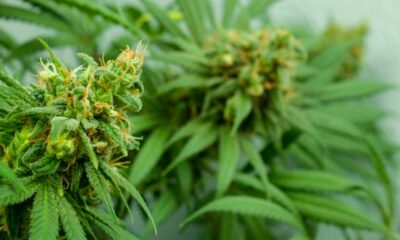
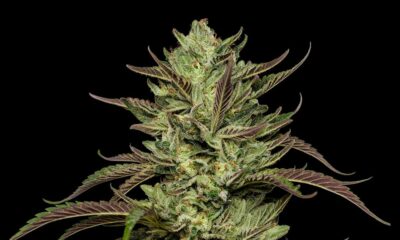
A CBD flower is the dried female inflorescence of a hemp variety (Cannabis sativa L.), selected for its high cannabidiol (CBD) content and very low THC content, which is below the regulatory threshold (0.3% in France). The exact term is «CBD-dominant hemp flower,» which has been shortened in common usage to «CBD flower.».
It has exactly the same characteristics as «traditional» cannabis flowers: the same resinous buds, the same aromas, and the same cultivation methods. Only the composition changes, and it is this composition that determines the product’s legal status. This distinction between legal and illegal—based on a THC level invisible to the naked eye—explains most of the confusion, enforcement efforts, and controversies that we detail below.
CBD flower or CBD blossom?
CBD is a molecule—cannabidiol—not a plant. Strictly speaking, therefore, there is no such thing as a «CBD flower,» just as there is no such thing as a «vitamin C apple.» The most accurate term is «CBD-dominant hemp flower,» and «CBD flower» is the short form—which is the term we use in this guide.
«However, the terms »CBD flower« and »CBD blossoms” are still widely used, both in stores and in search results. They refer to exactly the same product.
In this guide: the composition of a CBD flower, its history, the legal framework in France, the different types, criteria for making the right choice, the major strains, consumption, precautions, and frequently asked questions.
What's in a CBD flower?
A CBD flower contains mainly CBD, but also dozens of other compounds: secondary cannabinoids, terpenes and flavonoids. It is their combination—rather than the CBD content alone—that gives each flower its unique profile.
| Family | Examples | What You Need to Know |
|---|---|---|
| Major Cannabinoids | CBD, in its acid form (CBDA) in the raw flower | CBDA is converted into CBD when heated (decarboxylation). Commercially available flowers typically contain between 5 and 20 percent CBD, and sometimes more, depending on the variety and growing conditions. |
| Minor cannabinoids | CBG, CBC, CBN, CBDV | Present in small amounts. CBN is formed primarily when THC ages and oxidizes. |
| THC | THC and THCA | Must remain below the legal limit. When analyzing, check for total THC (THC + THCA × 0.877). |
| Terpenes | Myrcene, limonene, β-caryophyllene, pinene, linalool | Contribute to the aroma and flavor: earthy, citrus, peppery, pine, floral. |
| Flavonoids | Cannaflavins | Pigments in the plant; these have been studied but are still poorly documented in the flower. |
Terpenes break down when exposed to heat and light. A flower with little scent is often one that has been dried improperly or is too old: the scent is a key indicator of freshness.
The hypothesis of the’entourage effect, a theory proposed in the late 1990s, suggests that these compounds may be more effective when used together than when used alone. It is an appealing theory but remains a subject of debate: we take stock of the situation in The "halo effect": myth or reality?. For the molecule itself, see our page Definition of CBD and the comparison THC and CBD.
The History of CBD Flowers
CBD flower is a relatively new product, first appearing in the 2010s, but its roots go back to the chemistry of the 1940s and a handful of European breeders in the early 2000s. The details of this history come mainly from the breeders’ own accounts, and some points remain a matter of debate.
1940–1960: The Discovery of CBD
CBD is isolated for the first time in 1940 by the American chemist Roger Adams. In 1963, Raphael Mechoulam and his team in Israel determined its chemical structure a year before doing the same for THC. In the 1980s, the same team conducted the first trials using CBD oil to treat epilepsy.
The therapeutic potential of CBD was recognized much later: in 2018, The U.S. Food and Drug Administration (FDA) approves Epidiolex, the first medication made from purified CBD, for certain forms of severe epilepsy. But for there to be so much CBD-dominant hemp, it took breeders—those geneticists who have created the strains of yesterday and today. And contrary to what one might think, they don’t come from California—you have to look to Spain.
The 2000s: Spanish breeders
In 2004, at the Spannabis, Jimi, the founder of Reggae Seeds, bought a packet of New York City Diesel seeds from Soma. From the plants grown from that batch, he selected three males, one of which stood out for its very pronounced Diesel aroma. This male plant was used in several foundational crosses, including Juanita la Lagrimosa and Kalijah. This led to the creation of iconic Reggae Seeds strains, such as Dancehall (Juanita la Lagrimosa × Kalijah) and Dub (Critical Mass × Kalijah). All evidence suggests that the original Diesel male passed on the CBD gene to some of its offspring.
That is where the Cannatonic, selected by Jaime of Resin Seeds in 2008. Its lineage was long described as an MK Ultra × G13 Haze cross; the breeder has since corrected this and traces it back to the Reina Madre × New York City Diesel lineage. The result was unpredictable and revolutionary, with phenotypes exhibiting a wide range of THC:CBD ratios (1:1, 2:1, or even 24:1).
The following year, at Spannabis 2009, Jaime had several strains from the same batch tested, including Cannatonic, Dulce Canna (Remedy), and Picantona (Dieseltonic). Their high CBD content—unexpected at the time—was a revelation. Between 2009 and 2010, he devoted all his resources to this endeavor and launched the first global campaign to promote a CBD-rich strain.
2009–2010: The CBD Crew
Jaime talks about it with Shantibaba, who was then the head of Mr. Nice Seedbank. From their discussions, the CBD Crew was born—a collaboration between Resin Seeds and Mr. Nice, with a clear goal: to develop CBD-rich strains for medicinal use.
From a cross between Cannatonic and a male Afghan/Skunk from Shantibaba, two genotypes with a 1:1 THC:CBD ratio were isolated: the indica-dominant Z6 and the sativa-dominant Z7. However, not all of their offspring express CBD. The breeders concluded that, to stabilize CBD, a pure THC genotype must be crossed with a pure CBD genotype. So they crossed THC strains with Dulce Canna, resulting in the CBD Crew’s first stable strains: CBD Critical Mass, CBD Shark Shock, CBD Mango Haze, CBD Skunk Haze, CBD Medihaze, and others.
For the first time, a seed bank is offering an entire collection in which all offspring contain more than 4% CBD—and always more CBD than THC. This consistency lays the groundwork for a new breeding standard. It quickly attracts other seed banks, and the genetics spread: to the United States, where they gave rise to strains such as CBD OG Kush and CBD Scout Cookies, and then to Israel.
2011–2017: Switzerland Transforms CBD into a Consumer Product
In 2011, Switzerland stopped classifying hemp and its derivatives containing less than 1% THC as narcotics. One percent may not seem like much, but it’s enough for farmers to experiment with new strains without fear of exceeding the 0.3% threshold that typically distinguishes legal hemp from cannabis in Europe. The boom began in 2017, when raw cannabis becomes legal to produce and sell as long as the THC content remains below 1 percent: the number of registered producers rose from five in early 2017 to 630 in 2018.
The result: a product that looks like cannabis, smells like it, and is consumed like it—but is legal. For the first time in Europe, CBD is no longer just a wellness product sold as oil: it’s an experience for the consumer, who can see and touch a flower. The Swiss model is inspiring neighboring countries, and demand for CBD flowers is spreading across the continent.
2018–2022: France Discovers CBD Shops, and the Legal Battle Begins
The pioneers of CBD flower sales in France emerged in 2018. Television networks are reveling in the first store openings, with hours of waiting in line. The government, caught off guard, responds with inspections, seizures, and legal proceedings.
The first highlight is the’Kanavape case. A CBD e-cigarette ends up before the Court of Justice of the European Union, which will hear the case on November 19, 2020 that CBD is not a narcotic and that France cannot ban its sale without a solid justification. A order of December 30, 2021 then attempted to ban the sale of raw flowers and leaves. The judge presiding over summary proceedings at the Council of State suspends him on January 24, 2022, and the Council of State overturned it on its merits on December 29, 2022.
Today: A European Market, a Still-Unstable French Framework
The original strains—Cannatonic and the CBD Crew hybrids—have become the cornerstones of the CBD industry, further developed by breeders around the world. Today, stores carry American and South American strains, produced using cheap labor and sold at very low prices per kilogram. In France, however, many producers focus instead on quality and small-scale production, often sold locally, while the vast majority of CBD consumed is still imported (80 to 85 percent, according to industry figures we reported in our article from January 2026).
Europe remains unharmonized: each country sets its own THC threshold, and the rules are changing rapidly, as shown by Italy. In France, the regulatory framework remains unstable (see below), and CBD has become the face of legal, mainstream, and increasingly accepted cannabis. Some pioneers now lament the commercial hype surrounding CBD and see players who were initially focused on healthcare shifting into the industry simply for financial gain.
CBD Flowers: What the Law Says in France
As of November 13, 2026, the sale of CBD flowers derived from hemp varieties with low THC content is not prohibited in France, but the legal framework remains uncertain, and several pieces of legislation could change it.
What Has Been Achieved
- CBD is not a narcotic. The Court of Justice of the European Union ruled on this on November 19, 2020 (Kanavape case).
- The sale of unprocessed flowers is no longer prohibited. On December 29, 2022, the Council of State overturned the decree of December 30, 2021, which had banned its sale. It ruled that this general and absolute ban was disproportionate, noting that CBD has no psychotropic effects and is not addictive, and that rapid tests can identify narcotic varieties.
- The THC threshold is 0.3%. This applies to hemp varieties with a THC content not exceeding 0.3%, in the List of varieties authorized in Europe. Above that threshold, the flower is once again classified as cannabis under the Narcotics Act.
What Remains Unclear or Risky
- Inspections. A CBD flower looks like cannabis, and the THC content isn't visible to the naked eye. Keep the original packaging, the receipt, and the lab report for the batch: in the event of an inspection, these are your supporting documents.
- Driving. In France, the mere presence of THC in the body is sufficient to constitute an offense, with no tolerance threshold. CBD flowers contain traces of THC and can therefore cause a saliva test to come back positive. See Our Update on License Revocation and THC detection time.
- Minors. Reputable stores already refuse to sell to anyone under 18, and Bill No. 21 (below) proposes to explicitly prohibit such sales.
The Texts Under Discussion
| Text | What it entails | Where Things Stand |
|---|---|---|
| 2026 Budget, Section 23 | Restrict sales to tobacco retailers and authorized establishments; ban online sales; tax flowers at the same rate as tobacco | Repealed by the Assembly in November 2025. Our Article from January 2026 concludes that invoking Section 49.3 saved the industry for the year |
| Bill No. 21 (Senate) | Digital traceability registry («hemp registry»), labeling, registration, and operating permits for retail stores following training; prohibition on sales to minors; a tolerance of 2 ng/mL of THC in the blood for driving; taxation | Introduced on October 8, 2026, by Guillaume Gontard and sixteen senators; referred to the Committee on Social Affairs. First reading to follow. Our Analysis |
| 2027 Budget | The bill as submitted contains no provisions regarding CBD flowers. An amendment proposes a 20% VAT rate. | Under discussion in the Assembly. Amendments are still possible. |
To follow this story, see our feature CBD legal in France.
The Different Types of CBD Flowers
The cultivation method and size determine the appearance, aroma, and price of a CBD flower. Even within the same variety, two batches can therefore be very different.
Depending on the cultivation method
| Culture | Principle | What Sets It Apart |
|---|---|---|
| Indoor | Indoor cultivation, artificial light, controlled environment | Consistent quality, dense buds, distinct aromas. High energy costs, resulting in a higher price |
| Greenhouse | Natural light, supplemented as needed | A balance between quality and cost |
| Outdoor | Open field, one harvest per year | Large quantities and low prices. Quality depends on the weather and, above all, on the drying process. |
Depending on the format
- Whole flowers (heads) : the most beautiful pieces, the most expensive ones.
- Small buds : same plant, smaller buds, often cheaper for a similar profile.
- Trim and manicure sheets : more plant material, less resin. Since they are less expensive, they are best suited for herbal teas and other preparations.
- Pre-rolled : Ready to use. Check the actual amount of flower used and the composition of the paper and filter.
- CBD Resins and Hash : resin concentrates derived from the flower. See our guide to CBD resins.
The most important factor isn’t on this list: it’s the quality of the drying and curing processes, which preserve the terpenes and prevent mold. This is the subject of the next section.
How to Choose CBD Flowers
Five checks are enough to weed out most substandard products: laboratory analysis, appearance, smell, texture, and price. The first is the most important, because it alone can prove what the batch contains.
| Verification | A good sign | A bad sign |
|---|---|---|
| Laboratory Analysis | Certificate from an independent laboratory, including the package’s lot number, CBD content, total THC (THC + THCA × 0.877), pesticides, heavy metals, and microbial contamination | No certificate, or a certificate without a lot number or date, or a laboratory affiliated with the seller |
| Appearance | Intact buds, trichomes as shiny as crystals, orange or brown pistils, little dust | White or gray, cotton-like down (mold), crushed material, copious amounts of dust |
| Odor | Distinctive and characteristic: earthy, citrus, pine, spicy… | The smell of hay, ammonia, mold, or artificial fragrance |
| Touch | Flexible—neither brittle nor spongy | Crumbles into dust, or is damp and sticky |
| Price | Consistent with the cultivation method and format | Unusually low price per gram: often old stock, trimmings, or low-quality crop |
Warning Signs
- A test result indicating a THC level close to or above 0.3%. The product can then be legally considered cannabis.
- «Enriched» flowers. Some flowers are sprayed with distillate, isolate, or flavorings to boost their THC content or scent. A uniformly glossy appearance and an artificial odor are telltale signs.
- The promise of a euphoric high. It may contain synthetic cannabinoids or an excessively high THC content. See new synthetic cannabinoids.
- Therapeutic claims. A consumer product cannot claim to treat or cure a disease.
- No producer or country of origin identified. Without traceability, it is impossible to know where a batch comes from or to trace it back in the event of a problem.
CBD-dominant strains and genetics
CBD flowers are descended from a small number of founding strains. Knowing these families helps explain why flowers with different names look alike, and why a name says almost nothing about the contents of a batch.
| Lineage | Origin | Why She Matters |
|---|---|---|
| Cannatonic | Resin Seeds (Spain) | The first widely available CBD strain, with phenotypes exhibiting a wide range of THC:CBD ratios |
| Remedy (Dulce Canna) | Resin Seeds Seed Pack | Used as a CBD-rich parent in CBD Crew crosses |
| CBD Crew (CBD Critical Mass, Shark Shock, Mango Haze, Skunk Haze, Medihaze) | Resin Seeds and Mr. Nice Seedbank | The first stable strains containing more than 4% CBD and more CBD than THC |
| ACDC and Charlotte’s Web | United States | ACDC is said to be a phenotype of Cannatonic, and the Charlotte's Web is often associated with it |
| Sour Tsunami | Lawrence Ringo (United States) | Derived in part from the New York City Diesel, the same lineage that introduced CBD to Europe |
An important note: These historic strains have THC levels of several percent, well above the 0.3% threshold. They would not be marketable in France as CBD flowers. The flowers sold in stores come from later selections, bred to retain CBD while reducing THC to very low levels.
Why the Name of a Flower Is Misleading
Many CBD flowers take their name or aromatic profile from well-known THC strains (Purple Haze, Amnesia, Gorilla Glue…). The name gives you an idea of the taste and smell, but not of the genetics or CBD content. To compare two strains, rely on the batch analysis, not the name.
To explore other genetics, see our directory of cannabis varieties.
How to Use and Store a CBD Flower
How you consume CBD flowers affects the amount of CBD absorbed, how quickly it takes effect, and the health risks. There is no standard dose: CBD flowers are not a medication. Start with small amounts and wait before taking more. Our guide How to Use CBD describes each method in detail.
| Fashion | Principle | Good to Know |
|---|---|---|
| Vaporization | The flower is heated (to about 160 to 200 °C) without burning it | Avoid burning. Ask for a flower vaporizer with adjustable temperature settings. |
| Infusion | The flower is steeped in a hot liquid | CBD does not dissolve well in water: add a fat (whole milk, oil). The flower must first be decarboxylated |
| Kitchen | The flower is incorporated into an oil-based mixture | Same rule: decarboxylate first. See our guide to decarboxylation |
| Combustion | The flower is smoked | The most common method, and the one that is hardest on the respiratory tract. Mixing the flower with tobacco adds nicotine and leads to addiction: best avoided |
How to Keep Your Flowers Fresh
- A airtight glass jar, filled three-quarters full, and kept away from light and heat.
- A stable humidity level, around 60%. A humidity-regulating packet helps maintain it.
- No refrigerator or freezer: humidity and temperature fluctuations damage the buds and trichomes.
- Keep the jar closed as much as possible: terpenes evaporate, and when a flower loses its scent, it also loses some of its appeal.
Effects, Risks, and Precautions
A CBD flower does not get you «high»: CBD has no psychotropic effects, and the Council of State noted in 2022 that it is not addictive. That does not mean it is without effects or risks.
What We Know About the Effects
The most commonly reported effects include a feeling of relaxation, as well as drowsiness, fatigue, and digestive issues. Solid clinical evidence exists for a medication made from purified CBD, which is prescribed for certain severe forms of epilepsy. For the flower sold in stores, the evidence of any benefit is much weaker. See our page on the effects of CBD.
Precautions
- Medications. The CBD may interact with certain medications, because it slows down their metabolism in the liver. Ask a pharmacist or doctor for advice if you are taking medication on a regular basis.
- Pregnancy and breastfeeding. Consumption is not recommended.
- Minors. CBD flowers are not intended for anyone under the age of 18.
- High doses. In clinical trials of the drug, high doses were associated with elevated liver enzymes.
- Driving. Traces of THC in a CBD flower can cause a saliva test to come back positive (see the legal framework above).
- Smoke. Smoking exposes you to combustion byproducts, whether or not tobacco is involved.
A CBD flower is not a substitute for medical treatment or advice. If you have a medical condition, are undergoing treatment, or have any concerns, consult a healthcare professional.
Where to Buy CBD Flowers
Choosing a good store means checking what it’s willing to show. The same criteria apply to both brick-and-mortar and online stores.
- Batch-by-batch laboratory analyses, which can be viewed before purchase, not just upon request.
- The Producer and the Origin listed for each flower.
- Complete Legal Notices : company name, SIRET number, address, contact information.
- This sale is for adults only.
- No therapeutic claims on the product pages.
- A clear return policy.
- In-store: the opportunity to see and smell the flower before purchasing, and to request the lot certificate.
To get started, our marketplace brings together CBD flowers from several vendors.
Frequently Asked Questions About CBD Flowers
Are CBD flowers legal in France?
Yes, provided it comes from a hemp variety with a THC content of no more than 0.3%. Since the Council of State’s decision on December 29, 2022, the sale of raw flowers is no longer prohibited. However, the legal framework remains uncertain: see the section on the law.
What is the difference between CBD flower and cannabis flower?
The THC content. CBD flowers contain less than 0.3% THC and are not classified as a controlled substance. «Traditional» cannabis flowers contain much higher levels of THC. Our article explains the The difference between CBD, hemp, and cannabis.
Does CBD flower get you high?
No, CBD does not have any psychoactive effects. However, CBD flowers may contain traces of THC, and some flowers sold as «CBD» are actually enriched with or contain excessive amounts of THC—which is why lab testing is important.
Which CBD flower should you choose?
There is no such thing as the perfect flower for everyone. Start by having the batch tested in a lab, then assess its appearance, smell, and texture. The growing method (indoor, greenhouse, outdoor) primarily affects the price and consistency. See the section on how to choose.
Can you drive after using a CBD flower?
It's risky. In France, the mere presence of THC in the body is enough to constitute a violation—there is no tolerance threshold—and traces of THC from a CBD flower can cause a saliva test to come back positive.
Should we say «CBD flower» or «flower of CBD»?
Both terms are used, but «CBD flower» is more accurate: CBD is a molecule, and the product is a CBD-dominant hemp flower.
How long does a CBD flower last?
When thoroughly dried and stored in an airtight jar away from light, it retains its qualities for several months. It gradually loses its terpenes—and thus its smell and taste.














The United States Bans «Non-Natural» Synthetic Cannabinoids; THC Remains Legal Until December 11

Morocco's first CBD medication for epilepsy hits pharmacy shelves

November 2026's CBD Highlights: 10 Flowers and Rosins to Discover from 5 French Producers

Vanuatu is still trying to get its medical cannabis sector off the ground after years of delays

Snoop Dogg Opens His Cannabis Club in Barcelona

In Texas, Democrats and Republicans are beginning to find common ground on the legalization of cannabis

Proposition 215, 30 Years Later: When Cannabis in California Was a Movement, Not an Industry

Village Farms Expands Cannabis Production in the Netherlands while its European Business Jumps by 75%

Bedrocan's bankruptcy delays medical cannabis reform in the Netherlands

