
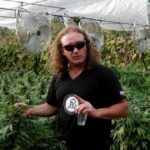
Scott Blakey, also known as Shantibaba is a cannabis breeder and grower. It was around the age of 13 that this Australian-born man discovered cannabis with a few friends. Shantibaba became passionate about the plant and began growing cannabis in earnest in the mid-1970s, «driven by an insatiable appetite for smoking the plant, and never having been able to find a satisfactory product on the black market,» in his own words.
With a master’s degree in biology, Shantibaba traveled the world—particularly Asia—in the 1980s. He traveled from village to village on his 1964 Royal Enfield Bullet (a popular motorcycle in Asia at the time) in search of the best seeds to grow. India, Afghanistan, Pakistan, Burma, and even Bhutan—the many encounters he had allowed him to find pure varieties and learn different cultivation techniques from local growers and farmers.
Scott settled in Amsterdam in the early 1990s, bringing with him a large and impressive collection of cannabis seeds. He began working with Nevil Schoenmakers (the "cannabis king" of the 1980s), with whom he founded the Green House Seed Company, and a Dutch partner named Arjan Roskam in 1994. Shantibaba worked on and left his personal mark on the «white» strains (White Widow, White Rhino, White Russian, etc.)
Shantibaba is the creator of the famous «White Widow» strain. In fact, it was by working with seeds he had brought back from Asia and seeds from his colleague Nevil (founder of the Seed Bank, which later became Sensi Seeds) that he developed the famous strain in 1994.
The famous Sativa(40%)/Indica (60%) hybrid is, according to research by our colleagues at Seedman, composed of a pure Brazilian Sativa (possibly Manga Rosa) and a hybrid from the Kerala region of southern India.
Shantibaba discovered the parent strain of White Widow in the remote mountains of Kerala. After sharing some weed with a farmer, the farmer gave him a tour of his farm and introduced him to a hybrid that the village had been growing and breeding for many years to increase resin production.
It was by crossing these two strains that Shantibaba and Nevil created White Widow. This strain won the Cannabis Cup in 1995. Shantibaba continued to work at Greenhouse until 1998. Following disagreements with his Dutch partner, he sold his shares in Greenhouse to Arjan and then moved to Switzerland.
However, the origin of this strain has been the subject of much debate since the 1990s. In fact, Ingemar, another employee at Green House Seed Company, gave an interview to a German cannabis magazine in which he claimed to have helped develop White Widow. Some Dutch growers support this theory, but there is no historical data to confirm it. Ingemar claims that the seeds that gave rise to White Widow were found by accident in a package of hashish, and that efforts to stabilize the plant took nearly six years—meaning White Widow was discovered in 1988!
To date, there is no evidence to support this theory. Shantibaba’s account therefore remains the most reliable, as he was indeed the first to document the plant in 1995, and he still possesses the original parents of the White Widow.
To put an end to this controversy, Shantibaba and Mr Nice Seedbank have renamed White Window as Black Widow, and the seeds currently on the market are derived from the original parents. It is therefore possible that the White Widow strains offered by many seed banks are not directly derived from the original strain created by Shantibaba in 1995.
Thanks to his status as the world’s top breeder, Shantibaba meets many prominent figures. It was in 1996 that he first shared a few beers with Howard Marks better known as Mr. Nice at the Cannabis Cup. After selling his shares in Greenhouse, Shantibaba retrieved all his mother and father plants and founded a new seed bank with Mr. Nice: Mr. Nice Seedbank. They were later joined by Nevil, who had also sold his shares in Greenhouse and transferred his seed bank to Ben Dronkers of Sensiseeds. They then began creating new strains under the MNS banner.
Alongside this project, he created Gene Bank Technology : a company focused on related businesses such as hemp beer, cloning nurseries, essential oil extraction, and seed production. After four years of normal operations, all of GBT’s assets were seized by Swiss prosecutors who sought to eliminate hemp in early 2003. Trouble began for Scott; he was imprisoned for 14 months before being released in late 2004. He managed to recover his mother plants and was thus able to continue producing for MNS. The other activities were abandoned following this misadventure.
Mr Nice Seedbank and Resin Seeds joined forces in 2009 with the goal of creating strains for medical use. The CBD Crew began offering seeds that produce plants with high CBD content and are aimed directly at patients and individuals using cannabis for medical purposes. Unlike MNS’s creations, where Shantibaba develops strains based on his own preferences, CBD Crew’s creations are designed to meet strict specifications and the needs of patients. CBD Crew now brings together several seed banks with the goal of offering as many varieties as possible with high levels of CBD.
After more than 40 years in cannabis genetics, Shantibaba remains one of the most talented breeders in the world. He has likely played a role, directly or indirectly, in the creation of one of your favorite strains.


The history of modern cannabis cannot be told without mentioning the Netherlands. Often associated with the coffeeshops of Amsterdam, the country has also played a central role in...
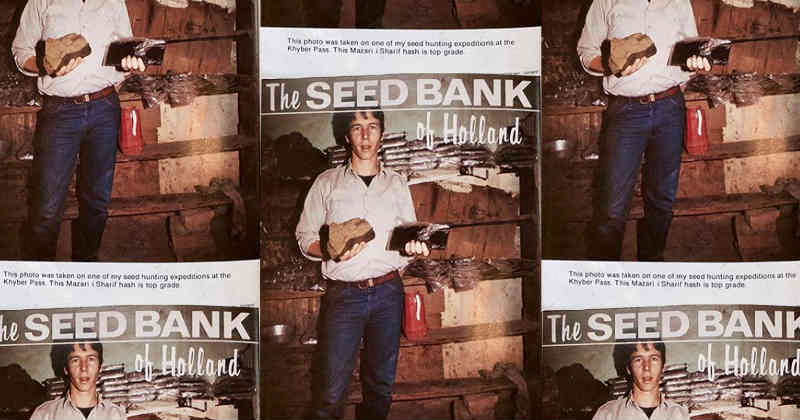
Nevil Schoenmakers, who was dubbed “The King of Cannabis” by High Times magazine, died last Saturday at the age of 62 in Australia...
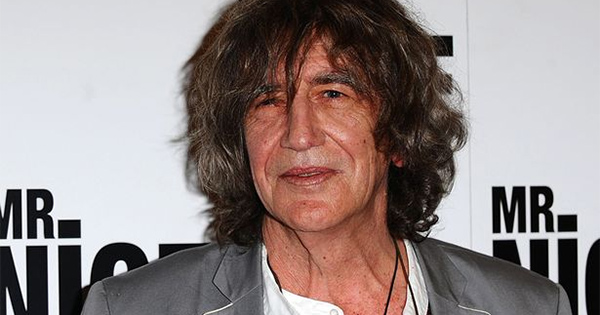
Tributes are piling up around the passing of cannabis legalization campaigner and CBD Crew co-founder via seed bank Mr Nice Seedbank, Howard...




