
Cannabis legislation in Latin America has evolved much more rapidly than in the Americas. Several countries have decriminalized possession, authorized the use of cannabis for medical purposes, or regulated its commercial cultivation and sale to enable adults to have access to it.
In most Latin American countries, the cultivation, distribution and consumption of cannabis are prohibited. However, several countries have decriminalized the possession of small quantities for personal use. Argentina, Chile, Colombia, Costa Rica, Ecuador, Mexico and Peru have decriminalized cannabis. In countries that have decriminalized possession of cannabis for personal use, you risk a fine, but you won't be arrested or imprisoned. In other countries, the law only allows the cultivation of cannabis for personal use if it is intended for medical purposes. These countries include Argentina, Brazil, Chile, Colombia and Peru. So not all Latin American countries allow you to legally purchase weed seeds for indoor and outdoor cultivation. Before embarking on such an activity, check the legislation in force in your country of residence.
Cannabis consumption is currently legal in Uruguay, Puerto Rico and Panama. However, Uruguay was the first Latin American country to regulate cannabis from production to sale for people aged 19 and over. In Puerto Rico and Panama, cannabis can be consumed in private residences or other places where smoking is legally permitted.
The medical cannabis industry is flourishing in the region. Many Latin American patients are taking advantage of the therapeutic benefits of cannabis to treat or manage their health problems.
In Colombia, where medical cannabis was legalized in 2017, the government has been working to expand access by allowing home cultivation, establishing new policies to encourage the production and export of CBD-dominant cannabis strains, and rapidly registering companies to produce medical cannabis. The country has legalized a total of 420 different medical conditions for treatment with medical cannabis, including PTSD, chronic pain and Parkinson's disease. Patients must first obtain a doctor's recommendation, then purchase cannabis from licensed growers who cultivate medical cannabis for regulated commercial distribution.
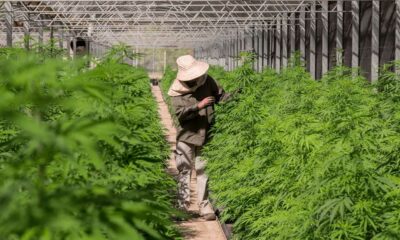
In Latin America, some countries have made it legal to grow cannabis plants if you intend to use the flower or extracts as a medical treatment. Argentina, Brazil, Chile, Colombia, Ecuador and Peru allow small quantities of cultivation for personal or medical use. The law allows people to grow up to 6 cannabis plants at home, providing enough medicine for a small family. If you wish to grow more than six plants, you can apply to the government for a permit. Each household can have up to 480 grams of cannabis flowers and 240 grams of extracts at any given time.
In Latin America, marijuana can be consumed in some countries for medical or personal use. In Panama and Puerto Rico, you can consume cannabis provided you are in a private residence. Other countries such as Colombia and Uruguay allow medical use, while Chile has decriminalized possession of small quantities. Argentina and Peru have laws allowing people to grow their own cannabis at home for medical use. By 2023, all Latin American countries will have regulated the medical cannabis industry, with the exception of Mexico, Honduras, Nicaragua and El Salvador. These countries currently have no laws to regulate cannabis.


Chilean cannabis clubs have proliferated over the past decade, but their expansion has followed a particularly uneven geographic pattern. A new study...


Uruguay is once again considering allowing foreign tourists to purchase legal cannabis. First discussed in 2021, this opening of the regulated market could this time...

Argentina has just established a clearer commercial pathway for hemp flowers and biomass while maintaining the national THC threshold of 1%.


The Mexican Supreme Court recently clarified one aspect of its «non-regulation» of cannabis. In a ruling handed down on September 10, the country’s highest court...


In El Guarco, in the province of Cartago, Costa Rica, Vantage Point Global has just opened what it describes as the country’s first laboratory dedicated to...


Chile has recognized the medical use of cannabis for several years and, under certain conditions, allows its cultivation for therapeutic purposes. But between a prescription and...


As regular Newsweed users will have noticed, we've been on hiatus for the past few weeks. But since there's no news to wait for us, here's a recap...


For the first time, the world's largest sporting event is taking place in countries where the cannabis market is regulated.


Uruguay was the first country in the world to legally regulate the entire cannabis industry. Yet, ten years later, medical cannabis still hasn't...


Researchers at the Federal University of Viçosa (UFV) in Brazil are studying whether hemp fibers could help improve the quality and shelf life of...


In Brazil, a coalition of researchers and industry stakeholders is challenging the current 0.3% THC limit for industrial hemp, arguing that it...


The debate over the legalization of cannabis in Argentina has returned to the national political agenda following the introduction of a bill that...


Uruguay's cannabis legalization model, once considered an innovative global experiment, is entering a new phase. More than a decade after becoming...


The election of José Antonio Kast to the presidency of Chile confirms an assertive turn to the far right. After defeating Jeannette Jara with 58 % of the...


On January 28, the collegiate council of Anvisa, the country's national health monitoring agency, approved a series of regulatory changes that extend access to...


13 years after the legalization of cannabis, the legal market in Uruguay is still trying to structure itself. The latest figures released for the year...


Brazil's agricultural research agency, Embrapa, has received authorization from the Anvisa health agency to conduct research on Cannabis. The agency hopes to create its first-ever cannabis bank...


After several years of waiting, Panama's Ministry of Health (MINSA), via the National Directorate of Pharmacy and Medicines (DGFD), has published the...


With Decree 1138 of 2025, published on October 27 by the national government, Colombia has officially authorized the use, production and marketing of flowers...


Colombian President Gustavo Petro has publicly called on U.S. President Donald Trump to end the ban on cannabis and replace it with a...




