
Purple Haze is one of the most famous cannabis strains in history, immortalized by Jimi Hendrix in 1967, even before cannabis culture was what it is today. A very dominant sativa resulting from a cross between a Haze and a Purple Thai, known for its intense, almost psychedelic cerebral effects and distinctive purplish buds. Born in Amsterdam in the 1960s, Almost 60 years later, it remains one of the world's leading cannabis sativas.
Purple Haze and Jimi Hendrix: what's the real story?
In 1967, Jimi Hendrix published Purple Haze, one of the most emblematic songs of psychedelic rock. The song is often interpreted as a direct reference to cannabis, and this association has gone a long way to forging the legend of the variety.
The reality is more nuanced. Hendrix himself gave contradictory explanations of the title's origin: he evoked a dream, the color of the sky before a concert, or a science-fiction novel. But in the context of 1967, San Francisco, Summer of Love and the rise of psychedelic culture, the semantic shift from song to variety was inevitable.
What is certain is that the variety Purple Haze emerged in the grower circles of’Amsterdam around the same time, driven by the American Haze scene that was developing on the West Coast of the United States. Its official name as a variety came later, probably in the 1980s-1990s, as an explicit tribute to the song. Today, Purple Haze is grown and distributed notably by Sensi Seeds, one of Amsterdam's most historic seedbanks.
Is Purple Haze a sativa or an indica?
Purple Haze is a very dominant sativa, estimated at around 85% sativa / 15% indica. It is one of the purest sativas available in commercial seed form.
This sativa dominance is directly evident in its profile:
- Elongated morphology tall plant (120-180 cm), loosely structured pyramid-shaped buds, typically sativa
- Long flowering 63 to 70 days, characteristic of Haze lines
- Pronounced cerebral effects accelerated thinking, associations of ideas, slight perceptual distortion, nothing in common with the bodily stone of indicas
It is a variety of day or afternoon, Clearly not recommended before bedtime. Its effect is not one of sedation, but of a slight drop in energy, so it doesn't keep you on the couch.
Appearance: why is Purple Haze purple?
Purple Haze's violet color is one of its most recognized visual signatures, and deserves some explanation.
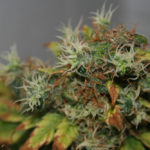
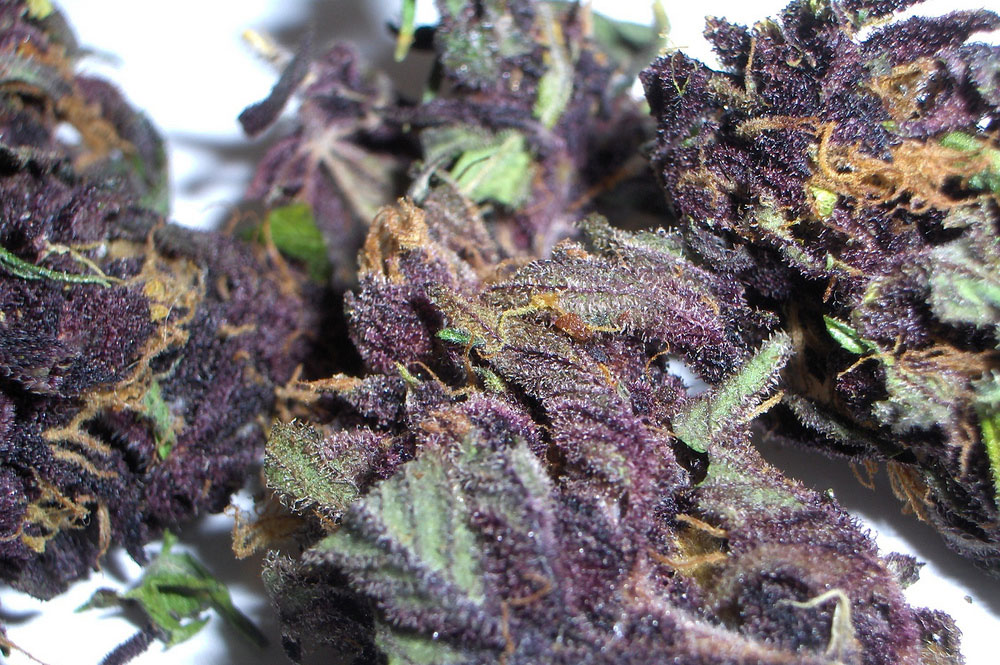
The purple and lavender hues in cannabis are due to the anthocyanins, hydrochloride pigments present in certain phenotypes. These pigments are expressed when night-time temperatures fall at the end of flowering, This triggers their production in leaves and sometimes buds. It's a mechanism similar to the one that turns tree leaves red in autumn.
This is an important point: anthocyanins have no effect on taste or aroma. Purple Haze has no grape or red fruit flavour despite its color, contrary to what many consumers assume. The color is aesthetic, not gustatory.
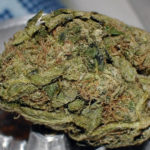
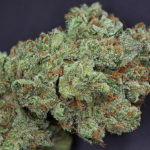
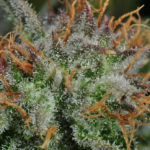
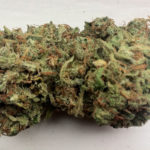
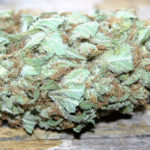
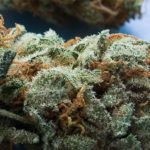
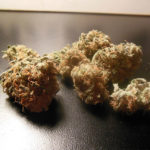
Morphologically, its buds are medium to large, pyramid-shaped, with downy leaves in a patchwork of mossy green and deep purple, covered with the sticky trichomes responsible for its psychoactivity.
Aromas and terpenes of Purple Haze
Purple Haze's aroma profile is true to its Haze heritage: earthy, hashy, with tart berry notes in the background. Not brightly fruity or citrusy, this is a variety with a wild, herbaceous character.
- On the nose Haze: slightly musty and damp when cold, the tart, berry notes appear when warm. Grinding the flowers releases the herbaceous aroma characteristic of the Haze lineage.
- In the mouth Smoke: smooth, easy smoke, sweet-hashy taste on exhale.
Its dominant terpenes :
- Myrcene brings earthy, musky notes, lightly reinforces body relaxation
- Ocimene Sweet, slightly fruity, herbaceous notes, characteristic of the Haze lineage
- Pinene Resinous and pine notes contribute to mental clarity and partially counterbalance the sedative effect of myrcene.
What are the effects of Purple Haze?
Purple Haze hits fast and hard. The first effects appear shortly after inhalation, with physical signals characteristic of powerful sativas: slight pressure at the temples, flushing of the cheeks. These sensations quickly fade, giving way to the main effect.
Cerebral phase (dominant effects) : The high is above all mental. Thoughts speed up, associations of ideas multiply in unexpected directions. External stimuli (sounds, images, sensations) take on a new dimension. It's this quasi-psychedelic profile that has made Variety's reputation and its link with the psychedelic culture of the 1960s.
Body phase (side effects) : Unlike many sativas, Purple Haze develops a notable body component, not sedative, but stimulating and slightly trippy. Smokers describe a new connection with their bodies rather than a relaxation. This combination makes it a popular variety for physical and creative activities.
Possible side effects:
- Slight pressure at temples at start of effect (transient)
- Recurring thoughts that are difficult to stop, not recommended for people prone to paranoia
- Red eyes and dry mouth
- Decrease in energy at the end of the effect (no couch-lock, but perceptible descent)
Avoid in the evening Purple Haze is not conducive to sleep. Consumed late, it risks leaving the user in a state of mental alertness incompatible with sleep.
Medical uses
Purple Haze is recommended for therapeutic use in :
- Chronic stress and mild anxiety in moderate doses, the euphoric effect is effective in muffling stress (caution: in high doses, the effect may be reversed)
- Depression Stimulating mood and boosting brain power to combat mild to moderate depressive episodes
- Attention disorders Focused brain phase concentration helps some users stay on task
- Lack of appetite moderate orexigenic effect
- Mild inflammations headaches and cramps can be soothed by the background analgesic effect
⚠️ Purple Haze is not recommended patients prone to paranoia or severe anxiety disorders, due to its recurrent and intense thought patterns.
Growing Purple Haze
Purple Haze is a variety accessible to intermediate growers, A moderately long flowering period for a sativa.
Indoors :
- Output: 400-500 g/m².
- Flowering: 63-70 days
- Vigorous growth, may require LST or topping to control height
- To express violet hues: lower night-time temperatures to 16-18°C at the end of flowering.
Outdoor :
- Harvest: mid to late October, depending on climate
- Height up to 180 cm in optimum conditions
- Enjoys temperate to warm climates; tolerates temperature variations relatively well
Varieties close to Purple Haze
- Haze the mother strain, an even purer sativa profile
- Purple Thai second parent, Asian origins
- Super Purple Haze more powerful selection from the same line, slightly longer flowering time
- Purple Haze CBD low-THC version for the legal CBD market (similar aroma profile)
- Amnesia Haze: shares Haze heritage and cerebral sativa profile