
The differences between THC and CBD
THC and CBD are often compared, the most obvious difference being that the former produces psychotropic effects and the latter does not. But beyond their effects, what are the differences between THC and CBD ?
Chemical Structure
THC and CBD are two cannabinoids, chemical compounds secreted by Cannabis plants. These molecules are unique in that they mimic the effects of certain chemical compounds that our bodies produce naturally—called endocannabinoids—and activate our internal health systems. Simply put, cannabinoids act as messengers between cells to combat deficiencies in our endocannabinoid system.
When consumed, cannabinoids seek to bind to receptors in our bodies. Each cannabinoid has different effects depending on which receptor it targets. For example, THC targets receptors in the brain, while CBD targets receptors located throughout the body.
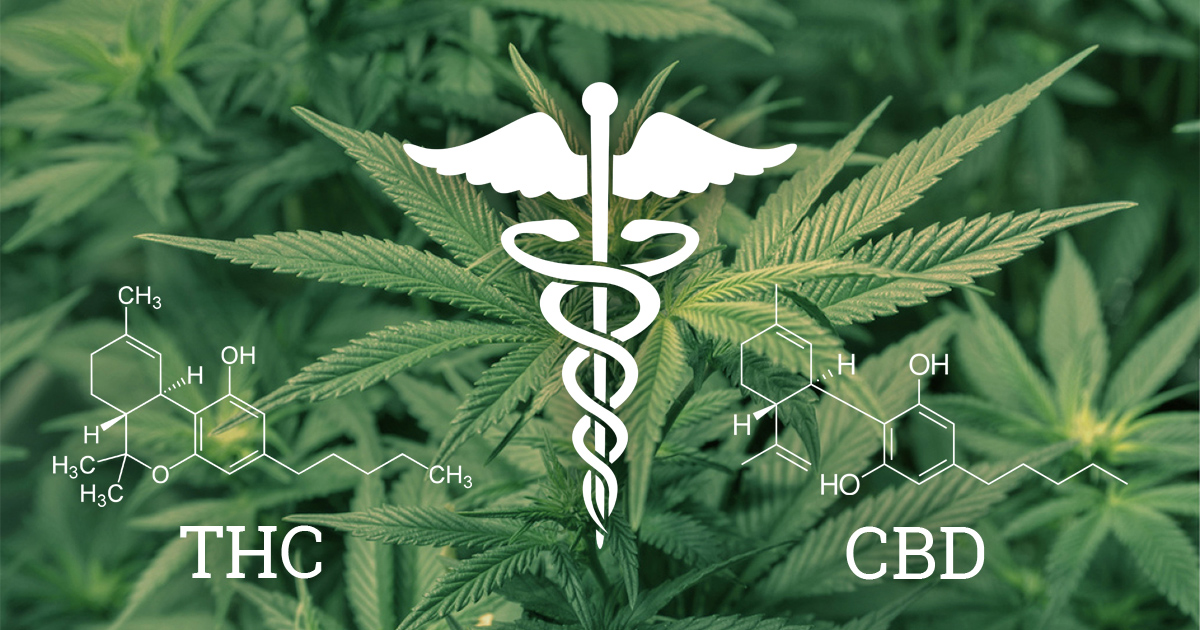
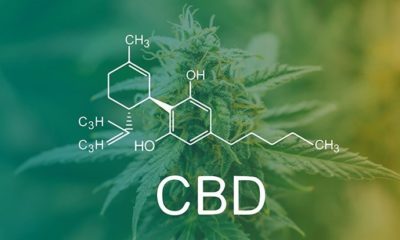
CBD and THC have the same chemical formula: 21 carbon atoms, 30 hydrogen atoms, and two oxygen atoms. The difference between them lies in the way the atoms are arranged. This tiny difference gives CBD and THC different chemical properties. This is also why they affect the human body differently.
How CBD and THC Affect the Body
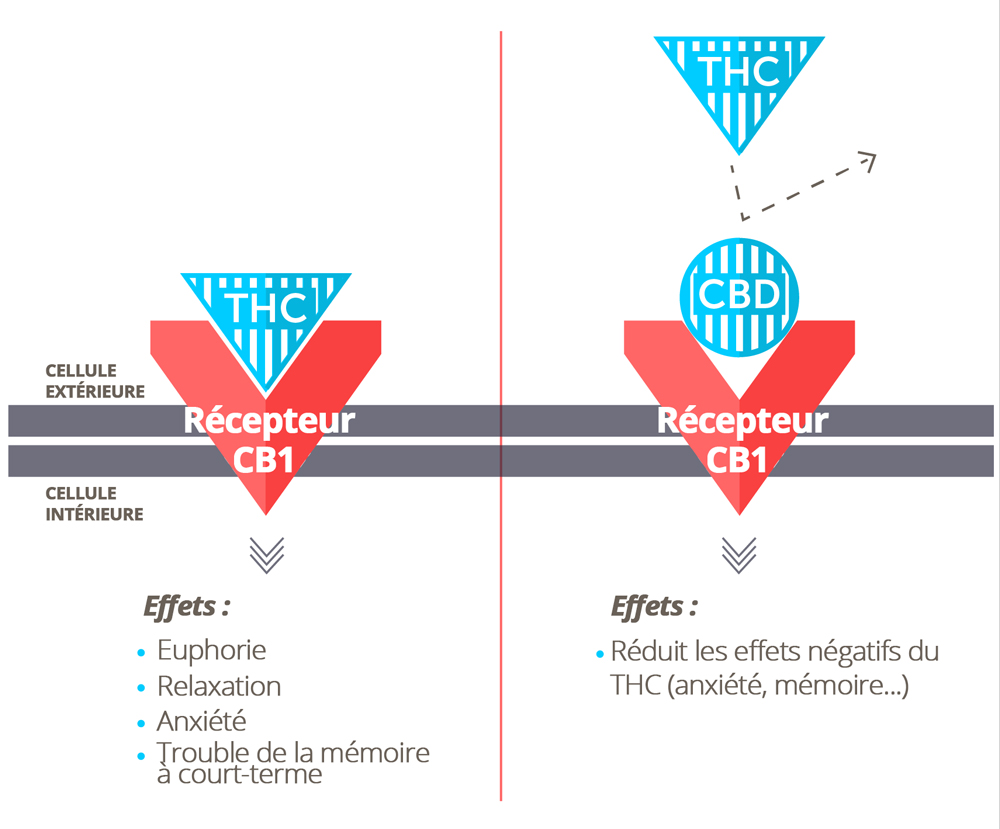
Both CBD and THC interact with the receptors of the endocannabinoid system, the two main ones being the CB1 and CB2 receptors. THC binds strongly to CB1 cannabinoid receptors, whereas CBD has a low affinity for these CB1 receptors.
To illustrate this, imagine cannabinoids as keys to a lock. The THC molecule is perfectly shaped to fit into the CB1 receptors. When this connection occurs, THC activates or stimulates these CB1 receptors. THC is called a CB1 receptor agonist.
THC partially mimics a neurotransmitter naturally produced by the human body, the’anandamide, also known as «the happiness molecule.».
Anandamide is an endocannabinoid that activates CB1 receptors. Animal studies have shown that anandamide can increase appetite and enhance the pleasure associated with eating.
It is likely responsible for some of the rewarding effects of exercise (for example, the «high rider»). Anandamide also plays a role in memory, motivation, and pain. THC is a «key» that is so similar to anandamide that it activates CB1 receptors, allowing it to produce those same feelings of happiness.
CBD, on the other hand, does not bind to CB1 receptors. It is classified as a CB1 receptor antagonist. As such, it does not act directly on CB1 receptors; rather, it further inhibits the activation of CB1 receptors by cannabinoids such as THC.
In other words, when you consume THC and CBD, THC directly stimulates the CB1 receptors, while CBD counteracts THC’s action at the CB1 receptor, thereby inhibiting THC’s psychoactive effects.
 Medical Effects of THC and CBD
 Medical Effects of THC and CBD
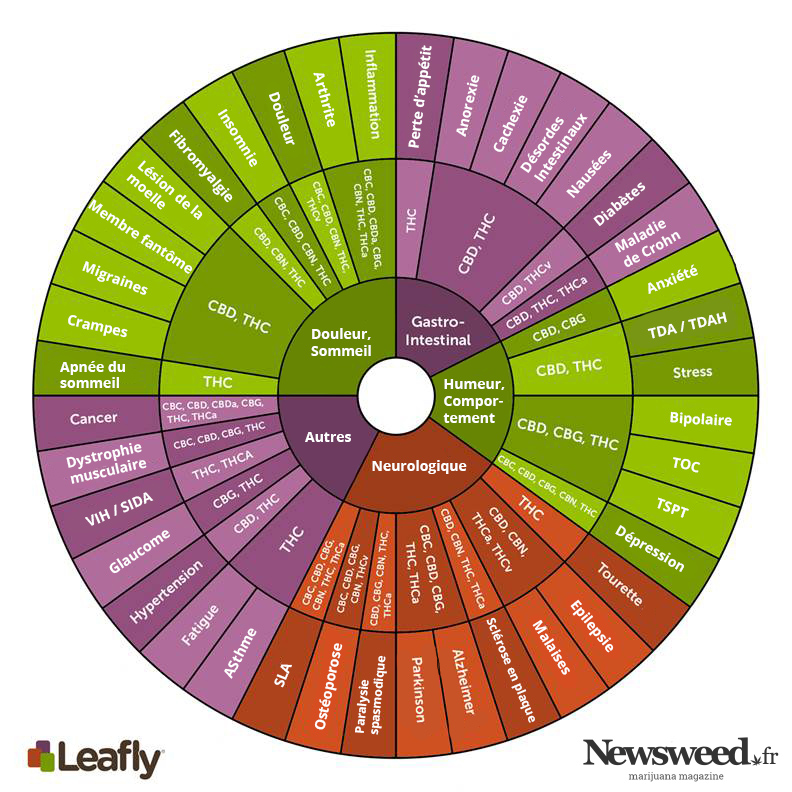
While THC and CBD have different effects, they are also used for medical purposes—either separately or in combination—and in different dosages depending on the condition. The cannabinoid wheel, as seen on Leafly and translated by us, shows the various cannabinoids associated with the desired effects.
Therapeutic Effects of THC and CBD
Generally speaking, people who take CBD products do so to relieve arthritis, Crohn's disease, diabetes, or multiple sclerosis. Some also say it helps them relieve anxiety, insomnia, and chronic pain associated with inflammation.
As for THC, it is used in countries where medical cannabis is legal to treat neuropathic pain, Parkinson’s disease, nausea, or to counteract the side effects of chemotherapy; to restore appetite in sick people; or to relieve intraocular pressure associated with glaucoma. When taken in high doses, however, it can cause anxiety and paranoia.
THC is the most popular cannabinoid and the one found in the highest concentrations in cannabis. The main cannabis strains available today have been cultivated and selected for their high THC content. Its psychoactive effects produce a rapid sense of euphoria. THC has been used to treat nausea, sleep disorders, and loss of appetite. When consumed in high doses, however, it can cause anxiety and paranoia.
When discussing the use of cannabis as a medicine in France, only the Sativex is currently authorized. Developed by GW Pharma, Sativex is an oral spray containing, among other ingredients, THC and CBD, at a concentration of 2.7 mg of THC and 2.5 mg of CBD per 0.1 mL of Sativex. The Sativex is not a synthetic cannabinoid but an extract from a cannabis strain developed specifically for this medication. It was scheduled to be marketed in France in 2015, but its launch has been blocked due to the excessively high price charged by the pharmaceutical company that produces it, even though it is already sold in 17 European countries. It is believed to provide relief to approximately 5,000 people suffering from multiple sclerosis.
As for THC, there is currently no legal access to natural THC, but a pilot program for medical cannabis is set to begin in France in 2020, which will likely lead to more formal legalization.
The Legality of THC and CBD
THC is classified as a narcotic in France. Access to it is therefore restricted to medical and research purposes. The CBD is legal in France.
THC-Rich Strains
Traditional cannabis strains contain more THC than CBD. Average THC levels in France are currently around 11%, but it is not uncommon to find strains with levels as high as 15–20%. The main effects of THC are as follows:
- euphoria
- relaxation
- altered senses (taste, hearing, smell, etc.)
- the urge to sleep
- increased appetite
These effects of THC are sought after by people who have trouble falling asleep or who experience nausea or even a loss of appetite due to chemotherapy. THC has also been found to be beneficial for people with multiple sclerosis in reducing spasms and pain.
Why Choose CBD?
If you’re feeling anxious—or simply because the effects of cannabis aren’t right for you—strains that are high in CBD and low in THC can provide certain benefits without making you feel “stoned.” The main effects of CBD-rich cannabis are:
- the reduction psychotic symptoms of schizophrenia
- relief of convulsions or nausea
- the reduction depressive symptoms
- alleviating anxiety
- reducing inflammation
Medically speaking, CBD is currently used primarily to treat epilepsy and anxiety, as well as fatigue and depression.
U.S. health clinics are increasingly recommending CBD varieties for first-time users. Those with prior experience in this area tend to experiment more with different THC strains until they find their favorite based on their preferences.
Conclusion
So, to sum up:
- CBD has no intoxicating effects (you can't get high on CBD), whereas THC is widely used for its recreational effects
- THC can cause anxiety when consumed in high doses, whereas CBD appears to have the opposite effect
- Unlike THC, CBD has antipsychotic properties and is being tested as a treatment for people with schizophrenia
- CBD is an effective treatment option as an anti-inflammatory, pain reliever, anti-anxiety agent, and antipsychotic, with no perceptible psychoactive effects
- Studies have shown that THC has positive effects on glaucoma and cancer
- Cannabis has positive effects on diabetes, although it is unclear whether this is due to THC or CBD.
- The CBD is more effective when combined with THC
- CBD has a more lenient legal status than THC and is beginning to be widely studied, even in Europe
Bonus: Here's a Quiz on the Differences Between THC and CBD














Autism and Cannabis: Results from the First Placebo-Controlled Trial of NTI164

Which countries legalized medical cannabis before France?

From the boom in dispensaries to a purely medical approach: Thailand is revising its cannabis policy

South Korea is preparing to begin local production of medical cannabis to meet rising demand

In the United States, cannabis use among high school students has reached an all-time low

Medical cannabis use surges by 64 % in Denmark

Canopy Growth Enters the U.K. Market with Four Canadian Strains

CBD: Full-Spectrum Extracts Under Threat in Greece

Medical Cannabis and Back Pain: Opioid Use Has Dropped by 90 % in 10 Years

