
Roger Adams, the first discoverer of THC?
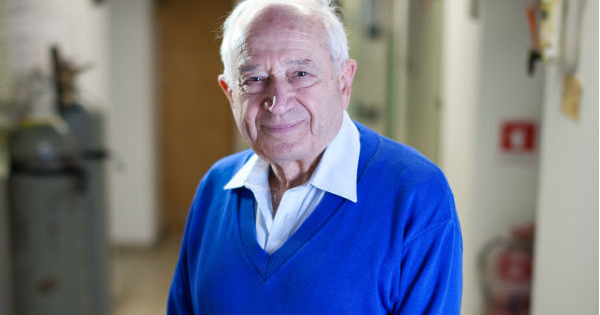
Anyone with even a passing interest in the history of cannabis has learned that the THC, the main psychoactive compound in cannabis, was discovered in 1964 at the Hebrew University of Jerusalem by an Israeli researcher, Raphael Mechoulam, and his partners.
While he was indeed the first to isolate and synthesize THC, he was not the first to study it, as recounted by Cannabis Digest in a 2014 post.
In 1937, under the leadership of’Harry Anslinger, Commissioner in charge of enforcement at the newly established Federal Bureau of Narcotics (FBN), cannabis became illegal in the United States. In 1938, Anslinger convened a meeting of 23 people, all of whom had expertise on «marihuana.» The purpose of this meeting was to implement the ban and to gather information to learn more about the plant.
Among the experts are specialists in hemp which made Anslinger aware of a problem: once they had finished growing, hemp plants were cut down and left in the fields all winter. The hemp flowers would then often disappear. Using the early methods of cannabinoid detection, the Beam Test Developed in Egypt in 1911 to ban hashish, scientists confirmed the presence of an «active ingredient.» Hemp was then labeled a «public nuisance.».
After the hemp experts came the chemists. The FBN was eager to track down this «active ingredient,» whatever it might be. A senior chemist named Siegfried Lowe passed the job on to his friend Roger Adams, who turned out to be a real gem. Between 1940 and 1949, he and his colleagues conducted 27 studies on cannabis, published in the’American Journal of Chemistry. It isolates cannabinol (CBN), Cannabidiol (CBD) and tetrahydrocannabinol (THC). He synthesizes CBN and develops THC-O-acetate, and describes the structure of THC more or less accurately.
It therefore seems that Adams studied THC without really knowing what it was and without being able to isolate it. The first extraction of THC will take place in 1942, probably with a mixture of Δ8-THC and Δ9-THC.
Roger Adams does not seem to be the only one to have dabbled in THC. As early as 1846, two Scottish scientists, T & H Smith, carried out extractions from Indian hemp. The resulting resin proved to be highly psychoactive: «Two-thirds of a grain (44 mg) of this resin acts on us like a powerful narcotic, and one grain produces complete intoxication.»
In the late 19th century, Wood, Spivey, and Easterfield can also be found an intoxicating active ingredient in an extract of charas. They then named it cannabinol. Reports of an intoxicating active ingredient began to appear in 1897 (C. R. Marshall), 1920 (Cahn), 1942 (Wollner), and 1946 (Todd).
We still need to give credit to Raphael Mechoulam for isolating THC and CBD, describes their structure and summarizes both cannabinoids.









Medical Cannabis and Driving: New South Wales Ends Automatic Penalties for THC

China's Yongji Health Takes Control of Tasmanian Botanics

Autism and Cannabis: Results from the First Placebo-Controlled Trial of NTI164

Which countries legalized medical cannabis before France?

From the boom in dispensaries to a purely medical approach: Thailand is revising its cannabis policy

South Korea is preparing to begin local production of medical cannabis to meet rising demand

In the United States, cannabis use among high school students has reached an all-time low

Medical cannabis use surges by 64 % in Denmark

Canopy Growth Enters the U.K. Market with Four Canadian Strains

