Cannabis in the UK
Cannabis is classified as a Category B drug in the United Kingdom: recreational use remains illegal, and possession is punishable by up to five years in prison.
However, there are «Cannabis Social Clubs» dedicated to the use of cannabis containing THC. The authorities tolerate this kind of initiative, preferring a supervised setting to open-air street markets.
Medical cannabis has been legal with a prescription from a specialist since November 2018, with access primarily through private clinics, and CBD is sold under strict conditions (requiring «novel food» authorization and virtually zero THC). Find all the latest news and laws regarding cannabis in the United Kingdom here.
Legal Status of Cannabis in the United Kingdom
-
Recreational cannabis:
Illegal
Cannabis is classified as a Class B drug in the United Kingdom, and anyone found in possession of it is liable to five years in prison.
-
Medical cannabis:
Legal under certain conditions
Medical cannabis has been legal in the United Kingdom since 2018, but the requirements for access are very strict, making it difficult for most patients to obtain. Only specialist doctors can prescribe medical cannabis, and the medications must be approved by the national drug regulatory agency.
-
CBD:
Legal under certain conditions
CBD is considered a Novel Food in the United Kingdom and requires certification to be sold. CBD products must demonstrate that they do not contain narcotics in order to obtain this certification.
-
Possession:
Illegal
Cannabis is classified as a Class B drug in the United Kingdom, and anyone found in possession of it is liable to five years in prison.
-
Personal interests:
Illegal
Cannabis is classified as a Class B drug in the United Kingdom, and anyone found in possession of it is liable to five years in prison.
Last checked: October 8, 2026
Which countries in Europe have legalized cannabis?Do you have a question about cannabis in the United Kingdom?
✨ Newsweed AI is based on our articles and verified data.
History of Cannabis in the United Kingdom
Cannabis is regulated in the United Kingdom under the Misuse of Drugs Act 1971 (Misuse of Drugs Act of 1971), which classifies drugs into Categories A, B, and C. Cannabis is classified as a Category B drug under this system. This classification underwent a notable change: in 2004, it was downgraded to Category C, before being reclassified as Category B on January 26, 2009. It applies to England, Scotland, Wales, and Northern Ireland.
The major reform dates back to November 2018, when medical cannabis became legally prescribable by medical specialists. It followed highly publicized cases involving children with epilepsy whose families were demanding access to cannabis-based treatments. Since then, the medical market has expanded, largely through private clinics, and the United Kingdom has become one of the world’s leading exporters of cannabis-based medicines.
Politically, the issue remains at a standstill. In May 2025, the London Commission on Drugs, commissioned by the Mayor of London, published its report «The Cannabis Conundrum» (42 recommendations), which calls for decriminalization, among other things. The Home Office immediately responded that it had «no intention» of reclassifying cannabis, a position that remained unchanged as of September 2026.
Cannabis Legislation in the United Kingdom
Recreational cannabis: illegal
Under the 1971 Act, cannabis use is legal only if expressly authorized by a license from the Home Office, and the department’s policy is not to issue licenses for recreational use. Consequently, there is no legal market, no dispensaries, no social clubs, and no authorization for home cultivation. Under the applicable penalties, possession is punishable by a sentence of up to five years in prison, an unlimited fine, or both, and the production or supply of up to 14 years in prison.
Medical cannabis: legal with a prescription from a specialist
Since November 2018, medical cannabis products may be prescribed and dispensed to patients, who may possess them without a Home Office license (a license is still required for the entire supply chain up to the healthcare professional). The product must be either a medication with marketing authorization, an investigational drug used in a clinical trial, or an unapproved «special» medication prescribed by a specialist physician. It is illegal to self-administer these products by smoking them, except in certain research contexts.
In practice, prescriptions are limited to specific conditions; dried flowers are rarely prescribed; and prescriptions through the National Health Service (NHS) remain rare: access is primarily through private clinics. Licenses for cultivation, production, and import are issued by the Home Office.
CBD
CBD is not a controlled cannabinoid in the United Kingdom; therefore, the possession and supply of pure CBD do not require a license from the Home Office. In practice, it is difficult to isolate pure CBD and verify its purity in a laboratory, which means that commercially available products must comply with a limit of approximately 1 mg of controlled cannabinoids per container.
Food products containing CBD extracts or isolates are classified as novel foods (novel foods) and must be authorized by the UK Food Standards Agency (FSA), which has been administering this framework separately from the European Union since January 1, 2021. Products already on the market as of February 13, 2020, were required to have a validated application by March 31, 2021, and the FSA publishes a list of products whose applications are currently under review. Any product not on this list must be withdrawn from sale. The FSA recommends that healthy adults not exceed 10 mg of CBD per day in supplements.
Related searches
Cannabis in MaltaCannabis in DenmarkCannabis in LuxembourgCannabis in PortugalCannabis in the NetherlandsCannabis in AlbaniaCannabis in GermanyCannabis in AustriaCannabis in BelgiumCannabis in CroatiaCannabis in SpainCannabis in FinlandCannabis in FranceCannabis in GeorgiaCannabis in GreeceCannabis in IrelandCannabis in IcelandCannabis in ItalyCannabis in LithuaniaCannabis in North MacedoniaCannabis in NorwayCannabis in PolandCannabis in the Czech RepublicCannabis in SwitzerlandCannabis in UkraineLatest news on Cannabis in the UK
-
 Surveys3 days ago
1.2 million adults in Great Britain use cannabis almost every day
About 1.2 million adults in Great Britain use cannabis daily or almost daily, according to a new study published in the scientific journal *Addiction*. Conducted by...
-
 Cannabinoids2 weeks ago
The United Kingdom is set to ban THCA and HHC
The British government is preparing to tighten its cannabis laws by subjecting 12 cannabinoids, including THCA and HHC, to the same controls that apply to narcotics...
-
 Business4 weeks ago
British patients now have access to THCV-rich cannabis flowers
British patients can now be prescribed a new variety of medical cannabis rich in tetrahydrocannabivarin (THCV), a cannabinoid that has yet to be fully explored, whose effects...
-
 Medical cannabis1 month ago
The first plant-based medical THC spray arrives in the United Kingdom
The Irish pharmaceutical company Dunbar Pharma is launching the country's first plant-based THC oral spray. Manufactured by its British partner IPS Pharma,...
-
 Medical cannabis1 month ago
A British patient is challenging the NHS's refusal to reimburse medical cannabis
A British patient who uses cannabis for medical purposes and whose request for public funding for her treatment has been denied on several occasions...
-
 Business2 months ago
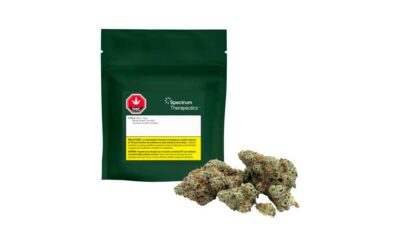
Canopy Growth Enters the U.K. Market with Four Canadian Strains
Canopy Growth is now selling its medical cannabis flowers in the United Kingdom. The Canadian producer announced on September 22, 2026, that it would supply four strains...
-

 Business2 months ago
The United Kingdom Is Moving Closer to a Regulated CBD Market
After more than six years of regulatory work, the United Kingdom is poised to take a decisive step forward for its CBD market. The Food Standards Agency (FSA)...
-

 Business3 months ago
Quick Hit August 2026: What We Missed in Recent Weeks
As regular Newsweed users will have noticed, we've been on hiatus for the past few weeks. But since there's no news to wait for us, here's a recap...
-
 Business5 months ago
The British medical cannabis market is expected to exceed 140,000 patients by 2026
The medical cannabis sector in the United Kingdom continues to expand, with the number of patients expected to exceed 140,000 by the end of 2026. According to the latest UK...
-
 Medical cannabis6 months ago
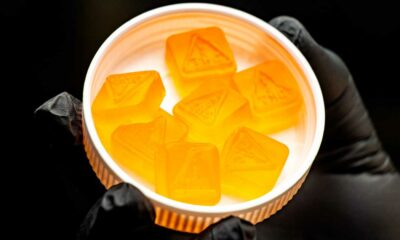
Medical cannabis in the UK: vapes and gummies grow faster than flowers
New data on the UK medical cannabis market suggest that patient habits are beginning to change. If cannabis flowers remain...
-

 Cannabis events6 months ago
Cannabis Europa London 2026: Key points, Day 2
From plant to patient: why genetics must be at the heart of medical cannabis outcomes Arjan Roskam, Green House Genetics; Dave Auger,...
-

 Cannabis events6 months ago
Cannabis Europa London 2026: Key points, Day 1
Cannabis Europa London is back at the Barbican Centre for two days of debates bringing together world leaders in the cannabis sector, political decision-makers,...
-

 Business7 months ago
Tilray acquires Lyphe and strengthens its UK presence
Tilray Brands continues its transformation into a global hybrid player at the crossroads of medical cannabis, beverages and wellness. In a press release...
-
 CBD7 months ago
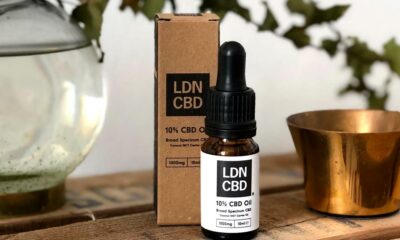
The UK is reportedly trying to eventually align itself with Europe's Novel Food for its CBD products
The UK's efforts to regulate CBD as a new food could suffer another setback. Indeed, the British authorities are closing in on a...
-
 Business8 months ago
Medical cannabis markets in the UK and Germany both double by 2025
The medical cannabis markets in the UK and Germany both more than doubled in size throughout 2025, confirming a...
-
 Business9 months ago
Curaleaf and Sanity join forces to conquer the UK medical cannabis market
Curaleaf Laboratories, one of the UK's leading manufacturers of medical cannabis products, has signed an agreement with Sanity Group, the Berlin-based company that has just...
-

 Recreational cannabis10 months ago
Jersey and Guernsey explore new avenues for cannabis reform
The Channel Islands are emerging as an unexpected laboratory for cannabis policy reform. Jersey and Guernsey, two Crown dependencies...
-

 Medical cannabis1 year ago
The Isle of Man prepares to welcome its first Cannabis Café
The Isle of Man is set to see the opening of The Green Lounge CSC, an educational and community center for medical cannabis patients. The venue...
-
 Medical cannabis1 year ago
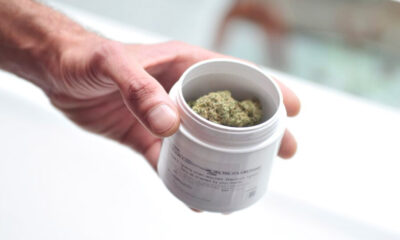
The UK legalized medical cannabis... but forgot to train its doctors
Almost seven years have passed since medical cannabis was legalized in the UK on November 1, 2018. Since then, less than 1 % of the 100...
-

 Business1 year ago
Casa Verde (Snoop Dogg) invests £4.5 million in UK medical cannabis clinic
Casa Verde Capital, the US venture capital firm co-founded by Snoop Dogg, has invested £4.5 million in Mamedica, a London-based clinic specializing in the treatment...




Netherlands: Edibles at the Center of a Policy Review of the Cannabis Experiment

Ottawa Simplifies Cannabis Taxes, Without Reducing the Tax Burden on Producers

Malta Wants Licenses for the Sale of «CBD Products»

From «Cannabro» to «AI Bro»: Some U.S. cannabis growers are envisioning a new future in data centers

Israel renews its allegations of dumping against Canadian medical cannabis

Bedrocan Bankruptcy: The Dutch Government Under Pressure
1.2 million adults in Great Britain use cannabis almost every day

CBD, CBN, and CBC Isolates: What Can You Expect from These Products?

The SQDC sold $207.5 million worth of cannabis in Q2 2026, with vape pens driving growth
