
What is CBD (cannabidiol)?
The CBD, cannabidiol, is one of the +110 active cannabinoids in cannabis, and one of the arguments in the debate surrounding the medical and wellness uses of cannabis.
While «CBD» is often equated with CBD products as a whole, or more narrowly with the CBD flower, cannabidiol is indeed a Cannabis molecule, and therefore very present in hemp plants.
While THC is mostly studied for its side effects, CBD seems to have very few, and medical evidence of its benefits is mounting. Here's everything you need to know about cannabidiol.
What is CBD?
Cannabidiol, more commonly known as CBD, is one of the main Cannabis cannabinoids. Of the various cannabinoids, THC and CBD are generally present in the highest concentrations, and are therefore the best known and studied. THC and CBD levels vary greatly depending on the hemp or cannabis variety. Plants grown for recreational use are often higher in THC than in CBD.
Nevertheless, by using selective reproduction techniques, the breeding, horticulturalists have succeeded in creating varieties with high cannabidiol levels.
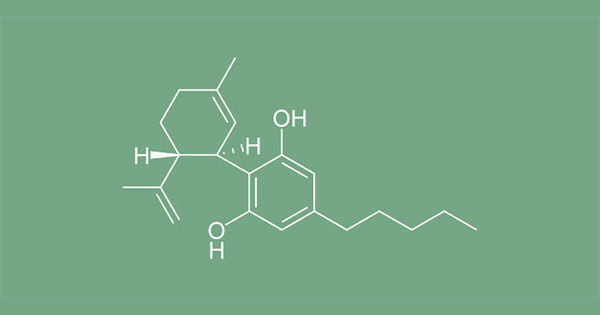
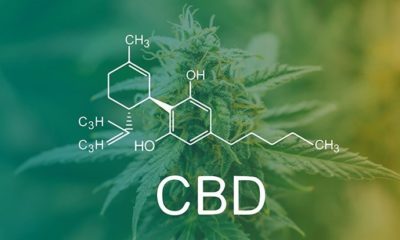
Cannabidiol is composed of 21 carbon atoms, 3 hydrogen atoms and two oxygen atoms. Its precursor in the plant is’cannabidiolic acid or CBDA.
How does CBD interact with our bodies?
The human body has a network of receptors called endocannabinoid system (SEC), This system is present throughout the body and is responsible for maintaining the balance of essential functions: homeostasis. Cannabinoids like CBD interact with this system by influencing the activity of cannabinoid receptors and encouraging the production of natural endocannabinoids.
Notably, CBD also acts beyond the SEC, interacting with serotonergic, opioid and dopaminergic receptors, which explains its potential in areas as varied as pain, anxiety and neuroprotection.
→ Find out more about the science of CBD and the endocannabinoid system
Does CBD produce psychotropic effects?
Unlike THC, cannabis CBD does not «get high or doesn't get you high. While this makes it a poor choice for recreational smokers, it does give the substance a significant advantage as a drug, with health professionals preferring treatments with the fewest possible side effects, or as a wellness molecule.
Nevertheless, the cannabidiol is psychoactive because it acts on some of the brain's receptors, while having no psychotropic or intoxicating effect. The CBD is very safe, even if there are risks to be aware of. Also, the CBD interacts with certain drugs, which should not be taken together.
An article published in 2011 in Current Drug Safety concluded that CBD «does not interfere with psychomotor and psychological functions». The authors add that several studies suggest that cannabidiol is «well tolerated and safe», even at high doses, as attested by WHO in 2017.
What diseases can CBD treat?
Cannabidiol has a wide range of medical benefits. According to a 2013 article published in British Journal of Clinical Pharmacology, Studies have shown that CBD has the following properties: anti-vomiting, anticonvulsant, antipsychotic, anti-inflammatory, anti-oxidant, anxiolytic and anti-inflammatory. anti-cancer. THC has the same properties, but with psychotropic effects.
Early studies were done on animals, but human studies are finally beginning to fill in the gaps around CBD's touted benefits. With that caveat in mind, here's what CBD's potential therapeutic applications include:
CBD and anxiety
One of the most widely used wellness applications for CBD is that it appears to be beneficial on anxiety symptoms, by influencing activity in the serotonin system.
For quick relief, vaping CBD-rich strains will work best. Or try a CBD oil laboratory-tested sublingual. Ingesting CBD oil can also help relieve anxiety, but the effects are not instantaneous.
Learn more about CBD for paranoia and anxiety
CBD and pain
According to the research carried out to date, CBD seems to act on two types of pain: neuropathic pain and inflammatory pain. For other types of pain, CBD seems less effective than THC.
CBD and sleep
The effects of CBD on sleep are poorly understood. Until now, a study showed a positive effect with effective doses of 160mg of CBD. CBD can, however, alleviate symptoms that cause insomnia, such as certain types of pain or anxiety.
CBD and epilepsy
Since the history of Charlotte Figi, The effects of CBD on epilepsy have come to the fore. CBD oils have massively appeared on the market, and have been emulated on the pharmaceutical side with the development of Epidyolex, prescribed to epileptic children refractory to traditional treatments.
Learn more about CBD and epilepsy in children
What effect does CBD have on THC?
Cannabidiol seems to reduce THC side effects, such as memory loss and paranoia.
CBD also counteracts THC-induced drowsiness, which may explain why certain varieties of cannabis are known to increase alertness levels.
The CBD and THC have both been found to present no danger of lethal overdose. However, to avoid potential side effects, medical users are advised to avoid using cannabis with excessively high levels of THC.
It is also an urban legend that the CBD converts to THC in the stomach. This rumor has been widely debunked.
Is cannabidiol legal?
In the United States, the cannabidiol from hemp is legal. CBD from cannabis, on the other hand, is legal only in states where cannabis is authorized. Only one CBD-based medicine, Epidiolex, has been approved for the US market, for children suffering from certain severe forms of epilepsy.
In Europe, CBD is legal, but its availability and that of the products containing it depend on each country.
In France, the CBD is legal, with a few hiccups. Strangely enough, the Synthetic CBD has no restrictions on its use, whereas natural CBD has the lawmakers coughing up more. French law does not classify CBD as a narcotic, nor does it clearly regulate products containing it. CBD flowers are therefore legal, but not clearly identified for tax purposes. CBD oils hover between the non-status of dietary supplement and the non-status of Novel Food.
In any case, the marketing of CBD products has increased following the trial of Kanavape, a French company that launched the first CBD product on the market in 2014. CBD vaporizer in France, which earned them a lot of trouble.
Today, CBD-related activities are authorized, such as’commercial extraction of CBD for shapers and other producers of oils and extracts.
It should be noted that there are variations of molecules around CBD - such as CBD-HQ or the H4CBD - and their legality varies according to use and country.
What's the difference between hemp-derived CBD and cannabis-derived CBD?
CBD is produced by both hemp and cannabis strains, the difference between the two plants being merely administrative, namely an THC content less than 0.3% for France (1% for Switzerland, for example).
CBD from hemp, on the other hand, is legal in France, whereas CBD from cannabis is not. However, it's impossible to tell the difference between the two once it has been extracted from the plant. The current lack of regulations means that products are flourishing without health controls, with random ingredient lists and sometimes illegal THC levels.
In countries where cannabis is legal, products made from hemp CBD contain fewer active ingredients than those derived from cannabis, the latter being reserved for medical and recreational users.
How to use CBD?
CBD is available in a variety of products and forms: it can be smoked, swallowed, vaporized or applied directly to the skin. Some forms of consumption are more suitable for certain conditions.
Learn more about how to use CBD?
CBD Oil
CBD oil covers a whole range of products. It is generally sold in liquid form in small bottles with pipette caps, but can also be found in swallowable capsule. It can be taken sublingually or swallowed, or mixed with drinks or preparations.
CBD cartridges
CBD cartridges contain cannabidiol extract and screw onto electronic cigarette batteries. Vaporized CBD produces fast-acting effects, making this method of administration ideal for those needing quick relief from symptoms such as anxiety and stress.
CBD topicals
CBD topicals are cosmetics that contain CBD and are applied directly to the area of need. Lotions, balms, gels, sprays, oils, creams, lubricants? topical CBD comes in many forms. Some are absorbed more quickly through the skin (water-based), while others are absorbed more deeply (oil-based).
In addition to CBD, these products typically contain ingredients such as menthol camphor or arnica to multiply the effects.
What dosage of CBD should I take?
There is no universal dosage for CBD. The effective dose varies according to weight, individual tolerance, the condition being treated and the mode of consumption. In the absence of official recommendations in France, here are the generally observed ranges:
- General well-being / mild anxiety 10 to 20 mg per day
- Moderate anxiety, mild pain, sleep disorders 20 to 50 mg per day
- Chronic pain, more severe conditions 50 to 100 mg per day, or more under medical supervision
The generally recommended rule is start low and work your way up Start at 5-10 mg/day, observe effects for a week, then increase by 5 mg increments if necessary.
The method of consumption also has a major influence on the effective dose. When taken sublingually (oil under the tongue), bioavailability is better than when ingested (capsules, edibles), which means less CBD is needed to achieve the same effect. Vaporization, on the other hand, offers the quickest, but least long-lasting action.
Note: EFSA estimated in 2026 that only 2 mg of CBD isolate per day would be «provisionally safe» as part of a diet, reflecting the current lack of scientific consensus on long-term doses. Find out more about EFSA's position
Full-spectrum, broad-spectrum or isolate CBD: what's the difference?
When you buy a CBD product, you'll often come across these three terms, which designate the composition of the extract used.
The Full-spectrum CBD (full spectrum) contains all the cannabinoids, terpenes and flavonoids naturally present in the plant, including traces of THC (less than 0.3% in France). This is the form that benefits most from the so-called’entourage effect The various cannabis compounds act synergistically and potentiate each other, making it theoretically the most therapeutically effective form. The most widely used product is’full-spectrum CBD oil.
The Broad-spectrum CBD (broad spectrum) is similar to the full spectrum, but the THC has been removed during the extraction process. This is an interesting compromise for those who wish to benefit from the entourage effect while ensuring the total absence of THC - notably for professional or sporting reasons.
L’CBD isolate is the purest form: cannabidiol extracted and isolated at over 99%, with no other plant compounds. It is odorless, tasteless and often used in cosmetics and food products. It is presented as CBD crystals. On the other hand, it has no entourage effect. This is also the form assessed by EFSA in 2026, when it estimated that only 2 mg per day would be «provisionally safe» in a dietary context.
For everyday wellness use, broad spectrum is often recommended as a starting point: it offers good efficacy without the risk, however slight, associated with traces of THC.
Learn more about the differences between full-spectrum CBD and isolate CBD
Which cannabis varieties contain the most CBD?
Most industrial hemp varieties in France contain low levels of CBD. Visit CBD varieties contain up to 7% of CBD for -0.3% of THC. The higher the THC limit, the more CBD the strains develop. At 1% THC, strains rise to 20-22% CBD.
In countries where cannabis is legal, two types of high-CBD varieties stand out:
- Dominant CBD varieties, which contain higher levels of CBD than TH, such as ACDC or Sour Tsunami.
- balanced CBD:THC varieties with a ratio close to 1:1, such as Harlequin or MediHaze
We've devoted a video to the history of CBD and the emergence of so-called CBD varieties.
Can CBD be given to animals?
Like humans, mammals have an endocannabinoid system and can therefore benefit from the effects of CBD for conditions ranging from arthritis to anxiety and epilepsy. Some brands have developed specific ranges for animals.
However, animals react much more to CBD than we do. Product dosage will therefore need to be adapted. Few studies have been carried out to date on dosage or efficacy criteria, leaving pet owners on their own when it comes to using CBD on their 4-legged companions.
Frequently asked questions about CBD
Does CBD give you a high?
No. CBD is not psychotropic and doesn't cause intoxication or euphoria. It is THC, the other major cannabinoid in cannabis, which is responsible for these effects. CBD products legal in France contain less than 0.3% of THC, insufficient to produce any psychoactive effect.
Is CBD legal in France?
Yes, CBD is legal in France under certain conditions. Flowers, oils and other CBD products from authorized hemp varieties containing less than 0.3% THC can be sold freely. The industry has seen several legal and legislative twists and turns in recent years, notably around the 2026 budget.
Is CBD addictive?
No. The WHO concluded in 2017 that CBD has no abuse or addiction potential. Unlike THC, it does not activate the brain's reward circuits associated with addiction.
How long does CBD remain in the blood?
This depends on the frequency of consumption and the method of administration. For a single intake, CBD is generally eliminated in 1 to 3 days. For regular consumption, it may be detectable for up to a week. Important: standard screening tests in France do not look for CBD, but THC - an incorrectly dosed or contaminated CBD product can theoretically trigger a positive result.
Can you drive after taking CBD?
Yes, CBD alone does not affect driving ability. However, some CBD products may contain traces of THC. Saliva roadside tests do not detect CBD, but can detect THC, even in minute quantities. Caution should therefore be exercised with full-spectrum products.
Is CBD reimbursed in France?
No, CBD products for the general public are not reimbursed. Only Epidyolex, a CBD-based medicine prescribed for severe forms of epilepsy, is reimbursed. Medical cannabis, some forms of which contain CBD, is gradually being rolled out in France, with a reimbursement framework currently being defined.












CBD is said to promote athletic recovery, without improving performance

294 cannabis clubs in Chile: a booming movement with uneven distribution

Chronic Sciatica: New York Approves First Clinical Trial of a THC-Based Medication

United States: The DEA is accelerating the integration of medical cannabis at the federal level

Florida is nearing one million patients using medical cannabis

Uruguay Revives Its Plan to Allow Tourists to Legally Access Cannabis

In Brazil, researchers are developing an innovative CBD eye drop

Autism: Medical Cannabis Is Linked to Reduced Anxiety

The $28 billion U.S. hemp market remains under threat

