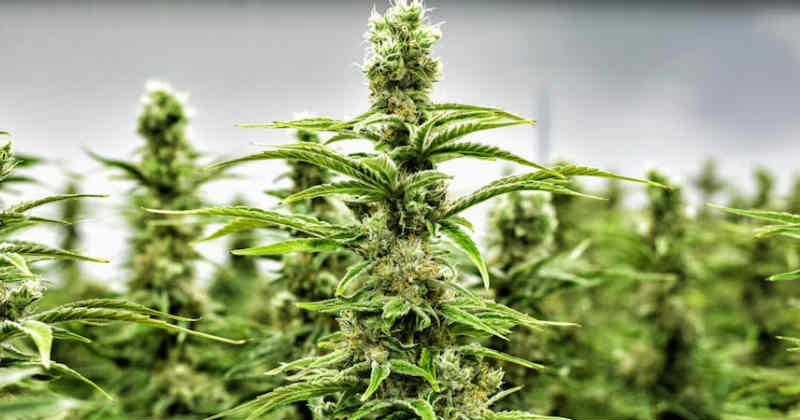
The entourage effect: myth or reality?
There are countless varieties of cannabis with different effects. Yet they all develop the same active ingredient: THC. In addition to THC, the Cannabis Sativa L. has a multitude of chemical components, 480 of which have so far been identified. While the cannabinoids undoubtedly have the most important physiological effects, the terpenes responsible for the taste of weed and the flavonoids responsible for the plant's color also have neurochemical effects.
Little is known about the action of all these components on the body. They are, however, reputed to have the potential to accompany the effects of THC by creating a form of synergy, known as the entourage effect. This would attest, for example, to the difference in effects between whole-plant extracts and cannabinoids pure, isolated.
What is the entourage effect?
When we consume cannabis, our bodies absorb hundreds of compounds. Each arrives with unique effects and benefits, and their behavior can change in the presence of other compounds. This is the principle of the entourage effect, where 1+1 can potentially make 3.
For example, in a 2010 study, patients with cancer pain were given either a pure THC extract or an extract containing almost equal levels of THC and CBD. Patients who received the THC / CBD combo reported less pain. Conversely, the entourage effect would explain why the CBD alone is not necessarily the most effective.
But cannabis is much more than THC and CBD. It also produces other cannabinoids such as CBN, the CBC or the CBG and dozens of others, as well as terpenes. The number of compounds multiplies the possible synergies. Unfortunately, very few studies have explored these synergies in humans.
Scientific reality or business strategy?
Chris Emerson, chemist and co-founder of the company that created the Level Blends, a vaporizer, believes that the entourage effect can be described as «the sum of all the parts that lead to the power or magic of cannabis». He believes it's possible to modify the terpene and cannabinoid ratios of e-liquids to achieve a specific effect and eventually be able to create customized products for the needs of the consumer or patient.
And that's what the culture of the breeding in which the smallest genetic aspects of the plant are measured and manipulated to produce different effects.
For Margaret Haney, a neurobiologist specializing in cannabis research at Columbia University, these claims are nothing more than a commercial marketing strategy. She doesn't deny the existence of the entourage effect, but stresses the lack of data: «the lay public has really latched onto this idea of the entourage effect, but there's a lack of data».
The case for
Cannabinoids other than THC, such as CBD, have a different neurochemical action. Are these effects capable of altering the action of THC to the point of producing a significant difference between the administration of whole plant extracts and isolated THC? This is the question posed by the concept of the entourage effect. Some believe that it does, and that CBD in particular has the power to mitigate the harmful effects of THC by blocking certain receptors in the brain.
Psychopharmacologist Ethan Russo, who has long studied cannabis compounds and their effects on the body, worked with GW Pharmaceuticals, the creators of Sativex, a cannabis medicine for multiple sclerosis containing an equal ratio of THC and CBD. He explains that 10 milligrams of THC can cause psychosis or psychotic symptoms in about 40% people. With Sativex, on the other hand, at 48 milligrams of THC and almost the same amount of CBD, only 4 out of 250 patients experienced adverse psychotic effects.» This, he says, is «a very important demonstration of this synergistic effect».
The entourage effect also received renewed attention in 2011 when Russo published an article in the British Journal of Pharmacology in which he reviewed all the potential interactions between THC and the various cannabinoids and terpenes. He cites, for example, a study suggesting that alphapinene, a terpene that gives weed a pine-like aroma, has the potential to preserve acetylcholine, a molecule involved in memory formation. This terpene could therefore counterbalance the harmful effects of THC on immediate memory.
More recently, a study published in 2023 has shed further light: researchers have shown that terpenes directly enhance THC's ability to interact with endocannabinoid receptors, a mechanism of action previously assumed but difficult to demonstrate in vitro. This discovery provides a more solid biochemical basis for the entourage effect beyond clinical observations.
Other interactions are detailed, such as :
- A combination of CBD and caryophyllene terpene that may be beneficial in the treatment of addiction
- CBD and the terpene limonene could work together to relieve anxiety
- The THC and cannabinoid CBN can potentially produce enhanced sedative effects
Also, a team of Brazilian researchers conducted a meta-analysis of studies carried out between 2013 and 2017 on the therapeutic effects of CBD in the treatment of epilepsy. Published in the Frontiers In Neurology In particular, the study distinguished between patients treated with pure CBD and those treated with a plant extract containing other natural cannabis components. In the latter, the medical effect of cannabis seemed to be maximized, with 71% of patients reporting improvements, compared with 36% of those taking pure CBD. The study concludes that «CBD-rich cannabis extracts appear to have a better therapeutic profile than isolated CBD» and that «this difference is probably due to the synergistic effects of CBD with other phytocomponents».
These documented interactions can be summarized as follows:
| Compound A | Compound B | Documented synergy |
|---|---|---|
| THC | CBD | Reduced psychotic effects of THC; enhanced analgesia |
| CBD | Limonene | Reduced anxiety |
| CBD | Caryophyllene | Potential in addiction treatment |
| THC | CBN | Amplified sedative effects |
| THC | Alpha-pinene | Counteracts the effects of THC on immediate memory |
| THC | Myrcene | Accelerated blood-brain barrier crossing |
| CBD | Flavonoids | Enhanced anti-inflammatory and antioxidant effects |
Arguments against
In the 1980s, a synthetic THC-based drug, Marinol, was introduced to stimulate the appetite of patients undergoing chemotherapy. Yet, despite its availability, many patients preferred to consume the cannabis plant rather than the drug. Colombia University's Haney conducted a study on the subject and concluded that the difference between the two products was insignificant. She considers that the drug is effective and does not have the side-effects that are generally attributed to a psychological placebo effect.
The researchers emphasize that the existence of this synergy needs to be proven by controlled clinical trials. To date, no double-blind clinical studies specifically targeting the entourage effect have been conducted. With placebos and in a controlled environment, researchers could verify whether there is a significant difference in effects between terpenes and placebos. Despite the lack of scientific data, the idea has gained ground in the industry, where consumers are already offered different ratios of cannabinoids and terpenes for designated effects.
Russo admits that scientific literature is lacking on the subject, but he personally believes in the entourage effect: «Do we need better studies to prove the concept? The answer is yes. I believe in it because I've known for 40 years about the differences between different types of cannabis. They smell different. They taste different. They have different effects.
Raphaël, Mechoulam, the researcher who discovered THC and CBD, also stated that he believed the therapeutic virtues of the whole plant were greater than those of its isolated components.
The entourage effect in practice: whole plant vs. isolate
The entourage effect debate has very concrete implications for consumers and patients, particularly in the world of CBD.
CBD Isolate Pure CBD extracted and crystallized, with no other cannabinoids or terpenes. Effective at precise, reproducible doses, with no risk of residual THC. If the entourage effect is real, this is the form that benefits least from it.
Broad-spectrum Extract containing CBD, terpenes and other minor cannabinoids (CBG, CBN, CBC...) but with THC eliminated by process. Potentially benefits from synergies between these compounds, without the psychoactive effects of THC.
Full-spectrum whole plant extract retaining all cannabinoids - including a legal trace of THC (≤0.3% in France) - as well as terpenes and flavonoids. Theoretically the format most likely to benefit from the entourage effect as a whole.
This is precisely what the Brazilian meta-analysis published in Frontiers in Neurology suggested in the field of epilepsy: 71% of improvement with a full-spectrum extract versus 36% with isolated CBD. A difference which, if confirmed in other contexts, would argue strongly in favor of whole-plant extracts for therapeutic use.
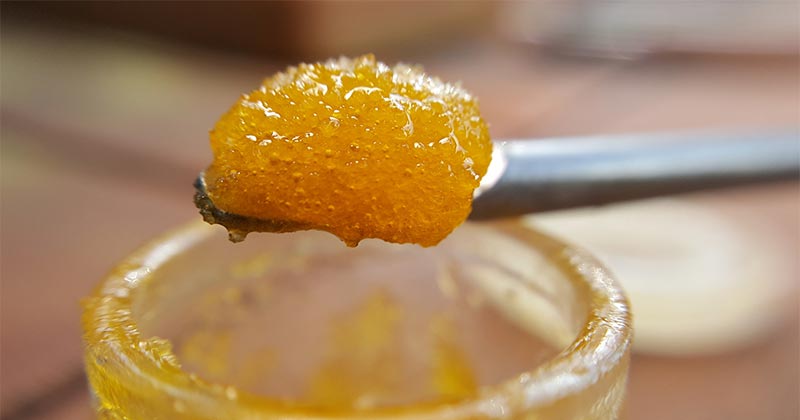
The same logic applies to recreational cannabis: a terpene-rich concentrate like a rosin or a live resin generally produces a more nuanced sensory and pharmacological experience than pure THC distillate - something experienced users often describe without necessarily naming the entourage effect.
Certain foods rich in terpenes common to cannabis - such as mango (myrcene) or broccoli (beta-caryophyllene) - can modulate the effects of cannabis via this same principle of molecular synergy.














JIHE 2026: Japan’s Largest Trade Show Dedicated to Hemp and CBD Returns to Tokyo with More Than 100 Industry Players
New Caledonia: The Courts Clear the Way for the Return of CBD

The Brazilian medical cannabis market continues to grow

Morocco: Three Cannabis-Based Medications Approved for the Treatment of Epilepsy

Canopy Growth Receives New EU-GMP Certification to Strengthen Its Presence in Europe

Three years after legalizing medical cannabis, Albania continues to establish regulations for it

The first plant-based medical THC spray arrives in the United Kingdom

Medical Cannabis in Germany: THC Prices Vary by a Factor of 12

France already has 3,000 cannabis retail outlets. None of them are legal.

