
Who discovered THC?
Delta-9-tetrahydrocannabinol, more commonly known as THC, is the primary cannabinoid in the cannabis plant. While cocaine and morphine were isolated in the 19th century, THC was not isolated until very recently. Let’s meet the man who popularized research on THC.
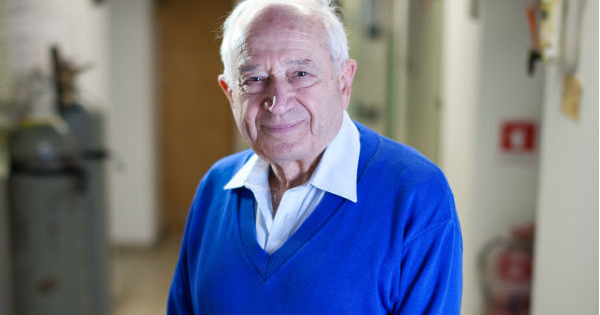
Israel, 1963. When Raphael Mechoulam When he first applied for a cannabis research grant from the U.S. National Institutes of Health (NIH), he was quickly turned away. Mechoulam, now 84, recalls, «They told me, »Come back when you’ve chosen another topic; marijuana isn’t an American problem.’” It’s true that at the time, cannabis was better known in South America than in the United States, where only a few jazz singers used it.
50 years later, after becoming the the first scientist to isolate THC, its discovery dates back to the 1940s, Having spent a long career studying cannabis and its effects on the body, and being known as the “Grandfather of Medical Cannabis” in Israel, Professor Mechoulam still seems a little proud when he talks about how quickly the NIH changed its mind.
«A year after the initial rejection,» he said in an interview, «I got a phone call from the same people. It turned out that the son of a U.S. senator had been caught smoking marijuana. The senator asked the NIH what effects this might have on his brain. They were embarrassed that they had never done any research on the subject and called me to see what our group had discovered so far.»
«At that time,» he continues, «we had already managed to isolate THC, so I invited him to meet with us.».
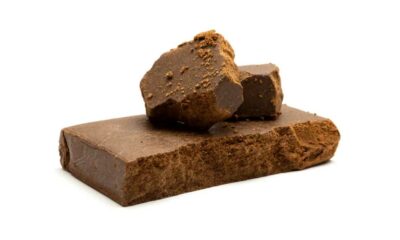
The discovery itself had a lot to do with the fact that Israel is a small country where everyone knows each other and where the rules are pretty flexible. «Our administrative director knew a guy from the army who had become a police officer. He called him to ask if he could get some Lebanese hashish from his stockpile. Long story short, I went to Tel Aviv, had coffee with a guy, and came back by bus with 5 kilos of hashish.». THC was then isolated from the contraband drugs.
The U.S. health official left Israel with pure THC, and «most of the research conducted on THC in the U.S. at that time was based on those 5 kilos,» Mechoulam explains with a smile. « »In the United States, I would have gone straight to prison.” Perhaps not so much today. As attitudes evolve in the U.S. and around the world, there is a renewed interest—and a new legitimacy—in developing cannabis-derived treatments based on the body’s natural mechanisms for fighting disease: the endocannabinoid system.
Mechoulam and his team explored everything. After isolating THC and the other cannabinoids from the plant (including the cannabidiol, which holds the greatest promise for the development of new drugs), other researchers discovered the receptors in the brain that they activate. Then, a team from Mechoulam’s lab began studying why these receptors existed. «The receptors don’t exist simply because the plant exists. But the plant acts on these receptors because the human body produces molecules similar to THC»—namely, endocannabinoids. They found that the human body naturally synthesizes cannabinoids that affect appetite, mood, memory, and much more. And that’s where things got stuck.
Mechoulam cites several reasons. THC and CBD are not patentable, so pharmaceutical companies cannot recoup the investment required to develop approved drugs. Second, the illegal status of cannabis in many countries discourages companies from using it. Furthermore, government regulatory agencies are not pushing hard enough for clinical trials of drugs. cannabinoid-based, partly because it is illegal.
«We’ve wasted a lot of time,» he said. «Back in the 1980s, we conducted a small study on the effects of CBD-rich marijuana on adults with epilepsy. And the results were indisputable. » Today, doctors are testing small doses of oil on children suffering from severe epileptic seizures. «The results are once again remarkable, but we’ve known this for 35 years. So many families have suffered since then.»
Mechoulam is a hero to many legalization activists: «I sometimes get fan mail,» he says. He now has a nuanced view of legalization. «I definitely don’t agree with people going to jail for smoking weed, but if I had to say yes or no, I’d vote no,» he says, citing the effects of THC—particularly on young brains—as his reason.
The professor emeritus, who is still actively working in his lab with other researchers, admits to having tested cannabis on himself. «We did an experiment once where we sprayed 10 slices of THC cake. Half of us took THC-laced slices, and the other half took a placebo. »Looking back, we’d put in too much. One of us talked nonstop, my wife was sitting on the couch lost in her own world, another suffered a psychotic episode and was taken to a psychiatric ward, and the other two were asleep.« He added, smiling: »As for me, I was in the control group!”.
Text taken from The Odd and Amazing Tale of the Man Who Discovered THC and The Budding Expert from Jerusalem











CBD is said to promote athletic recovery, without improving performance

294 cannabis clubs in Chile: a booming movement with uneven distribution

Chronic Sciatica: New York Approves First Clinical Trial of a THC-Based Medication

United States: The DEA is accelerating the integration of medical cannabis at the federal level

Florida is nearing one million patients using medical cannabis

Uruguay Revives Its Plan to Allow Tourists to Legally Access Cannabis

In Brazil, researchers are developing an innovative CBD eye drop

Autism: Medical Cannabis Is Linked to Reduced Anxiety

The $28 billion U.S. hemp market remains under threat

