Germany Ends Public Health Insurance Coverage for Medical Cannabis Flowers

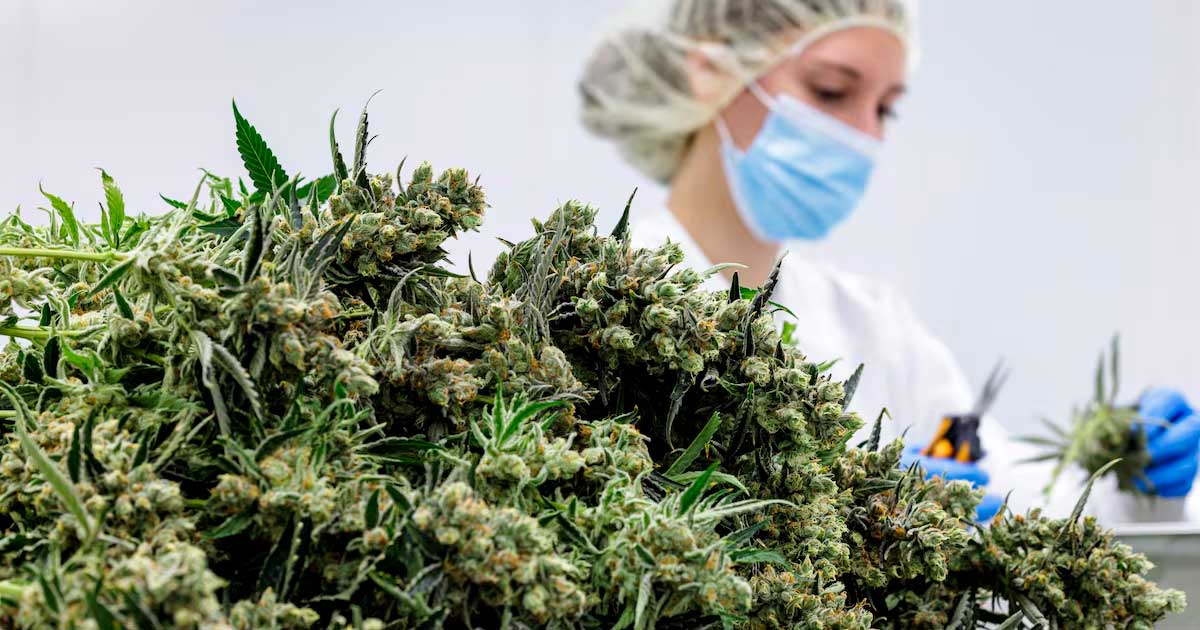
The German Bundestag has enacted new legislation eliminating reimbursement for medical cannabis flowers as part of the country's mandatory health insurance system (GKV). This measure is part of the broader framework of the GKV Premium Rate Stabilization Act, a law aimed at reducing spending in Germany's public health care system.
Under the new rules, as announced by, among others, Business of Cannabis, patients covered by the GKV, which accounts for approximately 90% of the German population, will no longer be eligible for reimbursement for prescribed cannabis flowers. The reform also introduces stricter conditions for reimbursement of cannabis extracts, requiring patients to undergo a mandatory six-month course of treatment with an approved cannabis-based medication before the extracts can be covered in most cases.
These changes have drawn sharp criticism from healthcare professionals and professional associations, who argue that the reform risks limiting access to treatment for seriously ill patients, while doing little to reduce healthcare costs.
Cannabis flowers are no longer reimbursed
The reform amends Section 31(6) of Book V of the German Social Code, which defines which cannabis-based medications are eligible for reimbursement.
Previously, patients with serious illnesses could receive a Reimbursement for cannabis flowers, the cannabis extracts, as well as for cannabinoid-based medications such as dronabinol and nabilone, provided that certain medical conditions are met.
Under the new legislation, flowers have been completely removed from the list of reimbursable treatments. No transition period has been provided for patients already undergoing treatment, which means that those who currently rely on reimbursed flowers risk losing their coverage as soon as the law takes effect.
According to Dr. Christiane Neubaur, executive director of the Verband der Cannabis versorgenden Apotheken (VCA):
«Many patients who currently receive prescription cannabis-based medications do not meet the criteria for these approved indications. A six-month general priority review period for ready-to-use medications can therefore create significant barriers to access if there is no duly authorized ready-to-use medication for the specific indication,» she wrote on LinkedIn.
For many doctors, the lack of provisions to preserve acquired rights creates uncertainty for patients whose treatment is already stable.
New six-month requirement for cannabis extracts
Although the cannabis extracts While they remain eligible for reimbursement, access to them has become significantly more restrictive. Patients must now first undergo a six-month therapeutic trial with a ready-made cannabis-based medication before reimbursement for custom-prepared extracts can be granted, except in limited situations where exemptions apply.
Currently, only three approved cannabis-based medications meet this requirement:
- Sativex for spasticity associated with multiple sclerosis.
- Epidyolex for certain severe forms of epilepsy.
- Canemes for chemotherapy-induced nausea and vomiting.
L’Exilby, approved in June 2026 for chronic back pain, is not currently available to patients pending pricing.
One of the practical challenges highlighted by critics is that many patients receiving medical marijuana are being treated for conditions that fall outside the approved indications for these drugs. Prescribing them would therefore often require off-label use, accompanied by additional clinical justification and separate authorization from public insurers.
The industry is questioning the rationale behind cost-cutting measures
The German government has presented this reform as a cost-cutting measure for the mandatory health insurance system. Several organizations representing the medical marijuana nevertheless maintain that the economic reasoning is flawed.
According to Michael Greif, executive director of the Federal Association of the Cannabis Industry (BvCW), eliminating reimbursement for compounded medications could actually lead to an increase in spending, since approved finished drugs are often more expensive than those compounded in pharmacies.
The BvCW also highlights official prescription data, which show that approximately 76% of patients receiving reimbursement for cannabis are being treated primarily for chronic pain. Currently, only Exilby has an approved indication for this condition, but the product has not yet been the subject of the pricing negotiations required before systematic reimbursement can begin.
Antonia Menzel, president of the Federal Association of Pharmaceutical Cannabinoid Companies (BPC), also questioned the government's calculations:
«This amendment doesn’t save a single euro; quite the contrary. It forces doctors to prescribe six-month supplies of medications that may end up costing more per month of treatment than the tried-and-true formula—and that aren’t even approved for most conditions. This has absolutely no place in a law intended to stabilize contribution rates.»
Industry representatives further argue that treatment decisions should continue to be based on individual clinical needs rather than on mandatory administrative procedures.
Limited impact expected across the entire German medical cannabis market
While the reform could have serious consequences for the patients affected, some analysts believe that its overall commercial impact will be relatively modest. According to Alfredo Pascual, head of strategy and business development at Cannamedical Pharma, the cost of flowers covered by social security amounted to approximately 125 million euros in 2025, which corresponds to about 7.5 metric tons per year.
By way of comparison, the Total German market for medical cannabis flowers now exceeds 20 metric tons per month, which means that reimbursed prescriptions account for only about 3 to 4% of the total volume of flowers.
Mr. Pascual argues that a significant proportion of patients who lose their entitlement to reimbursement are likely to continue their treatment by paying out of pocket, especially since the over-the-counter prices charged by pharmacies remain significantly lower than those on the black market. Over-the-counter telemedicine providers have already indicated that their services would not be affected by this legislative change.
He therefore believes that this reform is of great importance to individual patients, while having only a limited effect on the market as a whole. As Mr. Pascual wrote:
«A negative sign? Yes. A real challenge for certain individual patients, as well as for pharmacies that specialize in cannabis covered by statutory health insurance (GKV), where prices are significantly higher than those in the over-the-counter market. But a market shock? The data suggest not.»
What's next?
The legislation does not require the approval of the Bundesrat to take effect, although the German upper house could still refer the measure to a mediation committee, which could delay its implementation and reopen discussions on the provisions regarding cannabis.
The BvCW has already urged the German states to explore this option. Among its proposals are reducing or eliminating the requirement for a six-month treatment period, introducing broader exemption clauses for patients for whom approved medications are not suitable, and establishing transitional provisions for individuals already receiving reimbursed cannabis-based treatments.
The outcome of the reimbursement negotiations regarding Exilby will also be closely monitored. Until this medication is fully available through the reimbursement system, many patients suffering from chronic pain could face significant practical obstacles under the new regulatory framework.






















Morocco: Three Cannabis-Based Medications Approved for the Treatment of Epilepsy

Canopy Growth Receives New EU-GMP Certification to Strengthen Its Presence in Europe

Three years after legalizing medical cannabis, Albania continues to establish regulations for it

The first plant-based medical THC spray arrives in the United Kingdom

Medical Cannabis in Germany: THC Prices Vary by a Factor of 12

France already has 3,000 cannabis retail outlets. None of them are legal.

Morocco's exports of legal cannabis have expanded to 15 countries

Aurora Cannabis Doubles Its Production Capacity in Germany

Tilray is accelerating its operations in Europe thanks to a license in Portugal

Boston will host the 10th annual State of the Cannabis Industry Conference on October 26
-
 Business2 weeks ago
The legal cannabis market in New York exceeds 4 billion $ in revenue
-

 Cannabis in France3 weeks ago
Which countries legalized medical cannabis before France?
-
Business4 weeks ago
South Korea is preparing to begin local production of medical cannabis to meet rising demand
-
Cannabis in Thailand3 weeks ago
From the boom in dispensaries to a purely medical approach: Thailand is revising its cannabis policy
-
Cannabis in France3 days ago
France already has 3,000 cannabis retail outlets. None of them are legal.
-
Cannabis in the U.S.4 days ago
A DEA report confirms that there are no fatal cannabis overdoses
-
Cannabis and driving3 weeks ago
Medical Cannabis and Driving: New South Wales Ends Automatic Penalties for THC
-
Autism3 weeks ago
Autism and Cannabis: Results from the First Placebo-Controlled Trial of NTI164

















You must be logged in to post a comment Login