5 discoveries about cannabis made by Raphaël Mechoulam

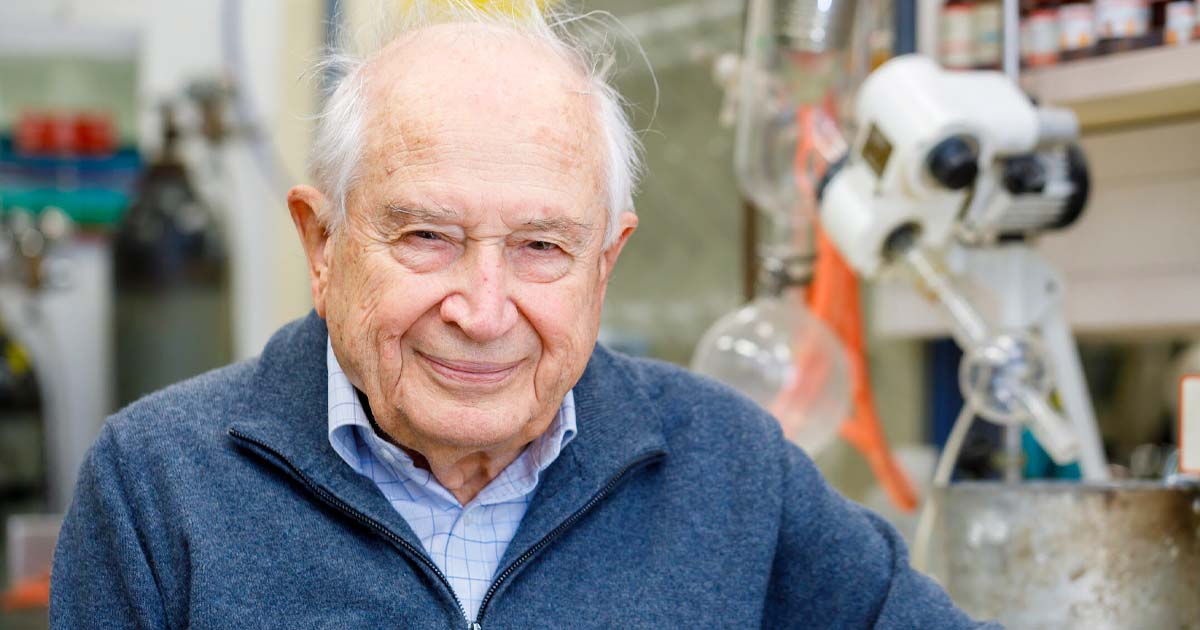
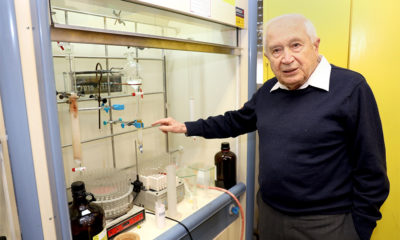
Raphael Mechoulam, an Israeli researcher and chemistry professor known as the «father of medical cannabis,», passed away recently after devoting much of his life to the study of cannabis.
If it isn't not the first to have conducted research Through his work on this plant, he made pioneering contributions to numerous scientific advances in our understanding of it, for the benefit of medicine and patients. Thanks to his work, we all know a little more about cannabis.
Here are his five most important discoveries.
He isolated THC
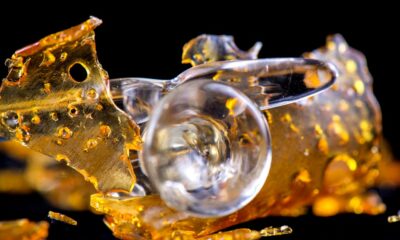
During the early years of his research, in 1963, Dr. Mechoulam and his team focused on understanding the chemistry of cannabinoids. In 1964, They were able to isolate THC (tetrahydrocannabinol), one of the two best-known cannabinoids in cannabis and the one responsible for the plant’s psychotropic effects. After isolating THC, researchers were able to determine its chemical structure and even synthesize it.
The isolation of THC has been of paramount importance for a great deal of other research on cannabis.
The Discovery of the Halo Effect
Dr. Mechoulam discovered the’entourage effect with Dr. Shimon Ben-Shabat in 1999. This refers to the synergistic way in which cannabinoids work together, often enhancing each other’s benefits when consumed together rather than individually or in isolated form. He and his team observed that certain cannabinoids, when taken in isolation, had little or no effect, but when combined with THC or other cannabinoids, they proved to be highly beneficial.
It is important to understand the entourage effect, not only for scientific purposes but also for consumers. It can help medical patients better understand the types of products they should use. This is all the more important given that there are now dozens of different forms of cannabis, from CBD isolates and THC to whole-plant-based medications. People take isolates for certain reasons, but today, because of the entourage effect, we know that to maximize the healing properties of cannabis, it’s best to take whole-plant-based medications.
The Effect of CBD on Epilepsy
In 1980, Dr. Mechoulam published the results of a small study suggesting that CBD might be beneficial in reducing seizures in patients with epilepsy. He found that CBD was more effective than a placebo, and He expected this to spark interest major pharmaceutical companies to develop CBD-based medications for epilepsy.
That didn’t happen—at least not for several decades. It was thanks to his groundbreaking research that THC had to share the spotlight with CBD. CBD doesn’t get you high, but it has powerful antiepileptic properties that no other pharmaceutical drug can match.
Today, it’s easy to see that Dr. Mechoulam had stumbled upon something important when he studied CBD at a time when no one else was paying attention to it. CBD is now a household name in the cannabis world; it’s incorporated into all kinds of products, from beverages to capsules, including cosmetics, edibles and much more. Thousands of people use CBD not only for epilepsy, but also for anxiety, stress, depression, inflammation, and overall well-being.
Discovering Endocannabinoids
Dr. Mechoulam's research also led to the discovery of the endocannabinoids, particularly anandamide in 1992, a compound produced by the human body that can activate the CB1 receptor—the same receptor that binds to THC. This was a significant milestone, as it was the very first endocannabinoid to be discovered.
Her Discovery of Anandamide Not only has it had a significant impact on cannabis research, but it has also had a considerable impact on the fields of biology, biochemistry, chemistry, medicine, and pharmacology as a whole.
A cannabinoid more potent than CBD and THC
Dr. Mechoulam has continued his research on cannabis. In 2020, he even discovered another compound called EPM301, which turned out to be more potent than THC and CBD. He was 88 years old when EPM301 was discovered.
It took some time to discover EPM301 due to its instability, but Mechoulam found a method to extract cannabinoid acids that remained stable long enough to be used in further studies and trials. In addition, they discovered that EPM301 could be useful in treating nausea and anxiety, although it may also be helpful in treating cancer, chemotherapy, psoriasis, and inflammatory bowel disease.
























Medical Cannabis in Germany: THC Prices Vary by a Factor of 12

France already has 3,000 cannabis retail outlets. None of them are legal.

Morocco's exports of legal cannabis have expanded to 15 countries

Aurora Cannabis Doubles Its Production Capacity in Germany

Tilray is accelerating its operations in Europe thanks to a license in Portugal

Boston will host the 10th annual State of the Cannabis Industry Conference on October 26

A DEA report confirms that there are no fatal cannabis overdoses

A British patient is challenging the NHS's refusal to reimburse medical cannabis

October 2026 CBD Highlights: 10 Strains and Hash to Discover from 5 French Producers

CBD in France: Traceability, Retail Stores, THC and Driving… What the New Bill Proposes
-
 Business2 weeks ago
The legal cannabis market in New York exceeds 4 billion $ in revenue
-

 Cannabis in France3 weeks ago
Which countries legalized medical cannabis before France?
-
Business3 weeks ago
South Korea is preparing to begin local production of medical cannabis to meet rising demand
-
Cannabis in Thailand3 weeks ago
From the boom in dispensaries to a purely medical approach: Thailand is revising its cannabis policy
-
Cannabis and driving3 weeks ago
Medical Cannabis and Driving: New South Wales Ends Automatic Penalties for THC
-
Cannabis in Argentina4 weeks ago
Argentina Opens Its Market to Hemp Flowers Containing 1% of THC
-
Autism3 weeks ago
Autism and Cannabis: Results from the First Placebo-Controlled Trial of NTI164
-
Cannabis in France2 weeks ago
France’s Drug Policy Chief Defends Cannabis Prohibition... and Runs Into the Facts

















You must be logged in to post a comment Login