Kenya Denies Rastafarians the Right to Use Cannabis

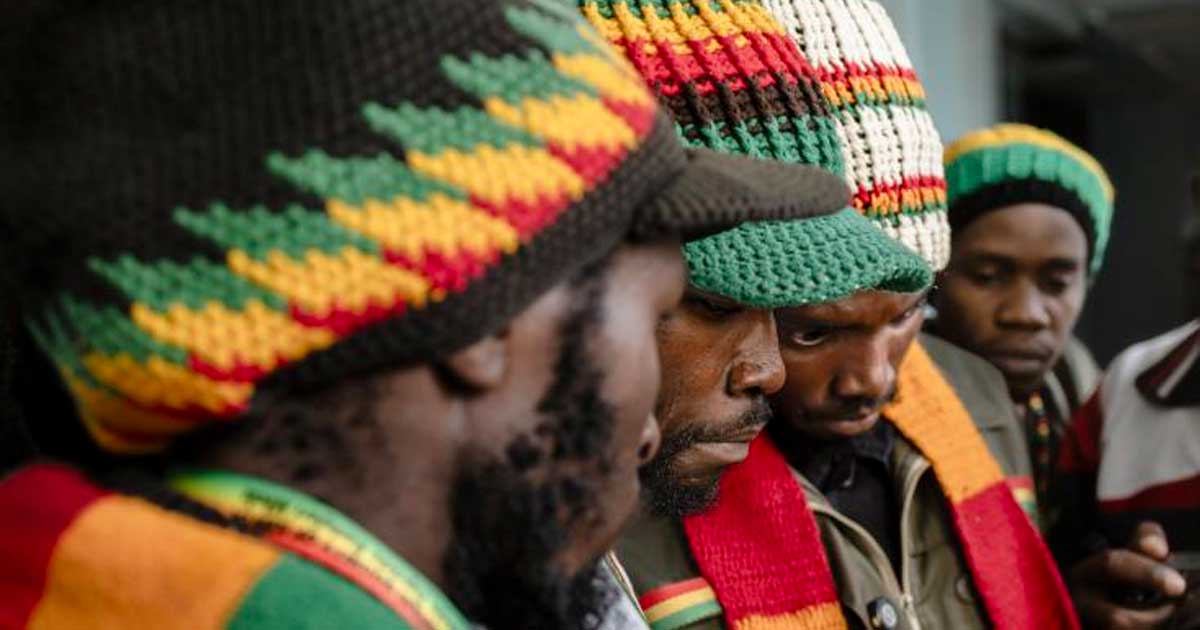
A High Court of Kenya rejected a petition filed by the country's Rastafari community, which requested an exemption authorizing the religious use of the cannabis.
While this ruling upholds Kenya’s laws, the judge also called for a national debate on the country’s approach to cannabis, arguing that this issue goes far beyond the scope of any single religious group.
Court Denies Religious Exemption for Cannabis Use
Legal action, originally filed in 2021, argued that the cannabis plays a central role in worship and meditation Rastafari and that banning its use violates the constitutional right to freedom of religion.
The judge Bahati Mwamuye found that the petitioners had not established a sufficient constitutional and legal basis to justify a derogation from the Law on the Control of Narcotics and Psychotropic Substances, which prohibits the cultivation, possession, and use of cannabis in Kenya.
According to the judge, although the witnesses agreed that cannabis is considered a sacrament within this denomination, they were unable to demonstrate that its use constituted an essential religious obligation.
«While all the witnesses agreed that cannabis is used as a sacrament, they could not agree on whether its use is essential or merely preferred.»
This decision rules that the Rastafarians are subject to the same penalties as any other Kenyan citizen. Under current law, possession or use of cannabis is punishable by fines of up to approximately 2,000 euros, a prison sentence of up to 10 years, or both. Drug trafficking carries significantly harsher penalties.
Judge Calls for a Broader Debate on Cannabis Policy
Although he denied the motion, Judge Mwamuye acknowledged that Kenyan cannabis laws deserved more thorough public scrutiny.
«This isn't just an issue that concerns the Rastafari community, », but an issue that affects society as a whole,« he said, calling for »an in-depth and frank discussion about cannabis and the direction we should take.".
The judge also noted that cannabis use had become widespread throughout the country despite decades of prohibition.
«There is no denying that cannabis use in this country has become ubiquitous, and has likely been so for several decades,» he observed, before quoting the famous reggae anthem by Peter Tosh, Legalize It, including the lyrics: «Judges smoke them, and even lawyers smoke them.».
According to the ruling, the current legal framework may no longer reflect the reality on the ground, even though amending it falls within the jurisdiction of lawmakers rather than the courts.
The Rastas pledge to appeal
The Rastafari community reacted with disappointment and announced that it would challenge the decision before the Court of Appeals. The lawyer Shadrack Wambui, representing the petitioners, confirmed that an appeal would be filed.
In front of the courthouse in Nairobi, community members gathered at the town’s Freedom Corner, where they chanted slogans, played drums, and openly smoked cannabis as a sign of protest. One of the petitioners, Ras Dimo, criticized the decision, calling it an attack on African religious traditions.
«The Rastaman simply wants to burn this sacred plant so that the incense may rise up to the Almighty.»
Another follower, Wanjiru Gakiu, expressed his frustration with this decision.
«I’m sure that if we had tried to legalize something satanic, we would have been allowed to. But when it comes to religion, the country turns a deaf ear and doesn’t want us to enjoy our religious rights.»
Supporters of the ruling also welcomed this outcome. Jedidah Ng’ang’a, a resident of Nairobi, said she opposed any relaxation of cannabis laws because of her Christian beliefs.
«I am very pleased with this ruling because, as a Christian, I would not advocate for the use of marijuana in our country.»
A rapidly growing movement seeking greater recognition
Although the Rastafarian movement originated in Jamaica in the 1930s, it has forged strong historical ties with the’East Africa, particularly through his reverence for the former Ethiopian emperor Haile Selassie and the importance he places on Pan-African identity.
The movement has also become increasingly visible in the Kenya, especially among younger generations. The Rastas claim that existing laws Drug laws are frequently used by the police to target members of their community.
Their legal status has, however, evolved in recent years. In 2019, a Kenyan court ruled that the expulsion of a student for wearing dreadlocks constituted a violation of her religious rights, marking a significant recognition of this faith.






















Medical Cannabis in Germany: THC Prices Vary by a Factor of 12

France already has 3,000 cannabis retail outlets. None of them are legal.

Morocco's exports of legal cannabis have expanded to 15 countries

Aurora Cannabis Doubles Its Production Capacity in Germany

Tilray is accelerating its operations in Europe thanks to a license in Portugal

Boston will host the 10th annual State of the Cannabis Industry Conference on October 26

A DEA report confirms that there are no fatal cannabis overdoses

A British patient is challenging the NHS's refusal to reimburse medical cannabis

October 2026 CBD Highlights: 10 Strains and Hash to Discover from 5 French Producers

CBD in France: Traceability, Retail Stores, THC and Driving… What the New Bill Proposes
-
 Business2 weeks ago
The legal cannabis market in New York exceeds 4 billion $ in revenue
-

 Cannabis in France3 weeks ago
Which countries legalized medical cannabis before France?
-
Business3 weeks ago
South Korea is preparing to begin local production of medical cannabis to meet rising demand
-
Cannabis in Thailand3 weeks ago
From the boom in dispensaries to a purely medical approach: Thailand is revising its cannabis policy
-
Cannabis and driving3 weeks ago
Medical Cannabis and Driving: New South Wales Ends Automatic Penalties for THC
-
Cannabis in Argentina4 weeks ago
Argentina Opens Its Market to Hemp Flowers Containing 1% of THC
-
Autism3 weeks ago
Autism and Cannabis: Results from the First Placebo-Controlled Trial of NTI164
-
Cannabis in France2 weeks ago
France’s Drug Policy Chief Defends Cannabis Prohibition... and Runs Into the Facts

















You must be logged in to post a comment Login