

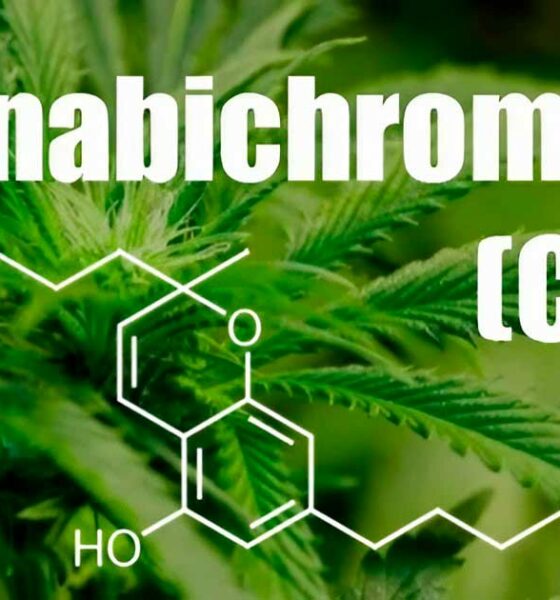
What is CBC (Cannabichromene)?
When studying the medical benefits of cannabis, cannabinoids such as THC and CBD often dominate the conversation. However, another powerful cannabinoid, CBC (cannabichromene), deserves attention for its unique role in enhancing the effects of THC and for its therapeutic benefits, such as pain relief, anti-inflammatory properties, and much more.
What is CBC (Cannabichromene)?
The CBC (Cannabichromene) is one of the many cannabinoids found in cannabis, alongside more well-known compounds like THC (tetrahydrocannabinol) and CBD (cannabidiol).
Discovered in 1966, CBC is considered a «minor» cannabinoid because it is generally present in lower quantities in cannabis plants than THC and CBD. Despite its low concentration, CBC plays an important role in the overall therapeutic effects of cannabis, particularly through what is known as the entourage effect.
Main features of CBC
- Non-psychoactive Unlike THC, CBC does not produce any psychoactive or intoxicating effects. This means it doesn't get users high, but it interacts with other cannabinoids and the body's endocannabinoid system to enhance therapeutic benefits.
- Therapeutic properties :
- Pain relief CBC has been shown to have analgesic properties, especially when combined with THC, which amplifies the analgesic effects.
- Anti-inflammatory Research suggests that CBD reduces inflammation without triggering the common side effects of nonsteroidal anti-inflammatory drugs (NSAIDs).
- Mood enhancement CBC has demonstrated antidepressant effects, even stronger than CBD, making it potentially beneficial in managing depression or mood disorders.
- Bone growth stimulation CBC has been associated with increased bone growth by stimulating the production of new bone tissue, making it a potential aid in the treatment of bone diseases.
- Interaction with the endocannabinoid system CBC does not bind strongly to CB1 receptors (which are responsible for the psychoactive effects of THC), but it affects CB2 receptors, which are found primarily in the immune system. It also interacts with other receptors in the body such as TRPV1 and TRPA1, which are involved in regulating pain perception and inflammation.
| Criterion | CBC | CBD | THC | CBG |
|---|---|---|---|---|
| Full Name | Cannabichromene | Cannabidiol | Tetrahydrocannabinol | Cannabigerol |
| Psychoactive | No | No | Yes | No |
| Abundance in the plant | Low (minor) | High (major) | High (major) | Very low (minor) |
| Targeted receptors | CB2, TRPV1, TRPA1 | CB1/CB2 (indirect), 5-HT1A | CB1, CB2 | CB1, CB2, α2-adrenergic |
| Anti-inflammatory | Yes | Yes | Partial | Yes |
| Pain reliever | Yes (synergistic) | Yes | Yes (powerful) | Partial |
| Antidepressant | Yes (strong) | Yes | Variable | Partial |
| Antibacterial / antifungal | Yes | Partial | Partial | Yes |
| Neuroprotective | Yes (promising) | Yes | Variable | Yes |
| Bone Growth | Yes (studied) | Partial | Undocumented | Partial |
| Surrounding effect | THC Booster | THC Modulator | Main compound | Precursor (CBGA) |
| Legality in France | Uncategorized | Legal (<0.3% THC) | Prohibited (>0.3%) | Uncategorized |
| Product Availability | Rare (niche) | Very wide | Limited (medical) | Growing |
| Research Level | Emerging | Very advanced | Advanced | In development |
Medical Effects of CBD: Pain Relief, Anti-inflammatory, and Sedative Properties
Cannabichromene (CBC) offers a range of therapeutic benefits, many of which have attracted the attention of researchers studying cannabinoids. Although it is a lesser-known compound than THC and CBD, CBC has shown significant potential in treating various health issues, often in synergy with other cannabinoids. Here are the main therapeutic benefits of CBC:
Pain relief
CBC is known for its analgesic (pain-relieving) properties. It interacts with pain-regulating receptors such as TRPV1 (a receptor involved in pain perception), which helps reduce pain signals in the body. Although CBC alone is not as potent as THC in pain management, it enhances THC's analgesic effects when used together, making it a powerful tool in full-spectrum cannabis products.
Anti-inflammatory effects
One of the main therapeutic benefits of CBC is its ability to reduce inflammation. Research has shown that CBC can help inhibit inflammation, particularly in cases where inflammation leads to chronic pain or discomfort. Unlike NSAIDs (non-steroidal anti-inflammatory drugs), which can have side effects, CBC offers a natural alternative without risk to organs such as the stomach or liver.
Antidepressant properties
The CBC demonstrated antidepressant effects, even stronger than CBD in some studies. It interacts with certain brain receptors (such as the pathways of serotonin and of ‘anandamide which helps regulate mood and alleviate symptoms of depression. Although further research is needed, CBC shows promise in cannabinoid-based mood disorder treatments.
Antibacterial and antifungal properties
The CBC has demonstrated activities antibacterial and antifungals, especially against certain strains of bacteria like E. coli and Staphylococcus aureus. This suggests that CBC could potentially be used as a natural antimicrobial agent to combat infections or be incorporated into treatments for skin conditions caused by bacteria and fungi.
Neuroprotective effects
The CBC showed promise in terms of neuroprotection, which means it can help protect the brain and nervous system from damage or degeneration. Its potential to support brain health could make it beneficial in the treatment of neurodegenerative diseases like the disease of ‘Alzheimer or the disease of Parkinson. CBC helps fight oxidative stress, a key factor in brain cell aging and cognitive decline.
Promotes skin health
Due to its anti-inflammatory and antimicrobial properties, CBD could be useful for treating skin conditions such as the’acne. Acne is often triggered by inflammation and bacteria, and CBC's ability to reduce both of these factors makes it a promising ingredient for skincare products aimed at reducing acne breakouts.
How CBD Enhances THC: The THC Activator
First, CBD relieves pain by interacting with THC. We assume that The CBC's ability to combat pain is mainly due to the enhancement of THC's properties, not necessarily its ability to independently cause this reaction.
Research shows that CBC not only enhances the pain-relieving properties of THC, but also has sedative effects, making it useful for relaxation and sleep aid. Furthermore, CBC's anti-inflammatory action helps reduce swelling while promoting homeostasis, or the natural balance of the body's internal systems.
It is also suggested that high levels of CBC make cannabis varieties full of THC even more powerful. CBC therefore acts as a THC amplifier. Like the cannabinoids CBD and CBG, The CBC has no psychoactive properties, but it helps THC deliver its effects. It is found in large quantities in cannabis strains native to the Tropics.
In what's called the entourage effect, researchers believe that dozens of cannabinoids and terpenes are involved in creating a greater overall therapeutic efficacy than each cannabinoid taken independently. These cannabinoids therefore interact with each other, but also with the cannabinoids naturally produced by the body.
CBC and Bone Growth: A Stimulator for Stronger Bones
CBC has also shown its ability to stimulate bone growth. Although present in smaller amounts than THC and CBD, CBC is known to work in conjunction with other cannabinoids. Recent research has shown that this relatively rare cannabinoid possesses an antidepressant effect 10 times greater than its cousin CBD.
The CBC vs. Cancer
Beyond its role as a THC booster, cannabichromene could be a tool for fighting cancer, particularly due to the way it interacts with the’anandamide, a endocannabinoid. CBC allows more anandamide to remain in patients' systems by inhibiting its absorption. This basically means it enhances the immune system's ability to use its own chemicals to get rid of cancer.
Many health experts have concluded that therapies involving a single cannabinoid, such as CBD oils used to treat children with epilepsy may not be effective enough for most patients. Proponents of whole-plant therapy point to the entourage effect and the subtle ways in which CBC enhances the effects of other cannabinoids or endocannabinoids.
With the discovery of more than 110 cannabinoids, further research is needed to understand the nuanced interactions of these chemical compounds, which bind perfectly to the CB1 and CB2 receptors in the human body and nervous system. A better understanding of cannabinoids and their efficacy is required before patients can receive safe treatments that target the right symptoms.
As research on cannabinoids such as CBC continues to advance, it is clear that cannabichromene has immense potential, both as a THC enhancer and as a standalone therapeutic agent. Its ability to interact with the endocannabinoid system and enhance the overall efficacy of cannabis makes it an essential component of full-spectrum treatments. Future studies may reveal even more health benefits of this powerful cannabinoid, particularly in areas such as pain management, cancer treatment, and the stimulation of bone growth.








CBD is said to promote athletic recovery, without improving performance

294 cannabis clubs in Chile: a booming movement with uneven distribution

Chronic Sciatica: New York Approves First Clinical Trial of a THC-Based Medication

United States: The DEA is accelerating the integration of medical cannabis at the federal level

Florida is nearing one million patients using medical cannabis

Uruguay Revives Its Plan to Allow Tourists to Legally Access Cannabis

In Brazil, researchers are developing an innovative CBD eye drop

Autism: Medical Cannabis Is Linked to Reduced Anxiety

The $28 billion U.S. hemp market remains under threat

