
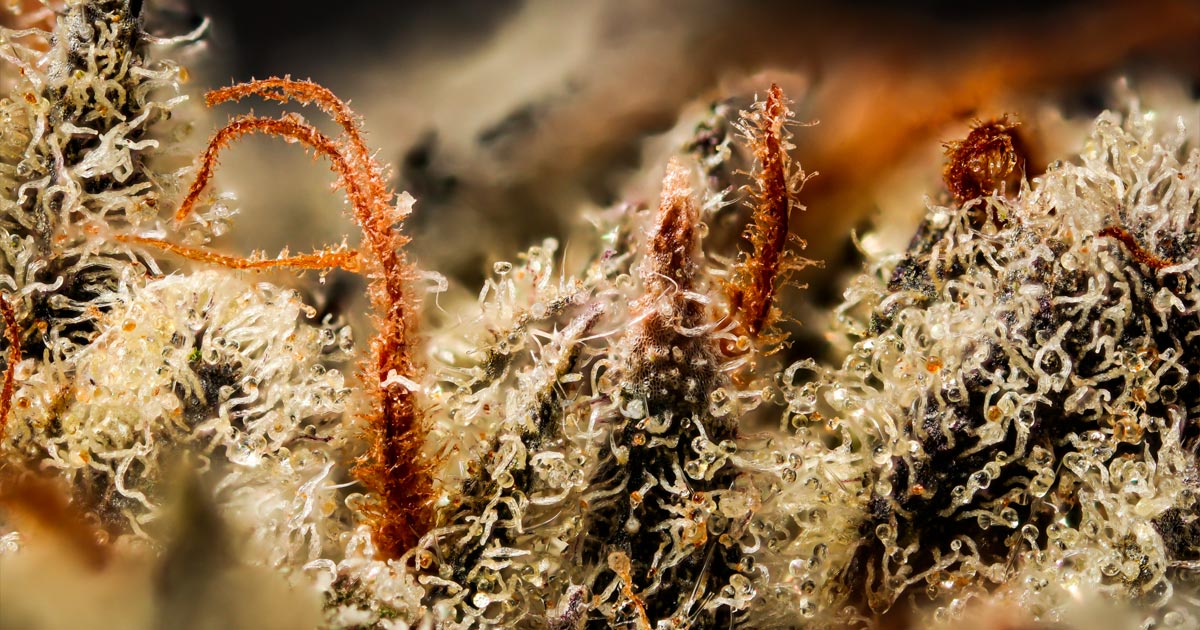
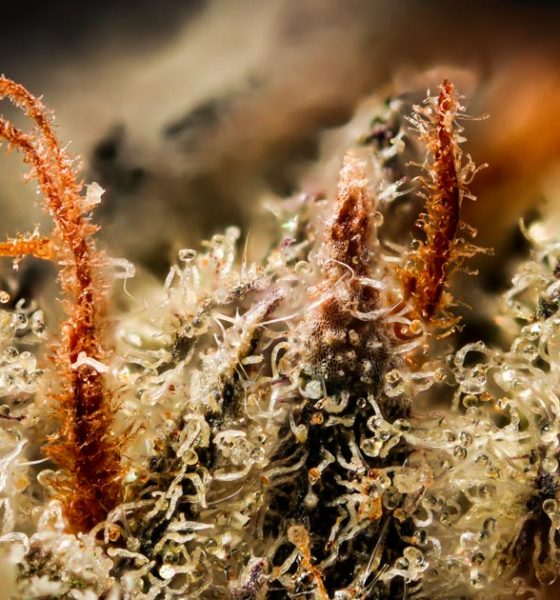
What is cannabinol (CBN)?
CBN is the cannabinoid resulting from the degradation of tetrahydrocannabinol (THC) either by time or light. THC degradation can be accelerated by exposing dried plant material to oxygen and heat. Cannabinol (CBN) is only mildly intoxicating; current research indicates that it may have only a quarter (¼) the potency of THC.
Find out more about cannabinol (CBN)
In more ways than one, CBN is a kind of «soporific» cannabinoid. It is far less popular than THC or CBD, and for the moment it is certainly less fashionable than terpenes.
Given its sedative effects and dominant presence in aged cannabis, CBN's reputation - both as a sleep-inducing cannabinoid and as a less desirable cannabinoid than THC or CBD - is justified, if not entirely satisfactory. CBN's distinct sedative quality is undoubtedly what sets it apart from other cannabinoids, but that doesn't mean we don't have a lot to learn from it. cannabinoid CBN, or much to be gained by learning more about its chemical composition and effects.
Most research into the effects of cannabinol, particularly sedation, has been carried out on rodents. A 1975 study has shown that CBN enhances the sedative effects of THC in rats and mice. Sedation is generally associated with CBN, as aged flowers contain much more CBN than fresh flowers. Sedation is not necessarily a product of CBN; rather, aged cannabis containing CBN cannabinoids will be sedative because it has also lost low-molecular-weight monoterpenoids in favor of more sedative sesquiterpenoids. The sedation factor is one of the main differences between CBN and CBD, The latter cannabinoid does not cause drowsiness, except possibly at very high doses.
Is CBN legal?
At present, CBN is not listed as a controlled substance. However, the legal issue could prove more complex, as CBN could be considered an analogue of THC, which is a listed substance in France.
How CBN works
One of the most valuable aspects of cannabis is that its cannabinoids offer multiple mechanisms of action, or pathways through which they produce an effect. CBD and THC produce beneficial effects, in part, because they can activate several biological pathways at once. They can also produce a wider variety of effects through distinct CB1 and CB2 receptor pathways.
The cannabinoid CBN has not been as rigorously researched as CBD, THC or even certain terpenes. But as researchers begin to harness cannabis for all its possible benefits, the demand for more information will likely reveal the full profile of CBN's effects.
The link between CBN and THC
Our current understanding of CBN as a major cannabinoid goes back a long way. 1999 study in which the United Nations Office on Drugs and Crime (UNODC) tested the loss of potency of cannabis over time. According to this study, the THC content of the cannabis sample tested fell to half its initial potency after four years. In addition, as THC oxidized and dissipated, it began to convert to CBN. The study also revealed that THC degradation was greatest during the first two years of inadequate storage, establishing a clear link between THC/CBN conversion and plant vulnerability.
Simply put, this study shows that THC degrades to CBN over time, meaning that cannabis generally becomes richer in CBN as it ages. The study also reveals why CBN and THC cannabinoids share alternative mechanisms of action at CB1 and CB2 receptors. When a laboratory result shows a high level of CBN, this indicates that the cannabis has aged considerably. As the UNODC study concludes, «a relationship between the concentration ratio between CBN and THC and storage time ... could serve as a guide to determine the approximate age of a given marijuana sample stored at room temperature.»
Benefits and medical uses of CBN
CBN may be the result of THC degradation, but it also presents new avenues for exploring the medical use of cannabis. In recent years, both THC and CBD have been highly valued for their therapeutic versatility. CBN, although much less well known than CBD or THC, also has an impressive list of potential medical uses.
Anti-insomnia
CBN is still mainly appreciated as a powerful sleep aid. According to an analysis by Steep Hill Labs, 5 mg of CBN is as effective as 10 mg of diazepam, a leading pharmaceutical sedative. As an insomnia medication, CBN is not only potent, but also easy to obtain, provided you have access to cannabis. If you're having trouble finding a cannabis product with a high CBN content (which, given their current scarcity on the market, is more than likely), simply store some cannabis in a non-hermetic container and let it sit for a few weeks or months.
Pain relief
In addition to its effectiveness as a sleep aid, CBN has recently has been identified as a potential analgesic. As previously mentioned, CBN has different mechanisms of action to CBD and THC. It is considered a weak CB1 partial agonist, meaning that it binds directly to the receptor but induces much weaker effects compared to a full agonist. In fact, CBN has been shown to produce only about 10 % of the activity of THC. Rather than relieving pain via CB1 or CB2 receptors, CBN releases peptides from sensory nerves, activating another nervous mechanism to achieve the same ends.
Anti-bacterial
CBN is one of many cannabinoids with the potential to fight bacteria. Tested on CBN has proved highly effective in the treatment of several antibiotic-resistant bacteria, and could prove a viable option for reducing methicillin-resistant Staphyloccus aureus (MRSA) bacteria in the future.
Anti-inflammatory
Cannabinoids can also be effective anti-inflammatories. CBN, while not as widely used for anti-inflammatory purposes as CBD or THC, may have similar abilities to treat a variety of inflammatory conditions. A 2009 study on cannabinoids as new anti-inflammatory drugs, for example, has identified CBD as a possible treatment for inflammatory disorders such as allergic asthma. Research has also revealed that CBN can treat glaucoma by reducing the inflammation that causes intraocular pressure.
Anti-convulsant
From studies dating back to the 1970s, have identified CBN as an effective treatment for seizure disorders. Like CBD and THC, CBN has the potential to reduce epileptic seizures and symptoms. Patients should be warned, however, that CBN's anticonvulsant properties may be more effective in conjunction with CBD and THC than as an isolated compound.
Bone cell growth stimulant
CBN fulfils all the usual requirements of a medicinal cannabinoid: pain relief, anti-inflammation, appetite stimulation, etc. But it can also stimulate bone marrow cell growth. By gathering and modulating stem cells, CBN may be an effective cannabinoid for creating bone tissue and healing fractures.
Appetite stimulant
In addition to the potential medical uses already covered, CBN can be an effective appetite stimulant. A study carried out in 2012 revealed that rats administered CBN showed a marked increase in the quantity and duration of meals. These results offer the possibility of using CBN as a non-intoxicating alternative to THC-based appetite stimulants.
Pharmacological history of CBN
Cannabis regulars may be surprised to learn that CBN was the first phytocannabinoid to be isolated - from a red oil extract of cannabis by Thomas Barlow Wood, WT Newton Spivey and Thomas Hill Easterfield in 1896. It wasn't until 1932 that R.S. Cahn clarified the chemical structure of CBN, paving the way for the chemical synthesis of the cannabinoid and its official discovery by two separate research groups, Lord Todd in the UK and Roger Adams in the United States in 1940.
After its discovery in 1940, the cannabinoid CBN was considered the main psychoactive component of cannabis for over two decades. Then, Israeli researchers Yechiel Gaoni and Raphael Mechoulam succeeded in isolating THC in 1964 and discovered its psychoactive dominance in the cannabis plant. This discovery led to further research which identified CBN as an oxidized and degraded version of THC, but without the latter's intoxicating effects.
More research is needed to fully understand the sedative effects of CBN. Some even theorize that changes in the terpenoid profile may contribute to the sedative quality of aged cannabis as much, if not more, than THC degradation.
When a person uses a product labeled «CBN», it is not an isolated cannabinoid. It contains other cannabis compounds in addition to CBN, including THC and terpenes, many of which are sedative.
The only way to know the specific medicinal properties of a cannabinoid is to study it as an isolated compound. A 1976 study did just that, exploring the sedative effects of CBN alone and in combination with THC. The researchers discovered that CBN was an «inactive» cannabinoid on its own - meaning that it was not sedative when administered to volunteers. Interestingly, CBN produced greater sedation when combined with THC, compared with THC alone. Thus, it is the combination of these different compounds that could be responsible for the sedation, and probably not the cannabinoid itself.
What is CBN oil?
Increasingly, as each cannabinoid is explored for its full medicinal value, CBN may become a more common cannabinoid and appear in CBN oil, CBN tincture, CBN capsules CBN and topical products. In fact, a few select companies have already jumped on the CBN bandwagon.
Most cannabis contains less than 1 % of CBN to start with, but there are many strains that have a higher CBN production potential than others. Anyone looking to develop CBN from aged cannabis should look to cultivars known to have higher CBN content, such as Strawberry Haze, Jorge's Diamonds, A-Dub, Amsterdam Flame, Death Star, Cataract Kush, Kosher Kush, Pineapple Chunk, Purple Sour Diesel, Red Dragon and Shark Shock.
Some CBN enthusiasts have noticed that the cannabinoid's sedative effects are stronger when taken with food. If you'd like to try this method, making CBN capsules at home is pretty straightforward and usually cost-effective. Basically, all you have to do is simmer aged cannabis in coconut oil over a low heat for a few hours, then place the infusion in a capsule maker.
Plants harvested late, around 7 to 10 days after the usual harvest, also develop more CBN, as the THC has degraded.








CBD is said to promote athletic recovery, without improving performance

294 cannabis clubs in Chile: a booming movement with uneven distribution

Chronic Sciatica: New York Approves First Clinical Trial of a THC-Based Medication

United States: The DEA is accelerating the integration of medical cannabis at the federal level

Florida is nearing one million patients using medical cannabis

Uruguay Revives Its Plan to Allow Tourists to Legally Access Cannabis

In Brazil, researchers are developing an innovative CBD eye drop

Autism: Medical Cannabis Is Linked to Reduced Anxiety

The $28 billion U.S. hemp market remains under threat

