Terpenes enhance THC's ability to interact with endocannabinoid receptors

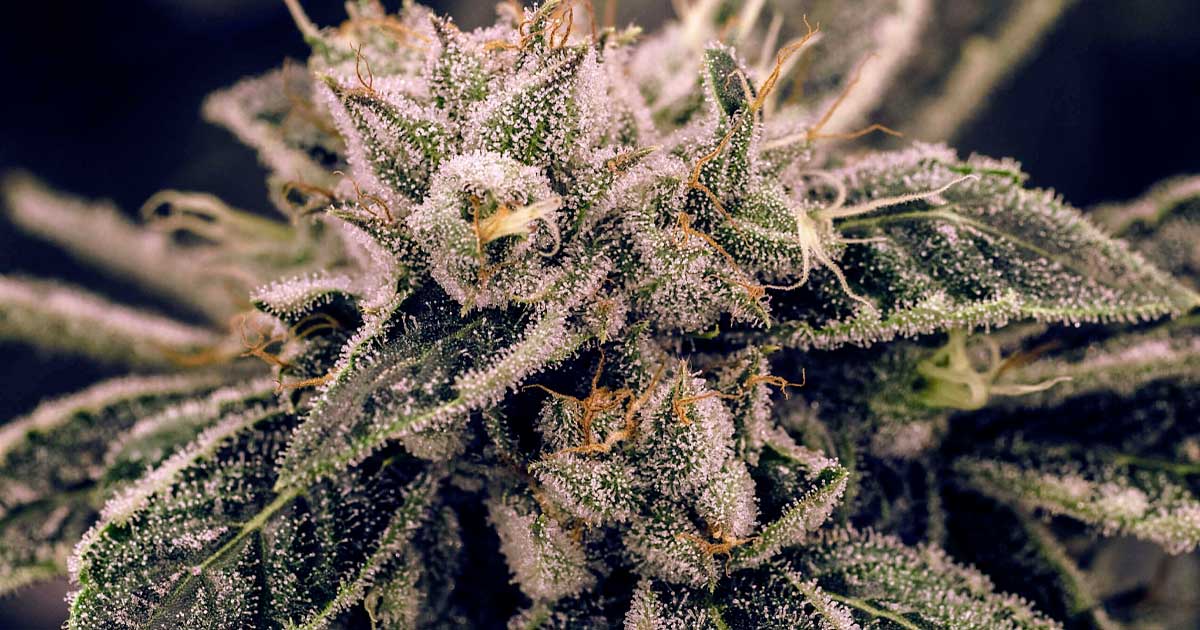
For many years, cannabis terpenes were very little studied. Terpenes are the olfactory compounds that give the cannabis plant its smell – and its taste. Scientists today estimate that the cannabis plant contains over 150 different terpenes, with different terpene ratios depending on the genetics.
Israeli researchers recently studied cannabis terpenes and their interaction with the CB1 receptor, one of the components of the endocannabinoid system with which the active ingredients of cannabis interact. What they have discovered regarding the interaction of THC with the receptor and terpenes could change how cannabis-based products and treatments are developed in the future.
The terpenes present in the cannabis plant would thus strengthen THC's ability to interact with the endogenous CB1 receptor, which could increase its effects, according to preclinical data published in the journal Biochemical Pharmacology. The observation goes hand in hand with what is designated as the entourage effect, namely the stronger ability of cannabis compounds to act together than separately.
Israeli scientists evaluated the role of terpenes in CB1 receptor-mediated functions. They also evaluated the extent to which terpenes acted as direct agonists of the CB1 receptor and as modulators of THC agonism.
Researchers have reported that certain terpenes – including borneol, geraniol, limonene, linalool, ocimene, sabinene, and terpineol – amplified THC's activity at the CB1 receptor, even in small amounts.
They reported the following: «The results demonstrate that all terpenes, when tested individually, activate CB1 receptors, at approximately 10-50 percent of the activation by THC alone. The combination of some of these terpenes with THC significantly increases CB1 receptor activity, compared to THC alone. In some cases, it is multiplied several times over. It is important to note that this amplification is evident for terpene/THC ratios similar to those found in the cannabis plant, which reflect very low concentrations of terpenes.»
The authors of the study They concluded: «The use of selected terpenes can allow for a reduction in the THC dose in certain treatments and, consequently, potentially minimize the adverse effects associated with THC. This would also make it possible to adapt treatments to more sensitive populations such as children and the elderly. Enrichment with selected terpenes can allow for composition to be tailored to personal needs and changes during chronic use, for example, for daytime or for sleep.»
The results are added to those of a study conducted in 2021, according to which certain terpenes activate CB1 and CB2 receptors, and that the combined administration of cannabinoids and terpenes produces additive effects. The authors of this study also suggested that «terpenes could be used to enhance the analgesic properties of cannabis/cannabinoid therapy, without worsening the side effects of cannabinoid treatment.».
A study published earlier this year showed that cannabis flowers with high levels of myrcene and terpinolene are associated with greater perceived symptom relief in patients.




























«Vincy Gold»: Humboldt Seed Company on the Hunt for Saint Vincent Sativas

Cronos Completes the Acquisition of CanAdelaar for 57.5 million euros

Cannabis with a "bloody" twist: Discover Sensi True Blood and Sensi Sangria, the two new strains from Sensi Seeds

Hemp: The Council of the EU Takes a Stand on New Production and Marketing Rules

Missouri's legal cannabis market accounts for 93 % of consumer spending

THC Gummies: How to Read a Certificate of Analysis Before Buying

British patients now have access to THCV-rich cannabis flowers

Spain: Medical Cannabis Is Coming to About 50 Hospitals

JIHE 2026: Japan’s Largest Trade Show Dedicated to Hemp and CBD Returns to Tokyo with More Than 100 Industry Players

New Caledonia: The Courts Clear the Way for the Return of CBD
-
 Business3 weeks ago
The legal cannabis market in New York exceeds 4 billion $ in revenue
-
Cannabis in France1 week ago
France already has 3,000 cannabis retail outlets. None of them are legal.
-
Cannabis in the U.S.1 week ago
A DEA report confirms that there are no fatal cannabis overdoses
-

 Cannabis and driving4 weeks ago
Medical Cannabis and Driving: New South Wales Ends Automatic Penalties for THC
-
Cannabis in France3 weeks ago
France’s Drug Policy Chief Defends Cannabis Prohibition... and Runs Into the Facts
-
Studies on cannabis2 weeks ago
Cannabis Oil and Endometriosis: A Promising Study for Pain Relief
-
CBD2 weeks ago
In Brazil, researchers are developing an innovative CBD eye drop
-
Autism4 weeks ago
Autism and Cannabis: Results from the First Placebo-Controlled Trial of NTI164
















You must be logged in to post a comment Login