

What are cannabinoids?
Cannabinoids are at the root of cannabis' action on the body, whether for medical or recreational use. Used therapeutically, cannabis can help chemotherapy patients cope with nausea. Multiple sclerosis sufferers can find relief from pain. And cannabinoids reduce seizures in children suffering from epilepsy, to the point where they can even return to school.
But how do cannabinoids affect patients? What differentiates the medical part of the plant? By identifying the chemical components that provide cannabis consumers with its benefits, couldn't growers and scientists strive to produce only those varieties of cannabis composed of as many of these compounds as possible?
Cannabinoids: the first chemical element
The chemical components of cannabis that produce the medical and recreational effects for patients and recreational users are called cannabinoids. Cannabinoids are simply a chemical compound in cannabis, which causes certain reactions when ingested in the form of smoke or vapor, or through the stomach when eaten. They can also pass through the skin, as is the case with cannabis creams. Effects differ according to how cannabis is consumed, in duration and potency. For example, smoked cannabis takes less time to exert its effects than when eaten.
Cannabinoids were discovered in 1940 by Roger Adams in the USA, and confirmed by Dr. G. B. B. in the United States. Raphael Mechoulam at the Hebrew University of Jerusalem. These chemicals work in synergy with the human body, and in particular with the endocannabinoid system. There are over 111 cannabinoids in the plant. The best known are CBD and the THC, sometimes referred to as CBN or CBG, and variants such as THCV and CBDV.
When cannabis is consumed, cannabinoids bind to their dedicated neuronal receptors. It takes about 2’30 minutes before you feel the effects, such as pain, inflammation or reduced nausea (the 3 symptoms most easily relieved by cannabis).
The THC route
THC is the active ingredient most present in cannabis. It delivers euphoric, relaxing or brain-altering effects, the "high". However, THC also provides medical patients with anti-inflammatory effects, among many others, for example against Crohn's disease.
THC has also proved effective for patients suffering from depression or post-traumatic stress disorder. Some cannabis strains, such as Trainwreck or Girl Scout Cookies, contain up to 30% of THC. The potency of these strains can produce significant effects, especially for victims of severe pain. Those looking for more can turn to cannabis concentrates, which can contain between 40 and 90% of THC.
Cannabinoid receptors
There are two main types of cannabinoid receptor in the endocannabinoid system: CB1 and CB2. The CB receivers1 receptors, located in the brain and central nervous system, adapt to THC molecules. This receptor is responsible for the euphoric and psychoactive effects of THC, as it is found in large quantities in the brain. Visit CB2 receptors, found in the immune system and associated organs, combines with CBD to deliver medical effects, such as reducing epileptic seizures and certain tumors in children and adults.
Other receptors have yet to be discovered. Cannabinoid research is currently limited by federal restrictions on cannabis in the USA and the general illegality of cannabis, a drug still classified as a dangerous substance. Scientific advances on the interactions between cannabis and the human body could be highlighted by research into the effects of cannabinoids on the endocannabinoid system.
Back to basics
Every disease or condition is different, not to mention patients' reactions to each therapy. Clinical trials on men are necessary to help patients gain access to cannabis-based treatments that can help offset some of the side effects of general treatments.
The cannabinoid community is demonstrating, step by step, the effects of cannabinoids in alleviating epilepsy and Crohn's disease. Unfortunately, more research is needed to take these facts out of the realm of scientific truth, and show how cannabinoids interact with the human body, and for example also with terpenes.
- Cannabinoid basics
- The endocannabinoid system
- Cannabinoid receptors
- Evolution of CBD's action in scientific history
- Surrounding effect
- List of cannabinoids
- Frequently asked questions
Cannabinoid basics
The cannabinoids are a set of molecules which bind to specific receptors in the human body, forming what is known as the endocannabinoid system. The metaphor of «the key and the lock» is often used to describe this process. The human body has specific binding zones (the lock) on the surface of many cells, and our body produces several endocannabinoids (the keys) that bind to these cannabinoid (CB) receptors to activate them.
In 1992, researchers first discovered an endogenous substance (produced by the body) that binds to these cannabinoid receptors. This substance, called anandamide, comes from the Sanskrit word «Ananda», meaning absolute happiness, and «amide» because of its chemical structure. A second endocannaboid, 2-arachidonoylyglycerol (2-AG), was discovered in 1995. These two endocannabinoids are the most extensively studied to date. Today, some 200 related substances are presumed to exist, bringing together endocannabinoids and their function in the so-called entourage effect. Many endocannabinoids bind not only to endocannabinoid receptors, but also to CB3, vanilloid and other receptors.
In addition to endocannabinoids, scientists have identified cannabinoids in cannabis, called phytocannabinoids, which function by mimicking the effects of, or acting against, certain endocannabinoids. Phytocannabinoids and terpenes are produced in the cannabis resin glands, or trichomes, found on the flowers and main leaves of mature plants. The volume of resin produced and its cannabinoid content vary according to plant type, growing conditions and harvesting period. The chemical stability of cannabinoids in harvested plants is affected by mould, temperature, light and storage, but gradually degrades under any storage conditions.
When a cannabinoid induces a receptor to act in the same way as it would with a natural hormone or neurotransmitter, it is called an agonist. On the other hand, when it prevents a receptor from binding with a naturally-occurring compound, resulting in the modification of a natural trait (appetite, pain, alertness), it is called an antagonist. Research is currently focusing on a better understanding of how cannabinoids can unblock (or block) certain receptors.
Of the more than 100 phytocannabinoids identified in the cannabis plant, most have medicinal value. Most differ only in a small chemical part. The most widely studied cannabinoids are tetrahydrocannabinol (THC), known for its psychoactive effects, and cannabidiol (CBD) for its healing properties.
Cannabinoids can be administered by smoking, vaporizing, oral ingestion, intradermal patch, sublingual absorption or suppository.
The endocannabinoid system
The endogenous cannabinoid system (ECS), The endocannabinoid system (ECS), more commonly known as the endocannabinoid system, is found in most mammals, and regulates a wide range of biological functions. The ECS is a biochemical control system of neuromodulatory lipids (molecules that include fats, sterols and fat-soluble vitamins such as A, D, E and K) and specialized receptors configured to accept certain cannabinoids. In general, a given receptor will only accept certain compounds and will be unaffected by others, like a key that only works with a lock.
These specialized receptors are located throughout the human body, including the hippocampus (specialized in memory and learning), the cerebral cortex (decision-making, emotional behavior) and the amygdala (emotions). When a specific cannabinoid or combination of cannabinoids binds to a specialized receptor, a series of events is triggered in the cell, resulting in a change in its activity, gene regulation and/or the signals it sends to surrounding cells. This process is known as signal transduction.
Endocannabinoid deficiencies are a disorder implicated in several diseases, including fibromyalgia, migraine and irritable stomach syndrome.
Cannabinoid receptors
The main cannabinoid receptors are called type 1 receptors (CB1-R) and type 2 receptors (CB2-R). These receptors are activated by three types of cannabinoids:
- endocannabinoids: endogenous cannabinoids produced naturally in the body (e.g. anandamide)
- phytocannabinoids: concentrated in the resin of the heads and leaves of certain plants such as cannabis (e.g. THC and CBD)
- synthetic cannabinoids: manufactured artificially, for example in laboratories
First detected in the brain, science has now shown that CB1-R is also located in other organs such as connective tissues, gonads and glands. They play an important role in movement coordination, spatial orientation and sensory perception (taste, touch, smell, hearing), cognitive performance and motivation.
The most important function of the CB1 receptor is the reduction of excessive or inappropriate signals from the brain's neurotransmitters. By activating CB1-R, hyperactive or hypoactive messengers such as serotonin or dopamine are rebalanced. Other symptoms such as nausea, muscle spasticity or epileptic seizures can be relieved or reduced by cannabinoid therapy.
CB2 receptors are associated with the immune system and are located outside the brain, in places such as the intestine, spleen, liver, heart, kidneys, bones, blood vessels, lymphatic cells, endocrine glands and reproductive organs. CBD, for example, binds to the CB2 receptor, alleviating the impact of inflammatory or neuro-inflammatory diseases. It also plays a role in signal processing in the brain.
A third receiver receives little attention: the TRPV1 (for English transient receptor potential vanilloide 1), receptors activated by molecules from the vanilloid family. The main function of TRPV1 is to detect and regulate body temperature. TRPV1 is responsible for sensations of extreme external heat and pain, and can be subject to desensitization. For this reason, if continuously stimulated, it could effectively treat certain types of neuropathic pain.
Evolution of CBD's action in scientific history
When the CB1 receptor was discovered by Alyn Howlett and William Devane in 1988, it was thought that CBD, unlike THC, did not bind to the CB1 receptor.
The latest data from the scientific community, however, show that CBD interacts directly with CB1-R, at a binding site distinct from that of THC. When it binds to the allosteric site, as opposed to the orthosteric site of THC, CBD influences the way the receptor responds to stimulation by THC and endogenous cannabinoids. Allosteric modulation of CB1-R changes the shape of the receptor, with consequences for cellular signaling efficiency.
A positive allosteric modulator that enhances CB1 receptor signaling indicates that CBD may be useful for treating diseases associated with endocannabinoid deficiency (anorexia, migraines, irritable bowel, fibromyalgia, post-traumatic stress disorder), or pathologies associated with endocannabinoid excess (obesity, metabolic disorders, liver disease, cardiovascular problems).
Surrounding effect
The concept of’entourage effect was introduced in 1998 by Israeli scientists Shimon Ben-Shabat and Raphael Mechoulam. The theory is that the cannabinoids inside the cannabis plant work together through a network of coincidental relationships as part of a larger organism and affect the body through a mechanism similar to the body's endocannabinoid system. In short, these compounds work better together than in isolation.
The greater efficacy of cannabis as a whole makes it irrational to use products containing only elements isolated from the plant, or synthetic cannabinoids attempting to mimic natural components.
Research into the benefits of THC and CBD alone is well known. THC has analgesic, anti-emetic and anti-inflammatory properties. CBD has anti-psychotic, anti-epileptic seizure and anti-anxiety properties. Used separately, their therapeutic effect is limited.
CBD is also known to block THC at the CB1 receptor. Increasing CBD levels when too much THC is ingested can therefore reduce the effects of THC.
List of cannabinoids
Cannabidiol (CBD)
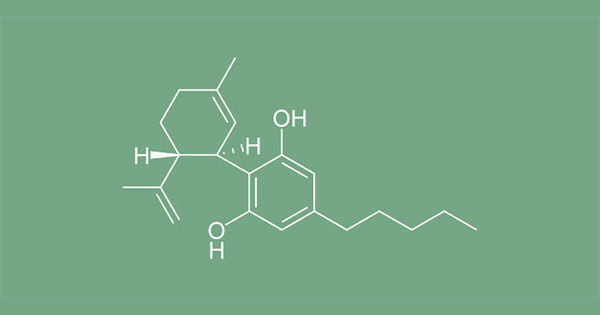
CBD is a cannabinoid with immense medical potential. This is particularly true when the right ratio of THC to CBD is applied to treat a particular pathology. Cannabidiol (CBD) acts as an antagonist of both CB1 and CB2 receptors, even though it has a low binding affinity with both. This suggests that the mechanism of CBD's action is modulated by other receptors in the brain and body.
Tetrahydrocannabinol (THC)
Delta-9-tetrahydrocannabinol (THC) is a phytocannabinoid, and the most abundant cannabinoid in cannabis products today. THC is derived from the decarboxylation of THCA. It is responsible for the psychoactive effects of cannabis. When consumed, it travels through the bloodstream and binds to cannabinoid receptors throughout the body.
These receptors affect memory, concentration, pleasure, coordination, time perception, appetite and many other functions.
THC's side effects range from anxiety to euphoria, red eyes, dry mouth, tremors, increased heart rate or short-term memory loss. Consuming a lot of THC in a short space of time can intensify its effects.
Tetraydrocannabinolic acid (THCA)
THCA is the compound most present in raw cannabis. THCA converts to Δ9-THC when heated to a certain temperature. THCA, CBDA, CBGA and other cannabinoid acids play a major role in inhibiting the COX-1 and COX-2 isoenzymes, contributing to the anti-inflammatory effects of cannabis. This cannabinoid also acts as an antiproliferative and antispasmodic agent.
Cannabidiolic acid (CBDA)
The CBDA is the precursor of CBD, which exists in the Cannabis plant alongside THCA. CBD is obtained by the decarboxylation of CBDA, an operation carried out under the effect of heat. CBDA decarboxylation increases CBD levels. Studies show that high concentrations of CBDA generate more antimicrobial activity than CBD alone.
Cannabivarin (CBDV)
Like THCV, CBDV differs from CBD only in the substitution of a pentyl for a propyl. Research into CBDV is still in its early stages, but shows promise in the management of epilepsy. This is due to its action on TRPV1 receptors and modulation of gene expression.
Cannabigerol (CBG)
A non-psychoactive cannabinoid, its antibacterial effects alter the effects of cannabis. The CBG is known to kill or slow bacterial growth, reduce inflammation (particularly in its acid form, CBGA), inhibit tumor cell growth and promote bone growth. It acts as a low-affinity antagonist of the CB1 receptor. Its effects on CB2-R are not yet known.
Cannabinol (CBN)
The CBN is a mildly psychoactive cannabinoid produced by the breakdown of THC. In a fresh plant, there is very little, if any, CBN. CBN acts as a weak agonist at CB1 and CB2 receptors, with more affinity for CB2-R than CB1-R. The breakdown of THC into CBN is often described as creating sedative effects, also known as «couch-lock».
Cannabichromene (CBC)
The CBC plays a role in the anti-inflammatory and anti-viral effects of cannabis, and may contribute to the analgesic effects of medical cannabis. A May 2010 study showed that CBC used with CBD and THC had anti-depressant effects. Another study showed that CBC promoted neurogenesis.
Tetrahydrocannabivarin (THCV)
The THCV is a cannabinoid found only in certain varieties of cannabis. The only structural difference between THCV and THC is the presence of a propyl instead of a pentyl. Although this variation may seem subtle, it changes the effect of THCV. These include a reduction in panic attacks, appetite and help with bone growth.
Other phytocannabinoids outside the cannabis plant
From phytocannabinoids have been found in a number of plants other than cannabis. Researchers have yet to discover phytocannabinoids other than those in cannabis that are as potent as THC, but other plants possess compounds that interact with cannabinoid receptors in a similar way.
Several flowers - including the’helichrysum, coneflower, electric daisy and Japanese liverwort - also contain phytocannabinoids, or other compounds that interact with the body's cannabinoid receptors, or both.
Which foods contain cannabinoids?
The cocoa is rich in anandamide - an endogenous cannabinoid that regulates mood, memory, appetite and pain perception.
Italian researchers have also recently discovered that black truffles are rich in anandamide.
Kava, a medicinal tea from the Pacific Islands, is rich in kavalactones - compounds that interact directly with CB1 receptors. This may explain kava's long-standing reputation as a natural remedy for anxiety and pain.
What are the effects of cannabinoids on the body?
Cannabinoids have a wide variety of effects on the body, all of which occur when cannabinoid receptors are activated. Cannabinoids, which are used for medicinal and recreational purposes, change the way we feel, and have regulatory effects on several bodily functions. Each body function requires a specific balance of factors to function optimally. When the body achieves this balance, we speak of homeostasis. Cannabinoids interact with receptors to trigger homeostatic responses throughout the body.
Effects on the nervous system
Cannabinoids trigger responses in the central nervous system largely through their interactions with CB1 receptors. There are also CB2 receptors on immune system cells in the brain, but their role and effects are not yet fully understood. As our body already uses cannabinoid molecules to regulate many functions, it is intrinsically endowed with many targets that the cannabis plant can activate. The central nervous system is the body's main CB1 receptor center, where they regulate a wide variety of brain functions.
CB1 receptors are the most widely expressed proteins of their kind in the brain. They regulate the release of other neurotransmitters, such as serotonin, dopamine and glutamate. CB1 receptors are responsible for the euphoric effects of cannabis, but they also play an essential role in the brain's top-down control of pain.
Peripheral effects
Although not as present in the nervous system as CB1 receptors, CB2 receptors are present in certain brain cells and play a role in pain relief, controlling inflammation and preserving nerve cell structure. But they are mainly found on immune cells circulating in the body and brain via the bloodstream.
CB2 receptors are present enough throughout the body to potentially mediate the damage caused by many human diseases, including those affecting the skin, bone, liver, lung, cardiovascular and gastrointestinal systems. The extent to which cannabinoids affect all these diseases remains clinically uncertain.
Both CB1 and CB2 receptors offer multiple therapeutic pathways. For example, both receptors are present in the skin, where cannabinoids can potentially intervene to treat a wide variety of skin conditions. Arguably, the most crucial difference between the two is that CB1 receptors are a critical target of intoxication in the brain, while CB2 receptors only cause non-intoxicating effects. Although CBD has at least 14 different mechanisms of action, it does not activate CB1 receptors like THC, which explains why CBD is able to trigger therapeutic effects without intoxicating the user.
As cannabis research slowly develops and medical applications become clearer, consumers should be aware that everyone's endocannabinoid system is unique. Our bodies vary greatly in the way they respond to phytocannabinoids.
We know that the endocannabinoid system exists, and we know that cannabinoids have therapeutic effects when they bind to cannabinoid receptors. But cannabis is a complex plant, and scientific consensus on its effects on the body remains elusive. Researchers are just beginning to understand how cannabis compounds work together to affect our bodies and alter our sensations.











CBD is said to promote athletic recovery, without improving performance

294 cannabis clubs in Chile: a booming movement with uneven distribution

Chronic Sciatica: New York Approves First Clinical Trial of a THC-Based Medication

United States: The DEA is accelerating the integration of medical cannabis at the federal level

Florida is nearing one million patients using medical cannabis

Uruguay Revives Its Plan to Allow Tourists to Legally Access Cannabis

In Brazil, researchers are developing an innovative CBD eye drop

Autism: Medical Cannabis Is Linked to Reduced Anxiety

The $28 billion U.S. hemp market remains under threat

