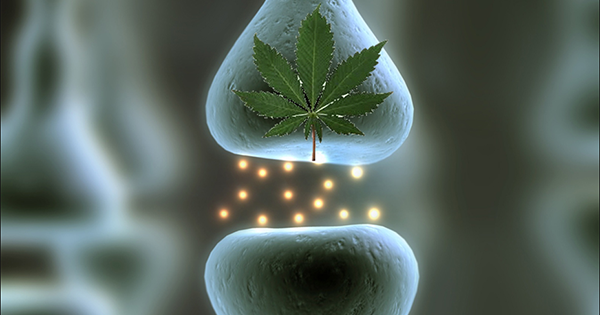
The endocannabinoid system: what is it? How does it work?
The endocannabinoid system, or endogenous cannabinoid system (ECS for endocannabinoid system), is at the root of cannabis' action on the human body. Its discovery is fairly recent, and not yet fully understood. So what is the endocannabinoid system? How does it work? What effect does it have on the body? Which channels does it use?
Endocannabinoid system: what is it?
The endocannabinoid system is a set of cellular receptors and molecules located in our body. These specific receptors, called cannabinoid receptors, were isolated in the 1990s thanks to the study of cannabis action on the brain. They thus inherited the name cannabis and the prefix «endo» to signify that they are produced by the body. This discovery would not have been possible without the Israeli professor Raphael Mechoulam, who isolated THC in 1963 and noticed that the body produced similar actions without the presence of THC.
Cannabinoid receptors are located throughout the human body.
What is the role of the endocannabinoid system?
The endocannabinoid system is thought to be responsible for homeostasis, the regulatory process that keeps the body functioning normally. This mechanism influences the essential functions of the human body: hunger, digestion, pain, energy, sleep, appetite, motor functions, reproductive functions, pleasure, regulation of body temperature... In short, these endocannabinoids are the explanation for the harmony between body and mind.
However, the endocannabinoid system can fail. The breakdown of the endocannabinoid system is called «clinical endocannabinoid deficiency». When the endocannabinoid system no longer regulates your body, the functions mentioned above may be affected.
The use of medical marijuana can then modify or compensate for certain endocannabinoid deficiencies and treat certain disorders of the endogenous cannabinoid system. When THC binds to CB1 receptors and CB2, it modulates the action of cannabinoid receptors and rebalances their function. For example, by massively activating CB2 receptors contained in the joints, cannabis calms joint inflammation in arthritis. It controls the triggering of «joint pain» information.
The medical properties of cannabis are therefore the result of the action of cannabis on the endocannabinoid system. A great deal of research is still needed to fully understand this system.
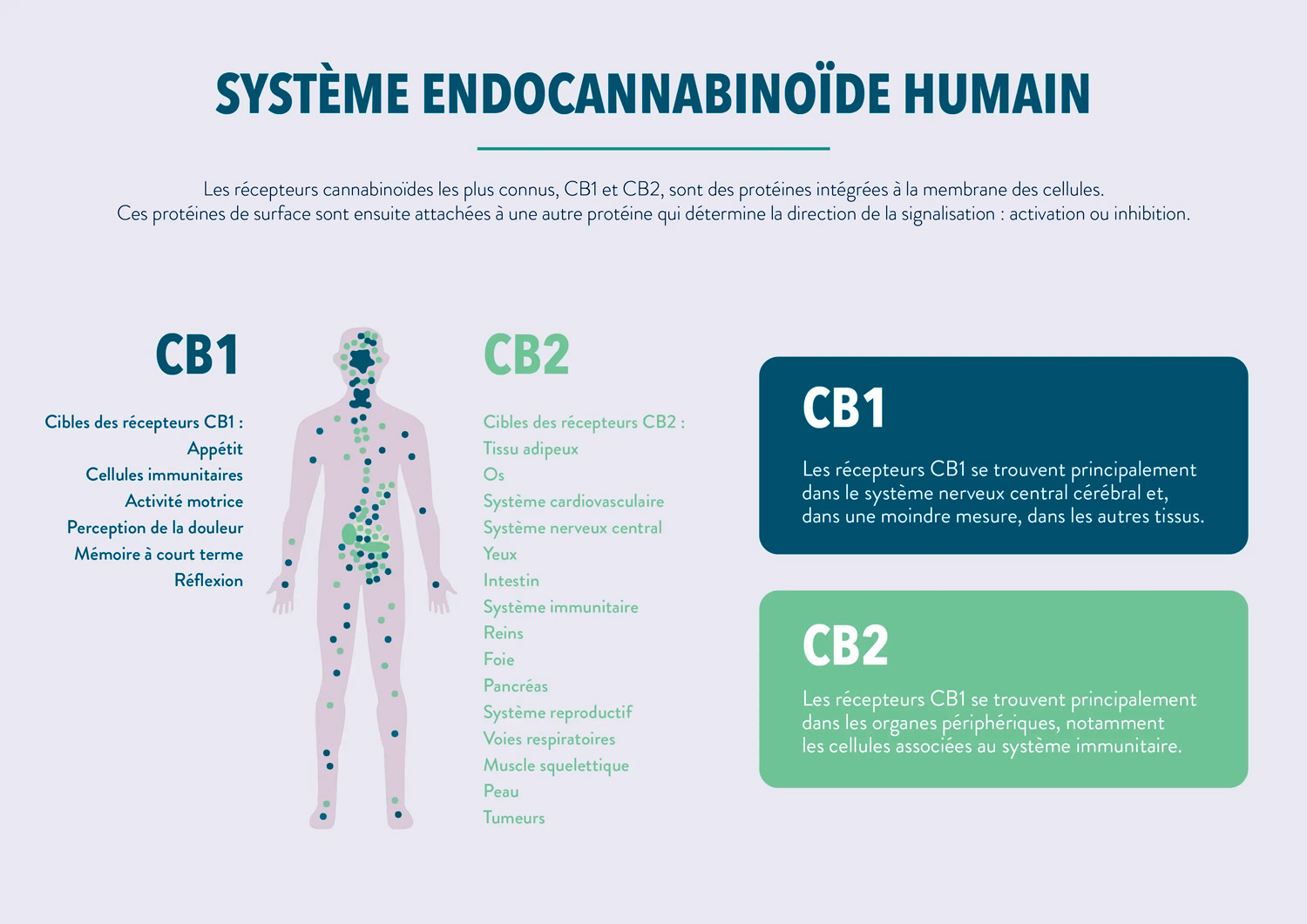
The human endocannabinoid system
Cannabinoid receptors
Cannabinoid receptors (endocannabinoid receptor) are proteins that receive chemical signals from outside a cell. When a chemical signal binds to a receptor, it elicits some form of cellular response. Cannabinoid receptors respond to three types of binders: the endocannabinoids produced by the mamillary bodies (a part of the brain near the hypothalamus), the phytocannabinoids produced by plants, and synthetic cannabinoids, which include cannabinoids that exist in nature but in very small quantities and are therefore reproduced in the laboratory - these are called synthetic phytocannabinoids - and «artificial» cannabinoids created and produced in the laboratory - these are called neocannabinoid.
The endocannabinoid system consists of two receptors, CB1 and CB2. The CB1 receptor is mainly present in the brain's central nervous system and nerve endings. The CB2 receptor is found throughout the body, in the immune system and in immune cell membranes. Receptors are also found in the spleen, bones, tonsils and thyroid.
Other receptors of the endocannabinoid system are being investigated, such as the orphan receptor GPR55, which is targeted by various cannabinoids and classical endocannabinoids. The latter has been shown to be beneficial against excitotoxicity, through effects exerted by modulating microglial function (Kallendrusch et al., 2013). This cannabinoid receptor has been classified in the G protein-coupled orphan receptor (GPCR) family alongside GPR18 and GPR119, among others.
Endocannabinoids
Endocannabinoids, also known as endogenous cannabinoids, are molecules produced by the body which bind to endocannabinoid receptors. At present, science distinguishes between two main types of endocannabinoid.
The first type is the neurotransmitter anandamide, or the happiness hormone. Anandamide is known to be at the origin of joy and good mood. Its concentration in the body is regulated by the FAAH enzyme, an agonist molecule which binds to CB1 and CB2 receptors.
The second endocannabinoid is 2 arachidonylglycerol ( 2 AG for simplicity's sake). It works primarily with the CB2 receptor, although it can also bind with CB1.
Where do endocannabinoids come from?
Endocannabinoids have been present in our food since we were toddlers. They are found in large quantities in breast milk and Omega 3, and are mainly present in fatty acids in foods.
A study conducted on animals and published by the’American National Health Institute shows a change in character when the animal is fed a fatty acid diet. The endocannabinoid system is therefore also regulated by our diet.
What are the differences with plant cannabinoids?
The cannabinoids (cannabinoids) are a family of molecules capable of acting on our endocannabinoid system. They were so named because they were first discovered in the Cannabis plant. The main cannabinoids derived from cannabis or hemp include :
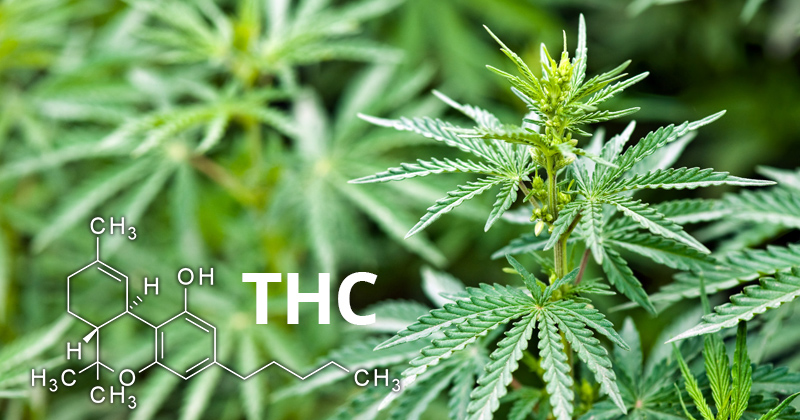
- The THC is a phytocannabinoid. It has the same properties as anandamide, and binds directly to CB1 and CB2 receptors to mimic the effects of endocannabinoids.
- The cannabidiol, CBD, on the other hand, does not bind to endocannabinoid receptors, but acts on the FAAH enzyme. CBD prevents it from regulating the concentration of anandamide. The amount of anandamide increases, promoting the body's innate protective endocannabinoid response. CBD also counteracts THC's action on the CB1 receptor, thus countering the molecule's psychoactive effects.
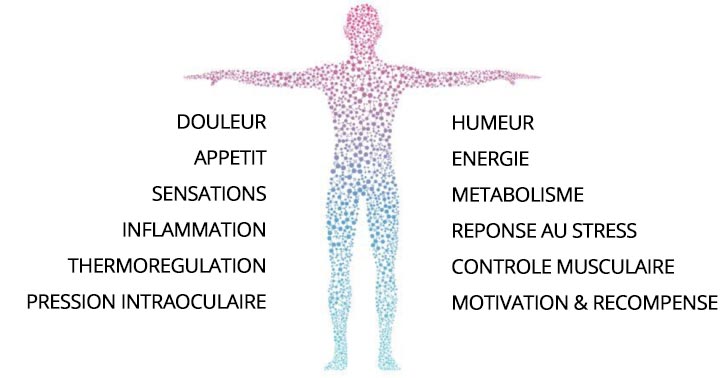
Actions of the endocannabinoid system
How do enzymes function in the endocannabinoid system?
In the endocannabinoid system, enzymes are like workers who create and break down important molecules. Some enzymes make endocannabinoids when needed, acting as tiny messengers that help maintain the body's equilibrium.
Once these messengers have done their job, other enzymes break them down and eliminate them, preventing too much activity that could upset the balance. It's as if a production team were making the essential components and cleaning up when the job is done, ensuring the smooth running and harmony of the whole organism.
How does THC affect the endocannabinoid system?
THC (tetrahydrocannabinol), the intoxicating compound in cannabis, affects the endocannabinoid system by interacting with its CB1 receptors in the brain and central nervous system, and with CB2 receptors throughout the body. THC also binds to certain non-cannabinoid receptors.
Here's how THC influences this system:
- By mimicking endocannabinoids: At the molecular level, THC resembles endocannabinoids, in particular anandamide. Because of this similarity, THC can bind to these receptors, in particular the CB1 receptors in the brain.
- Changes in brain function : When THC binds to CB1 receptors, normal brain communication is altered. Brain cells (neurons) generally communicate by releasing neurotransmitters that bind to receptors on neighboring neurons. THC alters this process by binding to CB1 receptors and increasing or decreasing the release of various neurotransmitters
- Intoxicating effect : This interaction can lead to the intoxication typically associated with cannabis use, such as altered perception, mood swings, memory impairment and altered perception of time, since THC affects the brain areas involved in these functions
- Tolerance : Repeated THC consumption can lead to changes in the endocannabinoid system, such as a reduction in receptor sensitivity or density, resulting in tolerance and the need to consume more cannabis to obtain the same effect.
How does CBD affect the endocannabinoid system?
The CBD (cannabidiol) acts on the endocannabinoid system in a very different way to THC. Unlike THC, CBD does not bind strongly to cannabinoid receptors in the endocannabinoid system. Rather, its influence is indirect and multifaceted:
- Receiver modulation : CBD interacts with various receptors in the body, either by binding directly to the receptor or, in the case of cannabinoid receptors, by binding indirectly, unlike the typical way THC binds to CB1 receptors. It can modulate the activity of CB1 and CB2 receptors, often acting to reduce their activity. This modulation can influence the way other cannabinoids, including THC, interact with these receptors.
- Increased levels of endocannabinoids : CBD inhibits the degradation of anandamide, an endocannabinoid, by suppressing the enzyme (fatty acid amide hydrolase or FAAH) responsible for its degradation. This inhibition can lead to an increase in anandamide levels in the body, which can reinforce the positive effects of this endocannabinoid, such as mood regulation and pain relief.
- Interaction with other systems : CBD also interacts with non-cannabinoid receptors and systems. For example, it binds to serotonin receptors, influencing mood, stress and anxiety levels. It also affects other receptors involved in pain perception and inflammation.
- Neuroprotective and anti-inflammatory effects : CBD has proven neuroprotective and anti-inflammatory properties. It can reduce inflammation in the brain and body, which is beneficial for conditions such as multiple sclerosis and arthritis. Its neuroprotective properties are being researched in the context of neurodegenerative diseases.
- Reducing the intoxicating effects of THC: CBD can counteract some of the psychoactive effects of THC by modulating the activity of the CB1 receptor. This can reduce the intensity of THC-induced anxiety or euphoria.
What has research shown about the endocannabinoid system?
Numerous studies on mice and humans have documented the health effects of cannabinoids, including their analgesic effect on different types of pain, including chemical, mechanical and thermal pain, as well as neuropathic, inflammatory and cancer pain.
Other studies have shown that the endocannabinoid system has an important impact on neurotransmission and on the neuroendocrine and neuroimmune systems, which are known to be dysfunctional in depressive patients. Consequently, common antidepressants have been shown to have a direct impact on cannabinoid receptor expression throughout the brain. The relationship between the endocannabinoid system and major depressive disorder therefore merits investigation.
Nevertheless, most studies focus on small parts of what is undoubtedly a larger mosaic of interdependent processes. This is why reviews of studies have endeavored to compare existing scientific literature for a better understanding of the relationship between SEC and health.










CBD in France: Traceability, Retail Stores, THC and Driving… What the New Bill Proposes

Organigram Enters the Race for Aurora Cannabis

Medical Cannabis: Augur Associates’ latest report provides an update ahead of the publication of the decrees

Golden Buds is relaunching its Nova High vape pens with a cannabinoid formula that’s out of the ordinary

Cannabis is now Canada's fifth-largest commercial crop

Bedrocan Finally Declared Bankrupt

After CBD, Can Wellness Exist Without Cannabinoids?

Uganda Launches a Cooperative Dedicated to Medical Cannabis

Ukraine: First Cancer Patient Prescribed Medical Cannabis

