
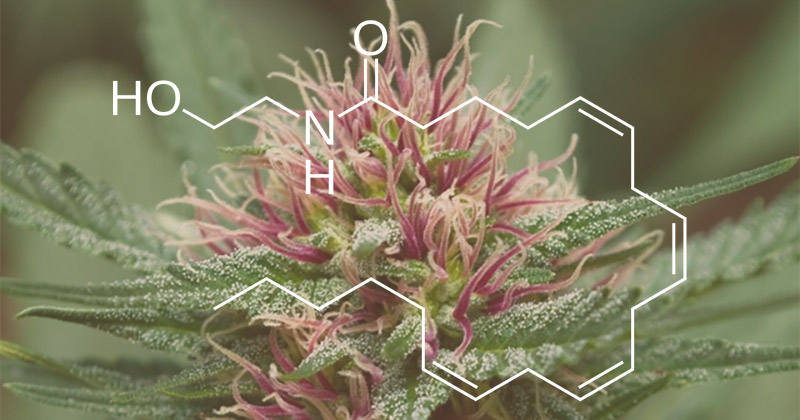
What is anandamide?
In short, anandamide (or arachidonoylethanolamine) is the human version of THC. Nicknamed the «molecule of pleasure,» Willam Devane discovered it during his work with Raphaël Mechoulam, the man who, on the other hand, synthesized THC. The root Ananda comes from Sanskrit «pleasure».
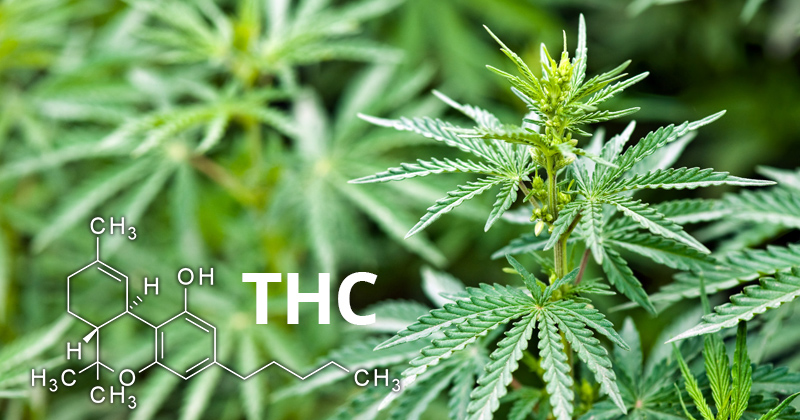
This molecule is one of the two main endocannabinoids produced by the human body, which interact with the endocannabinoid system. This neurotransmitter is produced by the brain and binds to cannabinoid receptors CB1 and CB2. Its structure is very similar to that of THC.
How does anandamide work?
Anandamide is part of the body's endocannabinoid system, a complex system of lipids, enzymes, and cannabinoid receptors that plays a role in maintaining homeostasis of many automatic bodily functions, such as sleep, energy balance, and reproduction. The endocannabinoid system is one of nature's oldest biological systems; it is known to have appeared before the evolution of vertebrates and exists in many species.
The ECS plays an active and dynamic role in the optimal functioning of our cells and body systems. Unlike other types of neurotransmitter molecules, which are stored in large reserves awaiting release, anandamide and 2-AG are produced on demand. As soon as a biological need stimulates their production, endocannabinoids seek out their targets, namely CB1 and CB2 cannabinoid receptors. CB1 receptors play a role in cognitive, sensory, and motor functions and are found primarily in the central nervous system, where they are activated by anandamide and other cannabinoids like THC. CB2 receptors are thought to play a greater role in neuroprotection and inflammation, and they are primarily expressed in cells involved in immune function.
anandamide acts primarily on CB1 receptors, the most abundant receptor of this type in the brain. According to a 2019 human brain imaging study published in Neuroscience, CB1 receptors are clustered in the frontal cortex, hippocampus, cerebellum, and basal ganglia. This data corroborates what has been observed previously in animals, confirming the roles of anandamide and the CB1 receptor in thinking, memory, sensory processing, movement, and more. Anandamide helps regulate eating behavior by creating a neural reward of pleasure every time we eat, motivating us to do so again. Anandamide also plays a role in mood regulation, promoting happiness, reducing pain, managing stress, and regulating sleep, among many other bodily functions affected by the endocannabinoid system.
It has also been shown that anandamide binds to other targets in the brain, including CB2 receptors, TRPV1, GPR55, and PPAR, according to a scientific review of anandamide's functions published in Acta Pharmacologica Sinica and another review of potential anandamide target receptors published in Vitamins and Hormones. According to studies, these receptors are all considered important components of the endogenous cannabinoid system. By acting on these targets, anandamide contributes to several functions such as anti-inflammation and neuroprotection, as shown by two animal studies published respectively in Neural Plasticity and The Journal of Pain.
Effects of anandamide
L’endocannabinoid Anandamide does much more than produce a state of happiness. It is synthesized in certain areas of the brain that are involved in managing memory, motivation, and motor control. It also plays important roles in pain, appetite, and fertility.
Some studies have attempted to decipher the role of anandamide:
- about the moodhere and hereLow anandamide levels are correlated with stress and anxiety levels
- on painhereAnandamide regulates pain and inflammation through specific channels
- on the post-sport feelinghere) : the « high rider »would be partly due to this molecule
- On appetitehere and here) : it would trigger the need to breastfeed in newborns, with anandamide being delivered by breast milk, and would promote appetite
- Regarding memory: studies are more contradictory. Some talking about stimulation of the neurogenesis, while others establish the contrary.
Anandamide is degraded by the natural enzyme FAAH (fatty acid amide hydrolase). People with a FAAH deficiency tend to be less anxious and less inclined to consume cannabis.
Cannabis and anandamide
Anandamide is known as the human THC for a reason. THC hijacks one of anandamide's traditional binding sites, the CB1 and CB2 receptors. The difference is that THC binds perfectly to these receptors and has a longer half-life than anandamide, which Disappears in 30 minutes.
CBD, unlike THC, would not replace anandamide but would improve its circulation by limiting its degradation.
What happens when there is too little anandamide?
When the body has too little anandamide in its system, the condition is diagnosed as clinical endocannabinoid deficiency. study published in Cannabis and Cannabinoid Research has linked many diseases to endocannabinoid deficiency, including migraines, fibromyalgia, and irritable bowel syndrome. A other study in vivo published in Molecular Autism revealed that children with autism spectrum disorder had lower plasma anandamide levels on average.
What increases anandamide?
Certain individuals naturally have more anandamide in their bodies than others. One vast study genetics published in the Journal of Happiness Studies Springer showed that some nations are happier than others, and that many residents of these «happy» nations share a mutation in the gene that produces the FAAH enzyme (the one responsible for breaking down anandamide). Due to this mutation, researchers believe that citizens of «happier» nations may have higher levels of anandamide because their bodies do not break down this molecule as quickly. This genetic study supports the notion of anandamide as the «bliss molecule.».
How to produce more anandamide?
To rediscover this feeling of well-being and enjoy the stress-relieving virtues of anandamide, several solutions exist:
- playing sports, to get those end-of-game/race feelings
- eating chocolate: one of its substances, theobromine, helps increase anandamide production
- eating truffles: black truffles contain anandamide








CBD is said to promote athletic recovery, without improving performance

294 cannabis clubs in Chile: a booming movement with uneven distribution

Chronic Sciatica: New York Approves First Clinical Trial of a THC-Based Medication

United States: The DEA is accelerating the integration of medical cannabis at the federal level

Florida is nearing one million patients using medical cannabis

Uruguay Revives Its Plan to Allow Tourists to Legally Access Cannabis

In Brazil, researchers are developing an innovative CBD eye drop

Autism: Medical Cannabis Is Linked to Reduced Anxiety

The $28 billion U.S. hemp market remains under threat

