Broad spectrum CBD oil: definition, benefits and for whom it's the right choice
Broad spectrum is often presented as «the full THC-free spectrum», which is technically accurate but insufficient to understand what you're actually buying and why this format may be the best choice in many situations. Today, this is the default format recommended for the majority of CBD uses in France.
What is a broad-spectrum CBD oil?
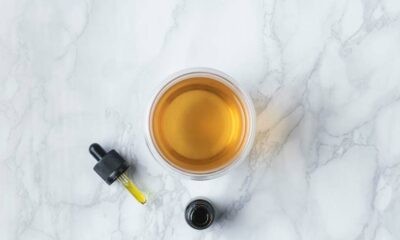
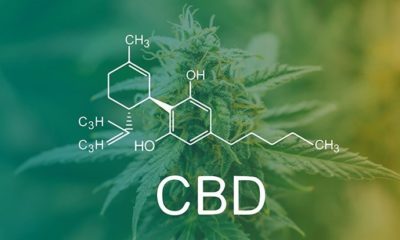
A broad-spectrum CBD oil (broad spectrum is a hemp extract that retains all the plant's natural compounds (minor cannabinoids, terpenes, flavonoids) with the exception of THC, which has been completely removed during the extraction process or in a post-extraction purification step.
In concrete terms, a broad spectrum oil contains :
- The CBD as the dominant cannabinoid
- The minor cannabinoids CBG, CBN, CBC, CBDA, CBGA and others in traces
- The terpenes myrcene, limonene, linalool, beta-caryophyllene, pinene...
- The flavonoids with antioxidant properties
- 0% of THC confirmed by certificate of analysis
This is what sets it apart from the other two formats: the full spectrum which contains traces of THC (< 0.3%), and the’CBD isolate which contains only pure cannabidiol and no other compounds.
How is THC removed?
This is the central technical issue that few guides address. THC removal from a full spectrum extract can be achieved by several methods:
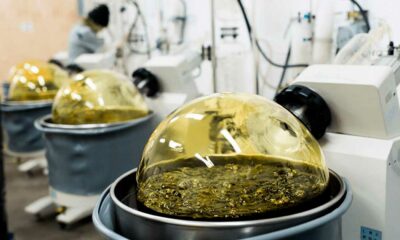
Chromatography the reference method. The extract is passed through a column which separates the molecules according to their affinity with the support. THC is isolated and removed without significantly altering the other compounds. This is the technique that best preserves the extract's original profile.
Fractional distillation The extract is heated at different temperatures to selectively evaporate compounds according to their boiling points. Effective for THC removal, but may degrade certain heat-sensitive terpenes.
Selective CO2 extraction Supercritical CO2 extraction: by adjusting pressure and temperature, supercritical CO2 extraction can be parameterized to avoid capturing THC from the outset, directly producing a THC-poor extract.
The method used influences the quality of the final product. A good manufacturer will indicate this on its product sheet or COA. In the absence of information on the extraction method, quality is more difficult to assess.
The THC-free entourage effect: is it really equivalent to full spectrum?
That's the honest question. The answer is nuanced.
L’entourage effect is based on the synergy between all cannabis compounds. THC - even at 0.3% - contributes to this synergy by partially activating CB1 receptors. Its absence from the broad spectrum therefore technically represents a loss in this respect.
In practice, there is a lack of direct comparative studies of broad spectrum vs. full spectrum at usual doses of well-being. The difference in perceived efficacy between the two is difficult to quantify, and varies according to individual and usage. For the majority of everyday uses (mild to moderate anxiety, sleep, recovery), broad spectrum produces effects comparable to full spectrum. The difference becomes potentially more significant for high-dose uses or specific therapeutic indications.
One thing is certain: broad spectrum is clearly superior to isolate in terms of the entourage effect, since it retains all the other synergies.
For whom is broad spectrum the best choice?
This is where the broad spectrum clearly differs from the full spectrum.
Competitive athletes. CBD has been authorized by WADA since 2018, but THC remains banned in competition. A broad spectrum certified 0% THC with accredited COA is the only truly safe option for athletes subject to doping controls. See our guide to CBD and sport.
Frequent drivers. Traces of THC from a full spectrum represent a theoretical risk on roadside saliva tests, according to the case law of the French Supreme Court (Cour de Cassation 2023). Certified broad spectrum 0% THC eliminates this risk. See our guide to CBD and screening tests.
People undergoing professional testing. Drivers, security personnel, military personnel, machine operators - any professional likely to undergo a urine test benefits from the peace of mind offered by certified 0% THC.
People who are highly sensitive to THC. Some people react to minute traces of THC, especially those with a history of cannabis-related anxiety. The broad spectrum eliminates this variable.
CBD beginners. For a first experience, broad spectrum offers a good compromise: entourage effect for maximum effectiveness, without the worry of THC traces.
How to choose a good broad spectrum
The same quality criteria apply as for full spectrum, with an additional point of vigilance: 0% THC certification.
The COA is indispensable. For broad spectrum, the COA must explicitly confirm the total absence of THC (< detection limit, generally < 0.01%). A COA that simply states «THC < 0.3%» does not certify broad spectrum - this is the legal limit for full spectrum. Demand a batch-by-batch certificate from an ISO/IEC 17025-accredited laboratory.
Check for the presence of minor cannabinoids. A true broad spectrum should mention measurable levels of CBG, CBN, CBC or other minor cannabinoids. A product that displays only CBD with 0% THC is probably an isolate dissolved in an oil, not a true broad spectrum.
Origin and extraction method. Certified organic European hemp, supercritical CO2 extraction, batch-by-batch traceability - the same guarantees as for a quality full spectrum.
The price. Quality broad spectrum generally costs as much or slightly more than an equivalent full spectrum, due to the extra THC removal step. A broad spectrum that costs significantly less than a comparable full spectrum is worth watching out for.
Broad spectrum vs full spectrum vs isolate: decision table
| Situation | Recommended format |
|---|---|
| General well-being without constraints | Full or wide spectrum |
| Competitive athlete subject to WADA control | Broad spectrum certified 0% THC |
| Roadside or professional saliva test | Broad spectrum certified 0% THC |
| First CBD experience | Broad spectrum |
| THC sensitivity or history of cannabis anxiety | Broad spectrum |
| Precise cosmetic or food use | Isolat |
| Maximum efficacy, no screening test | Full spectrum |
Frequently asked questions
Is broad spectrum as effective as full spectrum? For most everyday uses, the effects are comparable. The trace of THC in the full spectrum contributes to the entourage effect, but its absence in the broad spectrum is compensated for by the presence of other cannabinoids and terpenes. The difference is less significant than between broad spectrum and isolate.
How do you know if a product is really 0% THC? Only via a COA from an ISO/IEC 17025 accredited laboratory explicitly stating «THC < detection limit» or «0.00% THC». A simple marketing statement «THC-free» or «0% THC» on packaging without a COA is not sufficient.
Can broad spectrum trigger a positive test? A broad spectrum certified 0% THC with accredited COA does not trigger a positive THC test. This is precisely why this format is recommended for athletes and professional testers.
Is broad spectrum legal in France? Yes, CBD broad spectrum products made from hemp are legal in France. The absence of THC creates no additional legal problems compared with full spectrum.
Broad spectrum and isolat, what's the difference? The isolate contains only pure CBD, with no other plant compounds. It therefore has no entourage effect. The broad spectrum retains terpenes and minor cannabinoids - it's far more complete and generally more effective for wellness uses.
This article is for information purposes only. For any therapeutic use, please consult a health professional.













France already has 3,000 cannabis retail outlets. None of them are legal.

Morocco's exports of legal cannabis have expanded to 15 countries

Aurora Cannabis Doubles Its Production Capacity in Germany

Tilray is accelerating its operations in Europe thanks to a license in Portugal

Boston will host the 10th annual State of the Cannabis Industry Conference on October 26

A DEA report confirms that there are no fatal cannabis overdoses

A British patient is challenging the NHS's refusal to reimburse medical cannabis

October 2026 CBD Highlights: 10 Strains and Hash to Discover from 5 French Producers

CBD in France: Traceability, Retail Stores, THC and Driving… What the New Bill Proposes

