CBD, anxiety and paranoia: how cannabidiol works on stress

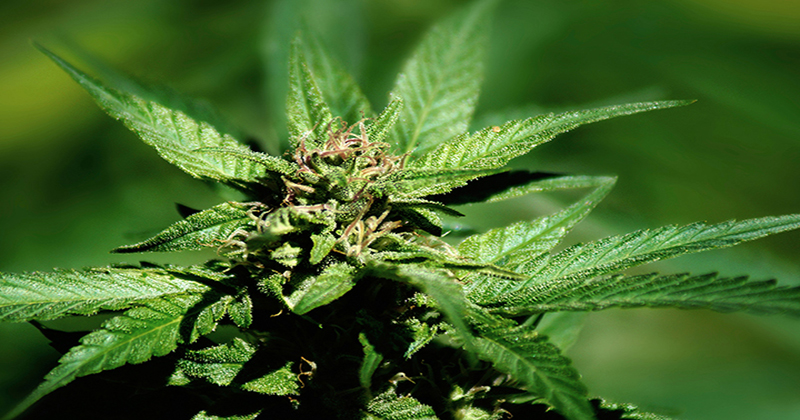
Anxiety is one of the most frequently cited reasons for use CBD in France. But behind this generic term lie very different realities: everyday stress-related anxiety, clinically diagnosed anxiety disorders, and the often overlooked angle of THC-induced paranoia and anxiety in cannabis users. Visit CBD does not act in the same way on these three situations, and the confusion between them explains many disappointments as well as unexpected successes.
This guide untangles the mechanisms, the studies, and the practical uses, clearly distinguishing what falls under everyday well-being, what requires medical follow-up, and what only CBD can do about cannabis paranoia.
How CBD works on anxiety: biological mechanisms
The serotonin pathway: the main mechanism
Anxiety results in part from an imbalance between the alert circuits driven by the amygdala and the emotional regulation circuits of the prefrontal cortex. When the amygdala goes into overdrive, it generates stress responses disproportionate to real-life situations.
CBD binds to serotonin 5-HT1A receptors, present in high density in the limbic system, the seat of emotions. By activating these receptors, it produces an anxiolytic effect similar in mechanism to that of certain SSRI antidepressants, but without creating dependence or documented tolerance. This is probably CBD's most direct and well-established route of action on anxiety.
Note: this effect is dose-dependent, with an inverted U-shaped curve. At moderate doses (10-300 mg), the effect is anxiolytic. At very high doses (over 400-600 mg), overactivation of 5-HT1A receptors can paradoxically increase anxiety. At standard wellness doses, this phenomenon is not observed.
The endocannabinoid system and anandamide
The endocannabinoid system regulates mood, stress response and emotional resilience. CBD inhibits the FAAH enzyme, which degrades’anandamide, a natural endocannabinoid nicknamed the «molecule of bliss». By increasing levels of circulating anandamide, CBD prolongs its natural soothing effects.
The HPA axis and cortisol reduction
Chronic stress keeps the hypothalamic-pituitary-adrenal axis in a state of hyperactivation, with excessive cortisol secretion. A Brazilian study published in the Brazilian Journal of Psychiatry in 2019 showed that CBD reduced cortisol secretion in subjects subjected to a social stress test, with an associated decrease in heart rate and muscle tension. This is particularly relevant for chronic anxiety linked to occupational stress or nocturnal ruminations.
What the studies say: an honest assessment
The data on CBD and anxiety are among the strongest in cannabinoid research - which is not to say that they are conclusive.
The benchmark study remains that published in 2019 in the Permanent Newspaper In a study of 72 psychiatric subjects, 47 of whom suffered from anxiety, 79.2% reported a reduction in symptoms in the first month with 25 mg CBD per day. A randomized study published in Neuropsychopharmacology showed that a dose of 600 mg significantly reduced anxiety during public speaking - a paradigm of acute social stress. A 2015 systematic review in Neurotherapeutics concludes that CBD has anxiolytic potential in several disorders: generalized anxiety, social anxiety, panic disorder, OCD and PTSD.
Limitations are important and should be clearly stated. Most studies have small sample sizes (less than 100 participants). Long-term studies of more than six months are lacking. Approximately 20 to 30% of participants do not respond to CBD - genetic variations in the CNR1 gene and individual liver metabolism partly explain these differences.
What CBD doesn't do: it does not treat severe clinical anxiety disorders, does not replace cognitive-behavioral therapy, and should never be substituted for prescribed medical treatment without medical advice. If you are taking benzodiazepines or antidepressants, it is essential to consult a physician before introducing CBD, as drug interactions via hepatic cytochrome P450 have been documented. See our article on CBD and drug interactions.
CBD against THC-induced paranoia and anxiety
This is the original angle of this page - and the one for which the data is actually the strongest, as the mechanism is best understood.
Why does THC cause paranoia?
THC acts as a direct agonist of CB1 receptors, particularly in the amygdala. It amplifies perceived threat signals and can trigger hyperactivation of this area - producing paranoia, acute anxiety, and in severe cases, dissociative states. This is a well-documented effect, particularly at high doses or in genetically predisposed individuals.
The THC concentration of current recreational varieties, often higher than 20%, explains the increasing frequency of these anxiety-provoking episodes, which consumers commonly refer to as «having a bad trip» or «getting paranoid».
How CBD antagonizes these effects
CBD acts as a negative allosteric modulator of CB1 receptors: it doesn't block them directly, but alters their configuration so as to reduce THC's effectiveness in activating them. In short, CBD reduces the potency of THC's psychoactive effects, including the paranoia and anxiety it can induce.
A seminal study by Zuardi et al. Psychopharmacology) showed as early as the 1980s that CBD reduced the anxiogenic and psychotomimetic effects of THC in healthy volunteers. Dozens of studies have since confirmed this antagonistic relationship. It's also the mechanism that explains why some long-time users prefer varieties with a high CBD:THC ratio - the experience is less anxiety-provoking, more bodily, more manageable.
The entourage effect
In CBD-rich cannabis strains, other components contribute to modulating anxiety: terpenes such as linalool (also found in lavender, with documented anxiolytic properties), myrcene (sedative), or beta-caryophyllene (which acts on CB2 receptors and the anti-inflammatory system). These are known as’entourage effect - the components of cannabis work in synergy rather than in isolation.
Balanced varieties with a CBD:THC ratio close to 1:1 - such as the Harlequin or MediHaze - produce a profile of effects significantly less anxiety-provoking than the dominant THC varieties. For consumers prone to paranoia, this is a concrete and well-supported lead.
What to do in the event of a «bad high»?
CBD can alleviate a THC-induced episode of anxiety or paranoia, but its action is not instantaneous. When taken sublingually, the effects appear in 15 to 30 minutes. Some practical guidelines for emergency situations:
- Take 50 to 100 mg of CBD in sublingual oil.
- Settle into a calm, familiar environment
- Drink water, eat something sweet (sugar can ease anxiety peaks)
- Don't panic - the effects of THC are temporary and systematically wear off.
CBD dosage for anxiety: a practical guide
| Situation | Indicative dose | Format | Moment |
|---|---|---|---|
| Light daily stress | 10-25 mg/day | Sublingual oil | Morning or stressful moment |
| Moderate chronic anxiety | 25-75 mg/day | Oil or capsules | In two plugs |
| Situational anxiety (exams, speaking engagements) | 150-300 mg single dose | Sublingual oil | 1-2h before the event |
| THC-induced paranoia | 50-100 mg | Sublingual oil | As soon as the first symptoms appear |
The general rule: start at 10-15 mg a day, observe for two weeks, then gradually increase in 10-15 mg increments. For chronic anxiety, the effects build up over time, so don't judge efficacy before four to six weeks of regular use.
Which form of CBD to choose for anxiety?
Sublingual oil remains the most versatile: rapid absorption (15-30 minutes), adjustable dosage, suitable for both regular daily use and acute anxiety situations. For anxiety, a Full or broad spectrum CBD is generally preferred to isolate, as the presence of anxiolytic terpenes reinforces the effect via the entourage effect.
Capsules are suitable for regular, discreet use. Absorption is slower (45-90 minutes), making them less suitable for acute attacks. Their advantage is precision dosing and ease of integration into a daily routine.
Vaporizing CBD flowers acts quickly, within minutes, making it an interesting format for situational anxiety peaks. Please note: the flowers contain residual THC, which may in rare cases aggravate anxiety in highly sensitive individuals. Test with caution.
Frequently asked questions
Can CBD replace anxiolytics or antidepressants? No. CBD can be a useful supplement for managing everyday stress and mild-to-moderate anxiety, but it does not replace prescribed medical treatment. Abruptly stopping a course of medication in favor of CBD is dangerous - especially for benzodiazepines, whose withdrawal causes severe rebound effects. Always consult a doctor before modifying a treatment.
Does CBD sometimes aggravate anxiety? Yes, in two specific situations: at very high doses (over 300-400 mg) via overactivation of 5-HT1A receptors, and in the first few days of use in certain particularly sensitive individuals. If you experience increased anxiety after taking CBD, reduce the dose.
Is CBD effective against panic attacks? Data are preliminary on this point. CBD does not stop a panic attack in progress. Its value lies in prevention - by lowering the level of background anxiety that promotes attacks - rather than in acute treatment.
How long does it take to feel the effects of CBD on anxiety? For acute situational anxiety, effects can appear within 15 to 30 minutes when sublingual. For chronic anxiety, effects build gradually - most users report noticeable changes between the third and sixth week of daily use.
CBD and cannabis paranoia: does it really work? Yes - it's one of the best-documented indications. CBD reduces THC's effectiveness on the CB1 receptors responsible for paranoia. Studies show that balanced CBD:THC ratios produce significantly less anxiety-provoking experiences than dominant THC varieties.
Does CBD interact with anxiolytic drugs? Yes, CBD inhibits liver enzymes (CYP2D6, CYP3A4) involved in the metabolism of benzodiazepines and SSRI antidepressants. An interaction may alter the plasma concentrations of your medication. Consult your doctor before taking any combination.
This article is based on available clinical and scientific studies. It does not constitute medical advice. For any diagnosed clinical anxiety disorder, consult a healthcare professional.








JIHE 2026: Japan’s Largest Trade Show Dedicated to Hemp and CBD Returns to Tokyo with More Than 100 Industry Players

New Caledonia: The Courts Clear the Way for the Return of CBD

The Brazilian medical cannabis market continues to grow

Morocco: Three Cannabis-Based Medications Approved for the Treatment of Epilepsy

Canopy Growth Receives New EU-GMP Certification to Strengthen Its Presence in Europe

Three years after legalizing medical cannabis, Albania continues to establish regulations for it

The first plant-based medical THC spray arrives in the United Kingdom

Medical Cannabis in Germany: THC Prices Vary by a Factor of 12

France already has 3,000 cannabis retail outlets. None of them are legal.

Morocco's exports of legal cannabis have expanded to 15 countries
-
 Business2 weeks ago
The legal cannabis market in New York exceeds 4 billion $ in revenue
-

 Cannabis in France4 weeks ago
Which countries legalized medical cannabis before France?
-
Business4 weeks ago
South Korea is preparing to begin local production of medical cannabis to meet rising demand
-
Cannabis in France4 days ago
France already has 3,000 cannabis retail outlets. None of them are legal.
-
Cannabis in Thailand4 weeks ago
From the boom in dispensaries to a purely medical approach: Thailand is revising its cannabis policy
-
Cannabis in the U.S.5 days ago
A DEA report confirms that there are no fatal cannabis overdoses
-
Cannabis and driving3 weeks ago
Medical Cannabis and Driving: New South Wales Ends Automatic Penalties for THC
-
Cannabis in France3 weeks ago
France’s Drug Policy Chief Defends Cannabis Prohibition... and Runs Into the Facts
















DC DC
August 3, 2017 at 21 h 32 min
It seems inaccurate to say that unlike THC, CBD has no psychoactive effect. I find that you limit the definition of psychoactive to provoking stimulating, euphoric, hallucinogenic effects, etc., and that CBD has anxiolytic and anti-paranoid effects. Yet CBD has anxiolytic and anti-paranoid effects, acting on the brain's endocannabinoid system. So that's the very definition of psychoactive effect... it would be a good idea to correct your vocabulary, while distinguishing between the various psychoactive effects of cannabis and its components.