Synthetic CBD: What is it?

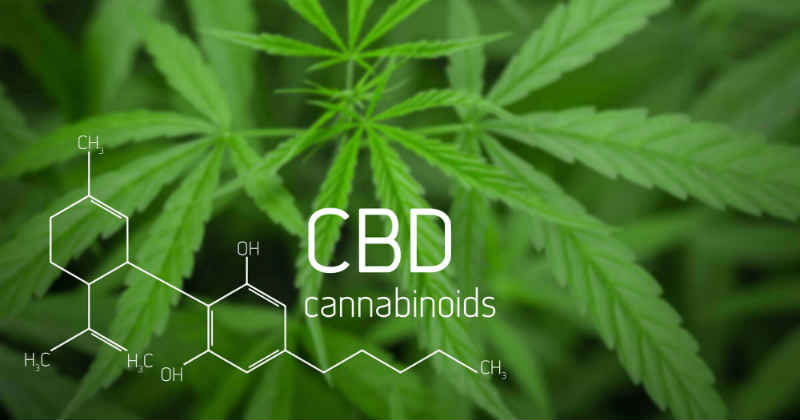
The cannabinoids are divided into three groups: the natural cannabinoids found in the Cannabis plant, the endogenous cannabinoids produced by the human body, and the synthetic cannabinoids. Some of the latter are analogues of natural molecules. Much confusion surrounds the understanding of these molecules, hence this necessary point on the CBD synthetic.
Synthetic versus natural CBD
There are a multitude of molecules which can be described as synthetic CBD: some are simply copies of the natural molecule created in the laboratory, others are slightly different, and others very different. On the other hand, their molecular structures are similar, acting on endocannabinoid receptors with differences in intensity.
CBD analogues also exist naturally in the Cannabis plant: CBDA (the precursor of CBD), CBDV, CBDVA... Synthetic analogues of these natural analogues can also be described as synthetic CBD.
The main difference between synthetic CBD and natural CBD is that the former is created in the laboratory, without a Cannabis plant (for example, with genetically modified yeasts to produce CBD instead of alcohol), while the second is extracted from the plant.
There is also confusion in the CBD isolates which are sometimes referred to as «synthetic CBD», irrespective of whether they are obtained by extraction from the plant or by synthesis. This term should not apply to CBD isolates obtained by extraction. Isolates are very often used in generic CBD products, and in research, as they enable the effect of CBD otherwise diluted in so-called the entourage effect.
Synthetic molecules and the pharmaceutical industry
As Professor Blin, who will oversee the project, told us Parkinson's clinical trial with synthetic cannabinoids, Synthetic molecules are the same as «natural» molecules. They are used for research by virtue of their easier supply than natural CBD. Some studies with synthetic cannabidiol have demonstrated the efficacy of these molecules. including one where synthetic CBD was shown to be effective on breast cancer and glioma patients.
In a review of synthetic CBD analogues, researchers found that the synthetic molecules tested were effective against inflammation and had anti-epileptic properties, like natural CBD. On the other hand, it turned out that some synthetic CBD molecules showed better pharmacological dynamics: natural CBD affects CB1 receptors only indirectly, whereas some synthetic analogues (including Abn-CBD, O-1602) bind directly to the receptors for enhanced effect. They also appear to stimulate other receptors that natural CBD does not activate.
As far as isolates are concerned, they enable us to better understand the specific action of CBD without the interaction of other cannabinoids. However, they do have one disadvantage, whether natural or synthetic: they are all subject to the bell curve, a phenomenon described by the scientist Lumir Hanus in the magazine Pharmacology & Pharmacy The therapeutic potential of the molecule is only observed with a specific dosage, which can be complicated to determine. This phenomenon does not occur with whole plant extracts: proof of the entourage effect ?
Synthetic molecules and mass consumption’
Most of the synthetic molecules used by the pharmaceutical industry to research and manufacture drugs are still in the trial phase, even if they are not yet available. certain medications containing synthetic cannabinoids already exist. It is important not to confuse them with synthetic cannabinoids, which are referred to as «cannabinoids".« designer drugs »These molecules are not created by certified laboratories and are intended for the recreational market. These kinds of molecules can prove extremely dangerous and cause psychotic and cardiac disorders requiring hospitalization. Deaths have also been recorded.
Unfortunately, it is becoming increasingly common for these dangerous molecules are found in CBD-based preparations. This was the case in North Carolina, for example, where a high school student overdosed after purchasing a CBD vaporizer cartridge. The Utah Center for Disease Control and Prevention also reported that. 52 people made ill by synthetic CBD between October 2017 and January 2018. These cases were linked to a product called Yolo CBD Oil which contained not natural CBD but the molecule 4-CCB (4-cyano CUMYL-BUTINACA). Police were unable to determine which company manufactured the product.
Most of these problems stem from the fact that the CBD industry is unregulated. Mislabeling (CBD content, source) is extremely common. Researchers analyzed 84 products from 31 different companies and found that nearly 70% of products sold are not correctly labeled - mainly e-liquids. In a report, the Spanish Observatory of Medical Cannabis came to the same conclusions with only a third of products analysed were correctly labelled. There is no inspection of these products or their production. So consumers can be deceived with impunity.
Choosing the right CBD
The products available on the market today are either based on natural hemp extracts or isolated CBD. In fact, it is this type of food preparation to which the European restrictions in terms of novel food. Nevertheless, these restrictions do not amount to regulation, and cannot protect users who easily source unverified products via the Internet. In addition to the difference between synthetic and natural products, you should also consider possible traces of pesticides, heavy metals and other pollutants in your choice of product, and give preference to organic production.
Today, it's up to the consumer to ask their distributor about the manufacturing process: which company manufactured the product? where does the CBD come from? under what conditions was the hemp grown? what extraction method was used? In the absence of answers, it's safer not to buy. A company that extracts its own CBD must be able to provide the consumer with the results of its sample analyses.







Medical Cannabis in Germany: THC Prices Vary by a Factor of 12

France already has 3,000 cannabis retail outlets. None of them are legal.

Morocco's exports of legal cannabis have expanded to 15 countries

Aurora Cannabis Doubles Its Production Capacity in Germany

Tilray is accelerating its operations in Europe thanks to a license in Portugal

Boston will host the 10th annual State of the Cannabis Industry Conference on October 26

A DEA report confirms that there are no fatal cannabis overdoses

A British patient is challenging the NHS's refusal to reimburse medical cannabis

October 2026 CBD Highlights: 10 Strains and Hash to Discover from 5 French Producers

CBD in France: Traceability, Retail Stores, THC and Driving… What the New Bill Proposes
-
 Business2 weeks ago
The legal cannabis market in New York exceeds 4 billion $ in revenue
-

 Cannabis in France3 weeks ago
Which countries legalized medical cannabis before France?
-
Business3 weeks ago
South Korea is preparing to begin local production of medical cannabis to meet rising demand
-
Cannabis in Thailand3 weeks ago
From the boom in dispensaries to a purely medical approach: Thailand is revising its cannabis policy
-
Cannabis and driving3 weeks ago
Medical Cannabis and Driving: New South Wales Ends Automatic Penalties for THC
-
Cannabis in Argentina4 weeks ago
Argentina Opens Its Market to Hemp Flowers Containing 1% of THC
-
Autism3 weeks ago
Autism and Cannabis: Results from the First Placebo-Controlled Trial of NTI164
-
Cannabis in France2 weeks ago
France’s Drug Policy Chief Defends Cannabis Prohibition... and Runs Into the Facts
















You must be logged in to post a comment Login