The different types of cannabis oil and CBD
The term «cannabis oil» covers very different realities, depending on the context. CBD oil sold in wellness stores, edible hemp oil in supermarkets, Rick Simpson oil used in some countries for medical purposes: these are radically different products in terms of their composition, effects, legality and uses. Confusing them is one of the main sources of confusion among new consumers.
This guide takes a look at each type, what it contains, what it's used for, and what not to expect from it.
CBD oil: the dominant product on the French market
It is by far the most widely consumed product in France under the name «cannabis oil». CBD oil is an extract of the hemp plant (Cannabis sativa L.) rich in cannabidiol, mixed with a carrier oil, usually hemp, olive or coconut oil to facilitate absorption.
It does not contain significant quantities of psychoactive elements, is legal in France under certain conditions (THC less than 0.3%), and can be divided into three main categories depending on the extraction process:
Full spectrum CBD oil
Oil to full spectrum contains all the cannabinoids, terpenes and flavonoids naturally present in the plant: CBD, CBG, CBN, CBC, traces of THC (less than 0.3%), as well as aromatic terpenes. This is the form that benefits most from the’entourage effect the different compounds act synergistically and potentiate each other.
For general well-being, anxiety or sleep, this is generally the most effective form. On the other hand, the presence of traces of THC contraindicates it for competitive athletes subject to anti-doping controls, and presents a theoretical risk on saliva road tests at high doses. See our guide to CBD and screening tests.
Broad spectrum CBD oil
Broad Spectrum retains the minor cannabinoids and full-spectrum terpenes, but the THC has been removed during the extraction process. This is the best compromise for people who wish to benefit from the entourage effect while ensuring total absence of THC for professional, sporting or principled reasons.
This is the recommended format for the majority of everyday uses in France.
CBD Isolate
L’isolate is pure CBD extracted and crystallized at over 99%, with no other plant compounds. Odorless and tasteless, it is often used in cosmetics and food products. It benefits from no entourage effect: its therapeutic efficacy is generally considered to be less than full spectrum on anxiety and sleep, but it is the only risk-free option on screening tests.
This is also the form evaluated by EFSA in 2026, which considered that only 2 mg of isolate per day would be «provisionally safe» in a dietary context, a position that reflects the lack of data on long-term exposure, not proven toxicity at usual doses.
How to read a quality CBD oil
Several criteria distinguish a serious product from a mediocre one:
- The COA (Certificate of Analysis): ISO/IEC 17025 accredited laboratory analysis, batch by batch, confirming CBD content, absence or presence of THC, and absence of contaminants (pesticides, heavy metals, residual solvents).
- The extraction method Supercritical CO2 extraction is the benchmark method: clean, with no residual solvents, it preserves terpenes.
- The origin of hemp preferably certified organic European hemp, with traceability from field to bottle
- Concentration expressed in mg of CBD per vial (e.g. 1000 mg per 10 ml = 10%), not just as a percentage.
Edible hemp oil
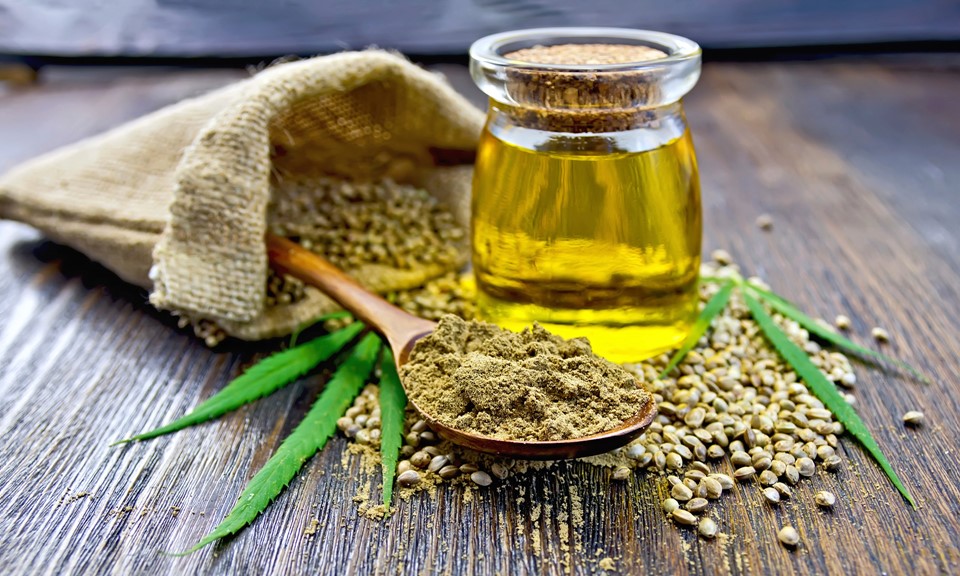
Edible hemp oil is cold-pressed from the hemp seeds. hemp seeds, not flowers or leaves. It therefore contains very few cannabinoids, including CBD. It is not a CBD oil and does not produce the anxiolytic or analgesic effects expected from cannabidiol.
Its value is nutritional: it is exceptionally rich in omega-3 and omega-6 essential fatty acids in an optimal ratio (3:1), in vitamin E and in antioxidants. It is used as a seasoning (not for cooking, as it cannot withstand high temperatures) and in cosmetics for its moisturizing and protective properties.
It is sold freely in supermarkets and organic stores, totally legal, with no psychoactive effects or therapeutic benefits linked to cannabinoids.
Beware of frequent confusion For example, a «hemp oil» sold in supermarkets for €5 is an edible oil made from hemp seeds. CBD oil sold in specialized stores is an extract of hemp flowers. Both are sometimes called «hemp oil» on labels, but always check the CBD content in mg.
Medical cannabis oil (with THC)
In countries where medical cannabis is legalized (Germany, the Netherlands, Canada, Israel and gradually in France via the current experiment) oils containing a significant proportion of THC are prescribed by doctors for specific indications.
These oils generally combine CBD and THC in varying ratios depending on the pathology being treated: 1:1 ratio for certain chronic pain conditions or spasticity (multiple sclerosis), CBD-dominant ratio for epilepsy or severe anxiety, THC-dominant ratio for chemo nausea or cachexia.
In France, medical cannabis has been the subject of gradual experimentation since 2021. These products are not available in CBD stores: they are dispensed in pharmacies on medical prescription within a strict regulated framework.
Concentrated oils and extracts
Oil extracted with CO2
L’CO2 extraction supercritical state is the industrial reference method for producing high-quality CBD oils. CO2 in a supercritical state (under controlled pressure and temperature) acts as a solvent without leaving chemical residues, preserves fragile terpenes and cannabinoids, and enables precise selection of the extracted molecules.
The result is a clean, concentrated oil whose composition can be finely controlled. Almost all high-end CBD oils on the French market use this method.
BHO and other solvent extractions
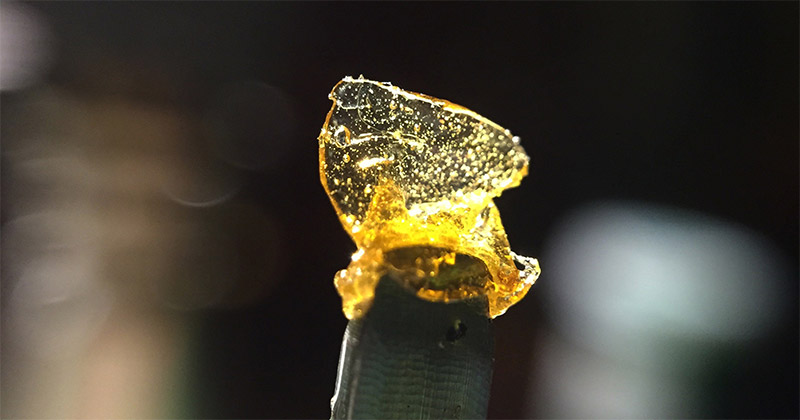
The BHO (Butane Hash Oil) is a cannabis concentrate obtained by butane extraction. High in THC, it is used in countries where recreational cannabis is legal (USA, Canada, Netherlands). It is not legal in France and has no place in the French CBD market.
Other solvent extractions (ethanol, propane) exist with similar profiles. These concentrates are distinct from CBD oils: they are targeted at recreational consumers or medical cannabis patients in countries where it is legal.
Rick Simpson Oil (RSO)
L’Rick Simpson oil is a full-spectrum cannabis extract highly concentrated in THC, obtained by extraction with isopropyl alcohol. Rick Simpson claims to have cured his skin cancer with this oil in 2003, sparking a major movement in patient communities across the US.
Rigorous clinical evidence remains insufficient to validate its therapeutic uses. RSO is illegal in France due to its THC concentration. It is mentioned here for information and to avoid confusion with legal CBD oils.
Cannabis tinctures
The dyes are alcoholic extracts of cannabis, historically used in medicine before prohibition. They enable rapid sublingual absorption and relatively precise dosage. Legal CBD tinctures are available on the French market, as distinct from THC tinctures, which remain illegal.
Summary
| Type | CBD | THC | Psychoactive | Legal in France | Main use |
|---|---|---|---|---|---|
| Full spectrum CBD oil | Yes | Traces (< 0.3%) | No | Yes | Well-being, anxiety, sleep |
| Broad spectrum CBD oil | Yes | No | No | Yes | THC risk-free wellness |
| CBD isolate | Yes (pure) | No | No | Yes | Targeted use, athletes |
| Edible hemp oil | Traces | Traces | No | Yes | Nutrition, cosmetics |
| Medical cannabis oil | Variable | Yes | Yes | On prescription | Controlled medical use |
| BHO / THC concentrates | Variable | High | Yes | No | Recreational/medical (outside France) |
| RSO | Variable | High | Yes | No | Medical (outside France) |
| CBD tinctures | Yes | Traces | No | Yes | Wellness |
This article is for information purposes only. For any therapeutic use, consult a health professional. For products containing THC, check the legislation in force in your country.





CBD in France: Traceability, Retail Stores, THC and Driving… What the New Bill Proposes

Organigram Enters the Race for Aurora Cannabis

Medical Cannabis: Augur Associates’ latest report provides an update ahead of the publication of the decrees

Golden Buds is relaunching its Nova High vape pens with a cannabinoid formula that’s out of the ordinary

Cannabis is now Canada's fifth-largest commercial crop

Bedrocan Finally Declared Bankrupt

After CBD, Can Wellness Exist Without Cannabinoids?

Uganda Launches a Cooperative Dedicated to Medical Cannabis

Ukraine: First Cancer Patient Prescribed Medical Cannabis

