Camphor: Definition, Properties, and Presence in Cannabis
Camphor is a natural terpenoid with a distinctive, powerful, camphor-like scent that most people immediately associate with muscle rubs or traditional pharmaceutical products. Although less well known than limonene or myrcene in the cannabis world, it is nevertheless present in certain varieties of the plant and contributes, in its own way, to a cultivar’s overall aromatic and therapeutic profile. It is also the’one of the terpenes the best-documented substances other than cannabis, which means we can draw on a solid body of scientific literature to understand its potential effects.
Note: Camphor should not be confused with camphene, a bicyclic terpene with a similar carbon skeleton but a chemically distinct structure. While camphene can oxidize naturally to form camphor, the two molecules have different properties and uses.
What is camphor?
Camphor (chemical formula C10H16O) is a bicyclic terpenoid belonging to the ketone family. At room temperature, it is a waxy, translucent substance that feels slightly greasy to the touch and is highly flammable. Its odor is instantly recognizable: fresh, pungent, slightly minty, with a woody note.
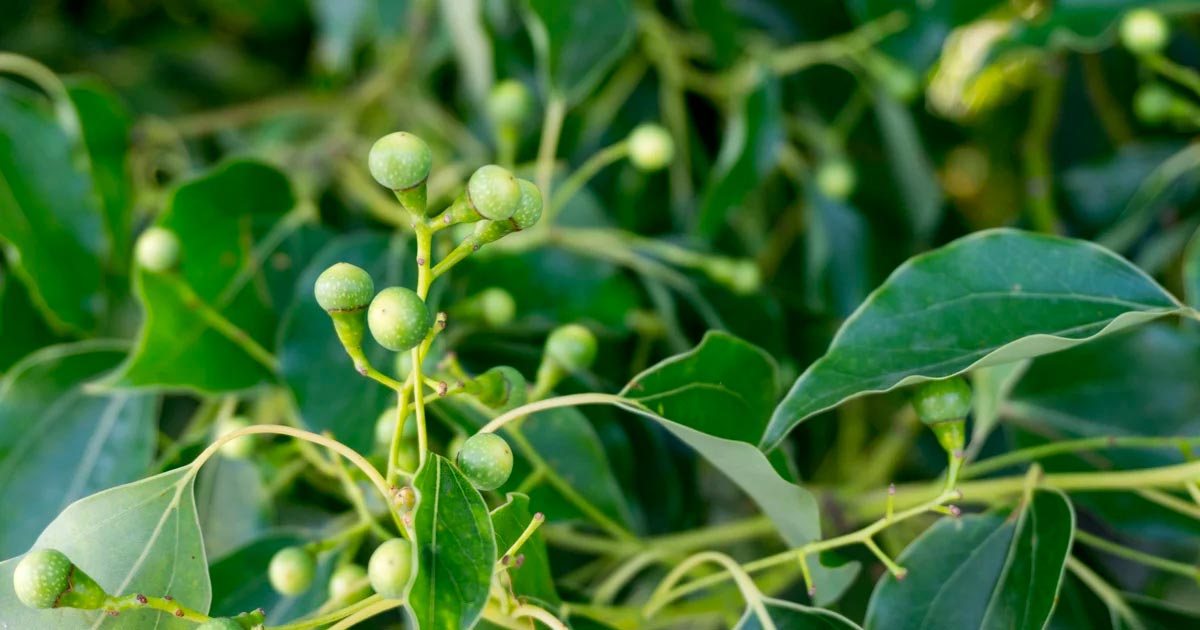
In its natural state, it is found primarily in the wood of the camphor laurel (Cinnamomum camphora), a tree native to Southeast Asia; steam distillation of this wood produces camphor essential oil. It is also found in rosemary, sage, certain species of basil, the leaves of the kapur tree, and, to a lesser extent, in several plants of the Lamiaceae family (mints, thymes, lavenders).
In cannabis, camphor is present in low concentrations in certain strains, particularly those with complex terpene profiles characterized by woody or herbaceous notes.
Properties of Camphor
Camphor is one of the most extensively studied terpenoids in pharmacology, and its properties have been documented for centuries in traditional Asian and European medicine.
Anesthetic and analgesic properties
Camphor acts as a mild local anesthetic by interacting with the TRPV1 and TRPM8 receptors, which are involved in the perception of heat, cold, and pain. When applied topically, it first causes a warming sensation, followed by a cooling effect and partial numbness in the treated area. This mechanism explains its long-standing use in balms for muscle and joint pain.
Antimicrobial properties
Studies have shown that camphor has significant antimicrobial activity against several bacterial and fungal strains, including Staphylococcus aureus and Candida albicans. This property is the reason for its traditional use as a preservative and antiseptic, particularly in topical pharmaceutical preparations.
Anti-inflammatory properties
Camphor inhibits certain inflammatory pathways by reducing the production of pro-inflammatory mediators. In vitro and in vivo studies suggest that it may help reduce swelling and irritation, particularly in topical formulations that combine camphor and menthol.
Effects on the Respiratory System
When inhaled, camphor produces a well-known decongestant and expectorant effect, which is utilized in inhalers and chest rubs. It stimulates cold receptors in the respiratory tract, creating a sensation of easier breathing. This is also why cannabis strains rich in camphor can produce smoke or vapor that feels «cooler» when inhaled.
Camphor in Cannabis: Its Role and the Strains It Affects
In the Cannabis sativa plant, camphor is considered a secondary terpene: it is rarely the dominant terpene compound, but it contributes to the complexity of the aromatic profile of certain cultivars. It is most commonly found in varieties with woody, herbaceous, or camphor-like notes, often derived from landrace strains from Central Asia or the Middle East.
Its role in the entourage effect is still being studied, but researchers are interested in its ability to modulate pain perception when combined with other cannabinoids such as CBD or CBG, whose anti-inflammatory properties are complementary.
Camphor also interacts with TRPV1 receptors, the same ones targeted by CBD in some of its mechanisms of action. This convergence on the same biological pathways suggests a potential synergy, although clinical studies specifically examining this combination in cannabis are still lacking.
Uses of camphor other than in cannabis
Camphor is used in many fields far beyond cannabis botany.
In pharmacy and medicine, it is an ingredient in many topical products for muscle pain (Tiger Balm, Vicks VapoRub, rheumatic ointments), decongestants, and antiseptics. It is also used as a repellent against insects and moths.
In cooking, camphor is used sparingly in certain South Asian culinary traditions, particularly in Indian sweet dishes, where it is used in very small quantities for its distinctive aroma.
In religious practices and ceremonies, camphor is burned in certain Hindu and Buddhist rituals for its purifying scent and because it burns cleanly, leaving no visible residue.
Historically, it has also been used as an embalming fluid and a preservative for anatomical specimens.
Precautions for Use
Although camphor is widely used for medicinal purposes, it is not without risks at high doses. When ingested in large quantities, it is toxic and can cause seizures, nausea, and neurological damage. For this reason, pharmaceutical formulations containing camphor are strictly dosed, and internal use is not recommended without medical advice.
In the context of cannabis, the concentrations naturally present in the plant are very low and do not pose any particular risk. However, people who are sensitive to essential oils or have a history of epilepsy should exercise caution when using products with high concentrations of terpenes.
Conclusion
Camphor is a terpenoid with multiple, well-documented properties: analgesic, antimicrobial, anti-inflammatory, and decongestant. Although present in only small amounts in certain cannabis strains, it contributes to the plant’s rich terpene profile and its potential effects through the entourage effect. Long confined to balms and folk remedies, it is one of those secondary cannabis compounds that deserve increasing attention as research on cannabis terpenes advances.







«Vincy Gold»: Humboldt Seed Company on the Hunt for Saint Vincent Sativas

Cronos Completes the Acquisition of CanAdelaar for 57.5 million euros

Cannabis with a "bloody" twist: Discover Sensi True Blood and Sensi Sangria, the two new strains from Sensi Seeds

Hemp: The Council of the EU Takes a Stand on New Production and Marketing Rules

Missouri's legal cannabis market accounts for 93 % of consumer spending

THC Gummies: How to Read a Certificate of Analysis Before Buying

British patients now have access to THCV-rich cannabis flowers

Spain: Medical Cannabis Is Coming to About 50 Hospitals

JIHE 2026: Japan’s Largest Trade Show Dedicated to Hemp and CBD Returns to Tokyo with More Than 100 Industry Players

