
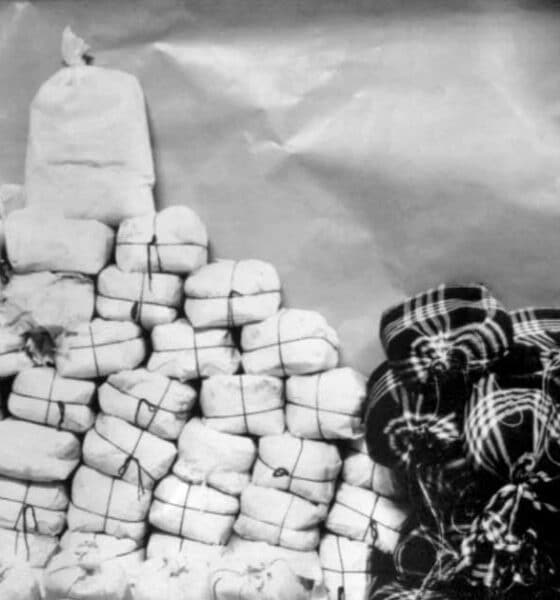
Why Is Cannabis Illegal in France? The History of the 1970 Law
The prohibition of cannabis in France is nothing new. While the law of December 31, 1970, remains a major milestone in France’s drug control policy, the history of cannabis prohibition dates back several decades earlier.
But why did France adopt such repressive legislation in 1970? What was the political and cultural context at the time? And how has this law influenced current regulations?
Key Dates in the History of Cannabis Prohibition in France
From 1916 to the current debate on medical cannabis: the legislation, events, and pressures that shaped the 1970 law and its aftermath.
-
Medicine and Culture
Moreau de Tours studies hashish
Moreau de Tours publishes Hashish and Mental Illness ; the Club des Haschischins met in Paris in the 1840s.
-
Medicine and Culture
Baudelaire published *Les Paradis artificiels*
The poet describes the effects of hashish and opium in Artificial Paradises.
-
Key Date
Legislation
First Law Criminalizing Drug Use
The text refers to opium, morphine, cocaine, and hashish.
-
Legislation
The offense of possession is added to the law
Two months after the law of July 12, mere possession becomes a punishable offense (Newsweed).
-
Legislation
The 1916 law is being strengthened
Two new laws tighten the 1916 regulations (Newsweed).
-
International Context
The Geneva Convention and Artaud's Letter
The International Opium Convention also regulates Indian hemp. Antonin Artaud published his Letter to the Legislator Responsible for the Narcotics Act.
-
Key Date
Legislation
First law with a public health component
The user is viewed as a patient, and the dealer as a criminal.
-
International Context
Single Convention on Narcotic Drugs
Under the auspices of the United Nations, cannabis is listed in Schedule IV.
-
International Context
Nixon writes to Pompidou
The U.S. president is urging his counterpart to take action against the French Connection, the Marseille-based heroin ring.
-
Key Date
French Context
Martine's Death in Bandol
A 17-year-old girl dies of a heroin overdose at the Bandol casino. The incident sparks a moral panic.
-
Parliament
First reading in the National Assembly
Members of Parliament passed Pierre Mazeaud's bill with virtually no debate.
-
Parliament
The Senate Tightens the Language
Robert Boulin represents the government; repressive measures are being tightened.
-
Parliament
Latest readings in the Assembly
Members of Congress vote on the final version.
-
Key Date
Legislation
Enactment of Law No. 70-1320
The law was published in the Official Journal on January 3, 1971.
-
International Context
Nixon Declares War on Drugs
In the United States, drugs are becoming public enemy number one.
-
Key Date
Skincare
Opening of the Marmottan Center
Claude Olievenstein is opening a facility that provides voluntary, anonymous, and free medical care.
-
Public Policy
Three-Year Plan to Combat Drug Abuse
The government adopts a plan to combat drug use and prevent addiction.
-
Legislation
The «Marilou» Law on Driving
The law prohibits driving under the influence of narcotics.
-
Legislation
Crime Prevention Act
A therapeutic injunction may be issued at any stage of the proceedings.
-
Medical cannabis
Green Light for the Pilot Program
The National Assembly has approved the principle of a pilot program for medical cannabis as part of the 2020 Social Security budget.
-
Key Date
Criminal Liability
Widespread Adoption of the Fixed-Amount Fine
The fixed fine for drug use, set at 200 euros, applies throughout the country.
-
CBD
Kanavape Ruling
The Court of Justice of the European Union rules on CBD.
-
International Context
The UN Removes Medical Cannabis from Schedule IV
The Commission on Narcotic Drugs amends the classification established by the 1961 Convention
Read the article : The UN Removes Medical Cannabis from Schedule IV
-
Key Date
Medical cannabis
First patient in the trial
Medical cannabis is entering the trial phase in France.
-
Medical cannabis
End of the pilot program
Patients who have already received treatment will continue to have access on an exceptional basis.
-
Medical cannabis
Widespread adoption is still pending
The expansion of the program is enshrined in law, but the necessary executive orders have not yet been issued; no new patients are being admitted.
The First Drug Restrictions in France
Before 1970: The Origins of Prohibition
Contrary to a common misconception—which we nevertheless use as a starting point for the recent approach to drug policy in France—the 1970 law is not the first French law to regulate narcotics.
In the 19th century, cannabis was known and widely used in certain medical and intellectual circles. Preparations made from Indian hemp are studied and prescribed for their pharmacological properties, while writers experiment with hashish in an artistic context, such as that of the The Hashishins Club.
At that time, public health concerns centered on morphine, which high society used to stave off boredom, as well as cocaine and heroin, which were then available in pharmacies to treat pain or as anesthetics. World War I also marked a turning point, as war wounded were treated with morphine and opium, and their use did not stop when they returned home.
France thus followed the United Kingdom (1868) and the United States (Harrison Act, 1914) and adopted the the law of July 12, 1916, which introduced repressive measures. Prohibited substances are listed in three schedules A, B and C. Schedule B comprises «narcotics», defined solely by the following list: «opium, extracts and powder, morphine and its salts, heroin and its salts, cocaine and its salts, hashish and its preparations.» The law punishes sellers, pharmacists accused of issuing fake prescriptions, and consumers with a prison term of three months to two years and a fine of 1,000 to 10,000 francs.
The Influence of International Conventions
During the first half of the 20th century, several international agreements sought to control the flow of drugs. The 1925 International Opium Convention helped regulate the cannabis trade on an international scale.
In 1961, the Single Convention on Narcotic Drugs reinforced this approach by establishing a global control system. France is thus part of an international movement toward restriction that predates contemporary debates on legalization by a wide margin.
The 1960s: French Society in the Midst of Transformation
The Emergence of New Cultural Practices
The 1960s were marked by profound social changes. Young people began to question certain traditional values, student movements gained momentum, and cultural influences from the United States spread throughout Europe. Cannabis gained new visibility, particularly through music, the hippie movement, and counterculture circles, even though its use in metropolitan France was virtually nonexistent before 1970.
For some young people, its use has become a symbol of individual freedom and a break from established norms. This trend is causing concern among policymakers in France and in Europe, which sometimes link drug use to the social changes of the time. In the wake of the countercultural uprisings of 1968, which popularized slogans such as «It is forbidden to forbid,» political leaders faced a profound crisis of authority and sought to restore social order.
The Bandol Case and the Public Debate
In 1969, the death of a teenage girl in Bandol, following a heroin overdose in a casino restroom, caused a major media stir. Although this incident was not related to cannabis, it helped fuel concerns about drug use.
The government therefore sought a more structured legal framework to address the problems of drug addiction and trafficking. This context contributed to the passage of the law of December 31, 1970.
Geopolitical Origins: Nixon, Pompidou, and the French Connection
The 1970 law was not merely France’s response to a specific incident: historians also see it as the result of intense American pressure on Georges Pompidou’s government. De Gaulle’s resignation in 1969 and the simultaneous rise to power of Pompidou and Richard Nixon accelerated the process.
Nixon had made drugs a central issue of his 1968 campaign. In August 1969, he sent a letter to Pompidou urging him to take action against the French Connection, the Marseille-based heroin trafficking ring. According to historian Alexandre Marchant, the U.S. president viewed the war on drugs at that time as part of his foreign policy, intended to disrupt traditional trafficking routes.
The pressure came from both diplomatic and law enforcement channels. The U.S. Embassy in Paris became the regional hub for the war on drugs in Europe, and federal agents were assigned to the consulate in Marseille to pressure local police deemed to be passive. On June 24, 1970, protesters marched past the French consulate in New York carrying signs accusing France of manufacturing heroin.
However, these pressures must be viewed in context. Marchant describes the French Connection as the central segment of a much broader market, and the pressure on France as just one of many actions taken by U.S. diplomacy. The Interior Minister Raymond Marcellin He himself believed that the American press campaign was not motivated solely by heroin trafficking. In 1971, he stated that to punish drug traffickers, «we will have to go as far as the death penalty if current sentences are not sufficiently deterrent.»
The law's provisions on traffic offenses reflect this context: sentences range from five to twenty years in prison, and up to forty years for repeat offenders.
A Quick Vote: How the Law Was Passed
The law of December 31, 1970, stemmed from a bill introduced by UDR Representative Pierre Mazeaud, which was considered alongside a proposal by Weber aimed at strengthening penalties for trafficking and use. The National Assembly passed it on first reading on June 30, 1970; the Senate considered it on November 3 in the presence of Health Minister Robert Boulin; and the Assembly voted on it again on December 10 and 18.
The text has been largely drafted by the Chancellery. According to the magazine Swaps, the government is pressuring Mazeaud, a member of the presidential majority, to endorse a bill that the Ministry of Justice has been working on for a year. Mazeaud and Alain Peyrefitte had, however, initially rejected the criminalization of personal and solitary use, deeming it contrary to individual freedoms.
The hearings held in the National Assembly, published by Peyrefitte through Plon in 1970, reveal professionals who were hesitant and skeptical about criminalization, while politicians were under pressure from public opinion and the press to act. The final version was a compromise between two ministries: the Justice Ministry wanted to punish drug use, largely for technical legal reasons, while the Health Ministry called for mandatory health monitoring.
The discussion focused primarily on implementation: the vote on anti-trafficking measures did not pose any major difficulties. At first reading, the bill passed unanimously and with virtually no debate; the Senate subsequently strengthened the enforcement provisions. Some lawmakers also feared that nighttime raids, which had been considered at one point, might be used against far-left organizations.
These debates cast a different light on the idea that the law was passed solely in the wake of the Bandol incident: criminalizing drug use initially met with resistance before the government imposed its position.
The Law of December 31, 1970: A Major Turning Point
Law No. 70-1320 of December 31, 1970, addresses public health measures to combat drug addiction and the enforcement of laws against the trafficking and illicit use of toxic substances. It is based on a two-pronged approach: public health and law enforcement.
This framework has established very strict legal limits. For example, under the’Article L3421-4 of the Public Health Code, encouraging the use of narcotics or portraying cannabis in a favorable light is punishable by penalties of up to 7 years in prison and a €100,000 fine. In practice, treating occasional, non-dependent users either as patients or as criminals has proven to be completely impractical.
Criminalization of Drug Use
The law imposes criminal penalties for the unlawful use of substances classified as narcotics. Cannabis is treated the same as other prohibited drugs; there is no general distinction based on their level of danger when criminalizing their use.
The bill provides for penalties of up to one year in prison and a fine for mere use, which has now been raised to 3,750 euros. This approach helps to firmly establish cannabis within the framework of French criminal law.
An often-overlooked health aspect
However, the 1970 law is not based solely on law enforcement. It also views drug addiction as a public health issue. In particular, it provides for mechanisms to ensure access to care and the option of referring certain users to therapeutic treatment.
This duality is one of the historical characteristics of the French model: the user can be viewed both as a person in need of care and as a perpetrator of a crime.
The Health Aspect in Practice: Mandatory Treatment, Anonymity, Marmottan
Drug treatment did not begin in 1970. The law of December 24, 1953, had already introduced a public health component, treating the user as a patient and the drug dealer as a professional offender./
The 1970 law added the therapeutic injunction: an alternative to prosecution in the form of medical supervision. A person admitted to a hospital for detoxification may, if they so request, remain anonymous, and this anonymity cannot be lifted to punish drug use. The magazine Swaps notes that anonymity and free treatment were at the heart of the system established in 1970.
The law of March 5, 2007, extends the therapeutic injunction to all stages of the proceedings and establishes the role of the «liaison physician,» who is authorized by the regional health agency. However, a circular urges prosecutors to reserve its use for cases of proven addiction.
In practice, clinicians quickly run up against legal constraints. In July 1971, Claude Olievenstein opened the Marmottan Center in Paris, the first specialized treatment facility for people with substance use disorders. Treatment there was voluntary, provided anonymously and free of charge, without moral judgment. These principles—«neither patient nor criminal»—contrasted with the «treatment or incarceration» alternative set forth in the 1970 law.
The psychiatric sector remains largely reluctant to admit drug addicts into its facilities. According to a report by the organization Addictions France, the underlying philosophy of the law has not changed since 1970, despite the rise in drug use.
How has the 1970 law evolved?
Over the decades, French legislation has undergone several changes. Yann Bisiou, an associate professor of criminal sciences at the University of Montpellier and a specialist in drug law, likes to point out that the The law changes every 6 to 9 months.
In 2000, the provisions of the 1970 law were recodified, primarily in the Public Health Code and the Penal Code. This recodification does not mean that the prohibition has been lifted.
Illegal drug use remains a crime punishable by one year in prison and a fine of 3,750 euros. In practice, the OFDT describes this as a massive volume of cases, with more than 130,000 arrests in 2020. To address this, criminal investigation officers initially relied on plea bargains, and then, since 2020, a fixed-amount civil fine, without amounting to decriminalization—since it still results in a criminal record for those arrested—and without, at the same time, providing a path to treatment for those who might need it.
What the law did not prevent: consumption
In 2023, 50.4 % of adults aged 18 to 64 had already tried cannabis, and 29.9 % of 17-year-olds had done so. There are approximately 21 million people in France who have tried cannabis, including 5 million who used it within the past year (same source). The OFDT estimates the number of daily users at 900,000.
Among adults, usage levels are stabilizing and the average age of users is increasing, according to the 2021 Health Barometer, in which 47.3 % of adults reported having used the substance at some point.
Why is the 1970 law still a topic of debate?
The 1970 law is particularly controversial because it failed to curb the use of illegal drugs and allowed mafia-like organizations to take control of the trade in these substances. While all discussions about prohibition acknowledge its failure, the proposed solutions differ depending on one’s perspective. Advocates of a repressive approach emphasize the protection of public health, the prevention of addiction, and the need to limit the spread of narcotics—whether for moral or dogmatic reasons.
Proponents of reform point to the limitations of law enforcement, the difficulties in controlling the black market, and the possibility of establishing specific regulations for cannabis and even other drugs that are currently illegal. International experiences—such as those in Canada, Uruguay, and all of our European neighbors, which have at the very least decriminalized or even legalized cannabis—fuel these discussions.
The current ban on cannabis in France thus stems from a news story in the 1970s. The law of December 31, 1970, reinforced a system that had been in place since the early 20th century, combining criminal penalties with health care—a laudable intention that never worked. More than half a century after its adoption, its legacy continues to shape debates on the legal status of cannabis, even as science and society have made significant progress on the subject, and the law has more than demonstrated its limitations.
FAQ – Cannabis Prohibition in France
When was cannabis banned in France?
The first restrictions date back to the early 20th century, particularly to the legislation of 1916. The 1970 law subsequently strengthened and reorganized the enforcement framework.
Why was the 1970 law enacted?
It addresses public health concerns, changes in drug use, and a political context marked by a commitment to combating drug trafficking and drug addiction.
Is the 1970 law still in effect?
Its provisions have been recodified and amended, but several key principles of French prohibition stem from it.
Does the 1970 law apply only to cannabis?
No. It applies to all substances classified as narcotics.
Selected Bibliography
The references below are organized by type; the links lead to the online versions that were consulted.
History and Sociology of Drugs
- Alexandre Marchant, The Impossible Prohibition: Drugs and Drug Addiction in France, 1945–2017, Perrin, 2018.
- Emmanuelle Retaillaud-Bajac, Lost Paradises: Drugs and Drug Users in Interwar France, Presses universitaires de Rennes, 2009 (presentation).
- Christian Bachmann and Anne Coppel, The Tamed Dragon: Two Centuries of Strange Relations Between the West and Drugs, Albin Michel, 1989.
- Anne Coppel, Can We "Civilize" Drugs? From the War on Drugs to Harm Reduction, La Découverte, 2002.
- Anne Coppel and Olivier Doubre, Drugs: Breaking the Deadlock. Exploring Alternatives to Prohibition, La Découverte, 2012.
- Alain Ehrenberg (ed.), Drugs, Politics, and Society, Descartes, 1992.
Academic Articles
- Alexandre Marchant, «The French Connection: Between Myths and Reality,», Twentieth Century: A History Journal, 2012/3, No. 115 (Cairn).
- Alexandre Marchant, «Drug Cultures in France and the Netherlands (1960s–1980s): Banning or Regulating the «Unacceptable,»» in J. Potts and J. Scannell (eds.), The Unacceptable, Palgrave Macmillan, 2013 (DOI).
- Alexandre Marchant, «When «Drugs» Become «Drugs»: Issues of Pharmaceutical Abuse in France from the 1960s to the 1990s,», Medicine Through the Centuries, Feb. 26, 2014, pp. 575–614 (text).
- Ivana Obradovic, Caroline Protais, and Olivier Le Nézet, «Fifty Years of Criminal Justice Responses to Drug Use (1970–2020),» OFDT, Trends (text).
- Review Swaps No. 96-97, Winter 2020-2021, special feature «50 Years of the Law» (text); see also «How did the 1970 law come about?».
- «The United States, France, and the French Connection: A Look Back at the Geopolitical Origins of the 1970 Law,», The Conversation.
- «History of Drugs and Approaches to Decriminalization in France,» thesis in geopolitics from the Joint Defense College, 2001 (text).
Primary Sources
- Alain Peyrefitte, Drugs: What Judges, Doctors, Police Officers, and Ministers Have Observed and What They Propose, Plon, 1970 (hearings leading up to the passage of the law).
- Law No. 70-1320 of December 31, 1970, including a history of its readings (text).
- Parliamentary Debates of 1970, National Assembly and Senate.
- Acts of July 12, 1916, and December 24, 1953: to be cited according to Légifrance.
Bandol and Moral Panic
- Criminocorpus, an article on the figure of «La Morphinée.».
- Larousse, archives from 1970, in the "News in Brief" section.
Data
- OFDT and Santé publique France, Cannabis Use Among Adults in 2021, Trends No. 153 (text).
- OFDT, the 2023 EROPP and 2023 ESCAPAD surveys, included in the Respadd Summary.
- ANSM, Thematic Report Medical cannabis.


















A Canadian study reveals the pleasant psychotropic effects of high-dose CBD

Medical cannabis: The Greens introduce two amendments to accelerate its widespread adoption

More THC, barely any additional effects: A new study challenges common assumptions about the potency of cannabis

Dr. Pascal Douek, a tireless advocate for medical cannabis in France, has died

Kentucky now has 26 medical cannabis dispensaries

«Vincy Gold»: Humboldt Seed Company on the Hunt for Saint Vincent Sativas

Cronos Completes the Acquisition of CanAdelaar for 57.5 million euros

Cannabis with a "bloody" twist: Discover Sensi True Blood and Sensi Sangria, the two new strains from Sensi Seeds

Hemp: The Council of the EU Takes a Stand on New Production and Marketing Rules

