Cannabis prohibition: history, origins and players
Cannabis prohibition is a recent phenomenon in human history. Visit cannabis has been used for thousands of years throughout the world - for medicinal, spiritual and recreational purposes - without any significant legal reaction. It was in the 20th century, and mainly under the impetus of the United States, that the plant went from being a universal remedy to a demonized substance.
Before Anslinger: the beginnings of Prohibition (1912-1930)
The first international restriction on drugs dates back to the The Hague Convention of 1912, which mainly targeted opium and cocaine. Cannabis was only marginally mentioned, but this was the first sign of a desire for international regulation that was to spread.
In the United States, several states began banning cannabis as early as 1910-1920, often in a context of racial tension: the term marijuana (rather than cannabis or hemp) is deliberately chosen for its Mexican connotations, in a xenophobic post-Mexican revolution climate. Cannabis is presented as «the drug of Mexicans and blacks», a rhetoric that would serve as the basis for national prohibition.
Harry Anslinger and the making of a moral panic (1930-1937)
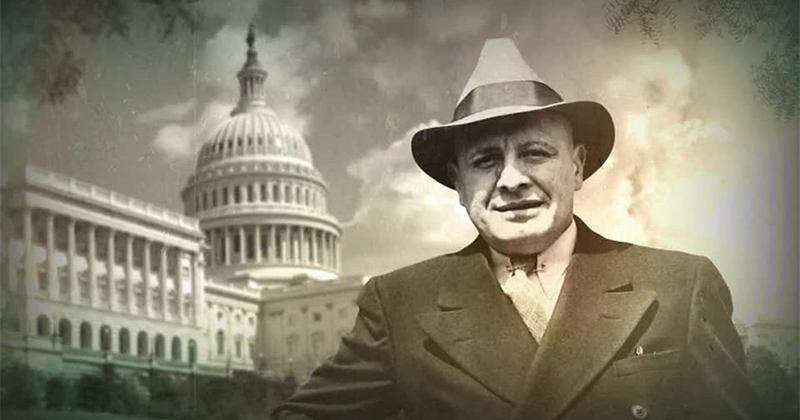
The central figure of cannabis prohibition appeared in 1930: Harry J. Anslinger, appointed head of the Federal Bureau of Narcotics (FBS). His position was threatened in 1933 when Franklin Roosevelt abolished alcohol prohibition, and the FBS lost its raison d'être. Anslinger soon found a new enemy: cannabis.
Its strategy is based on three pillars:
Media propaganda he joins forces with William Randolph Hearst, a press magnate who owns the International News Service and dozens of newspapers. The front pages were full of sensationalist headlines: «A young man, totally addicted after six months of inhalation, massacred his family with an axe», «Marijuana leads to brainwashing, pacifism and communism». Propaganda films such as Reefer Madness (1936) or Marihuana, Weed with Roots in Hell (1936) are produced and broadcast.
Economic interests Hearst has good personal reasons for fighting hemp - its newspapers use wood-based paper, in direct competition with cheaper hemp paper. Du Pont, the chemical giant and inventor of nylon, sees the textile industry as a source of industrial hemp a threat to its new synthetic products. Prohibition is as much economic as it is moral.
Building the myth Anslinger's products include theory of escalation towards hard drugs, the myth of the’cannabis addiction, the racist connotation of the term marijuana and prison overcrowding that will cost American taxpayers billions over the coming decades.
In 1937, despite opposition from the medical profession and New York Mayor Fiorello La Guardia, Anslinger obtained the adoption of the Marijuana Tax Act - which makes the production and sale of cannabis prohibitively expensive. All industries using hemp are gradually disappearing.
The globalization of prohibition (1961-1971)
American prohibition is exported via international institutions. Visit 1961, the United Nations adopted the Single Convention on Narcotic Drugs which classifies cannabis as one of the most dangerous substances - on a par with heroin - and standardizes prohibition worldwide, while authorizing limited medical and research use.
Visit 1971, President Richard Nixon relaunches the War on Drugs with unprecedented intensity. His adviser John Ehrlichman would admit decades later that the war on drugs was explicitly designed to target two groups: opponents of the Vietnam War (associated with cannabis) and black Americans (associated with heroin). Targeting their drugs, raiding their homes and arresting their leaders made it possible to «disrupt these communities». Nixon privately confessed that cannabis was «not particularly dangerous».
Prohibition in France and Europe
The France follows the international trend with the law of december 31, 1970 which penalizes the use of narcotics, including cannabis. It is one of the most repressive pieces of legislation in Europe. It makes no distinction between substances, and criminalizes simple use, not just trafficking. The broad outlines of the law are still in force today, although its application has evolved towards the forfaitization of fines since 2020.
In Europe, the policy varies greatly from country to country: from Netherlands with their tolerance system (gedoogbeleid) since the 1970s to Sweden, one of the most repressive, via Portugal, which decriminalized all drugs in 2001.
Prohibition on the wane
After more than 80 years of prohibition, the model is cracking. Uruguay legalized cannabis in 2013, Canada in 2018. In the United States, dozens of states have legalized cannabis for adult use. In Europe, Germany legalized possession and personal cultivation in 2024. Visit legalization progresses worldwide and with it, a gradual reappraisal of the narrative constructed by Anslinger and his contemporaries.
Economists and criminologists now agree that prohibition has not reduced consumption, has enriched criminal networks, has disproportionately punished minorities and the poor, and has cost governments considerable sums of money for results that are the opposite of the stated objectives.
Prohibition chronology
| Year | Event |
|---|---|
| 1912 | Hague Convention - first international restrictions on drugs |
| 1930 | Harry Anslinger appointed head of the Federal Bureau of Narcotics |
| 1936 | Reefer Madness - anti-cannabis propaganda campaign |
| 1937 | Marijuana Tax Act - effective prohibition in the United States |
| 1961 | UN Single Convention on Narcotic Drugs - globalization of prohibition |
| 1970 | French law of December 31 - criminalization of use in France |
| 1971 | Nixon's War on Drugs |
| 2001 | Portugal - decriminalization of all drugs |
| 2012 | Colorado and Washington - first U.S. states to legalize cannabis for adult use by referendum |
| 2013 | Uruguay - first national legalization |
| 2018 | Canada - legalization for adult use |
| 2024 | Germany - partial legalization in Europe |

















JIHE 2026: Japan’s Largest Trade Show Dedicated to Hemp and CBD Returns to Tokyo with More Than 100 Industry Players
New Caledonia: The Courts Clear the Way for the Return of CBD

The Brazilian medical cannabis market continues to grow

Morocco: Three Cannabis-Based Medications Approved for the Treatment of Epilepsy

Canopy Growth Receives New EU-GMP Certification to Strengthen Its Presence in Europe

Three years after legalizing medical cannabis, Albania continues to establish regulations for it

The first plant-based medical THC spray arrives in the United Kingdom

Medical Cannabis in Germany: THC Prices Vary by a Factor of 12

France already has 3,000 cannabis retail outlets. None of them are legal.

