«Vincy Gold»: Humboldt Seed Company on the Hunt for Saint Vincent Sativas
Five years after the eruption of La Soufrière, which devastated much of St. Vincent, Humboldt Seed Company, the California-based seed bank, ventured into the island’s volcanic hills in search of local strains that had survived. Its latest documentary highlights the resilience of Caribbean cannabis genetics and the generations of Rastafarian farmers who have preserved them.

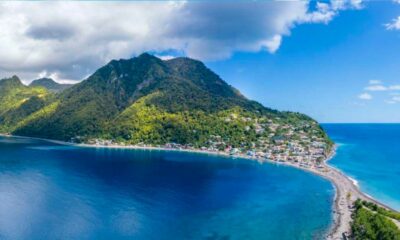
In April 2021, the eruption of La Soufrière volcano transformed the Caribbean island of Saint Vincent into a landscape covered by a thick layer of volcanic ash. Farmland was devastated, communities were displaced, and traditions passed down through generations were suddenly threatened with extinction.
Among them were some traditional varieties of cannabis native to the island, known locally as the Vincy Gold or the Saint Vincent Gold.
In a documentary posted on his YouTube channel, Humboldt Seed Company, a California-based seed bank, is documenting a expedition to the remote farming areas of Saint Vincent to catalog the cannabis populations that have survived and to meet the farmers who have preserved them.
Volcanic soil: a rare growing environment for cannabis
The survival and incredible resilience of the cannabis in Saint Vincent are directly linked to its extraordinary geological setting. The island has an extremely rare type of volcanic soil that accounts for only 0.74 % of the Earth’s crust. This unique geological foundation creates an unparalleled environment for growing elite sativas:
- Mineral richness: The soil is rich in essential minerals that are closely bound within its structure
- Root aeration and high yields: Very loose and prone to erosion, the soil does not retain standing water. This loose structure promotes rapid root expansion, optimal aeration, and explosive yields.
- Terroir synergy: Meticulous, traditional cultivation naturally releases these minerals. This creates the ideal terroir for producing the world’s finest arrowroot, as well as world-class Cannabis sativa.
Rediscover «Vincy Gold» and the roots of old-school sativas
As you make your way through the dense tropical vegetation, you’ll discover impressive sativa plants reaching over 2.5 meters in height. Among these discoveries is the legendary « Lamb's Bread », known locally as «Saint Vincent Gold».
From a botanical perspective, these ancient, non-hybridized plants serve as a vital link to the historical lines of local varieties. They are directly related to iconic varieties from the past, including Santa Marta Gold, the Colombian Gold, the Punto Rojo or the Panama Gold.
In an era dominated by hybrids, discovering pure sativas—rich in seeds and thriving through open pollination—is always a treasure. Local Rastafarian growers have preserved these pure strains simply by saving seeds from previous harvests and replanting them season after season, thereby preserving this heritage.
«Vincy Terp»: a distinctive flavor profile blending black pepper and green mango
Sativas from Saint Vincent have a distinct sensory and structural profile that sets them apart from modern indoor-grown varieties. The physical and aromatic characteristics of these plants include:
Primary aromatic profile: dominated by pinene, characterized by the typical, pronounced «Vincy terp»—a pungent blend of black pepper and spicy culinary notes, balanced by tropical fruit aromas.
Secondary scents: notes of crisp green mango peel blend with classic, authentic nuances of Haze.
Flower head structure and appearance: a compact, voluminous flower head featuring striking dark red hairs and a high density of trichomes.
Moisture and texture: This resinous tropical herb is so sticky, moist, and soft that traditional grinding is ineffective; it must be processed using a pair of small scissors to cut the flowers by hand.
Redefining ’OG« in ganja fields literally right by the ocean
While American farmers debate whether « OG » stands for «Original Gangster» or «Organic»; Saint-Vincent offers the literal definition: 100 % grown by the sea. Here, the fields of ganja are carved directly into the coastal cliffs and the slopes of volcanic mountains, suspended above the crashing waves.
«When we talk about growing by the sea… Here, the OG is 100 % grown by the sea… I never would have thought we’d be here doing this, talking about it on camera… After hiding from helicopters in the hills of Northern California, here we are now, walking through fields of ganja in Saint Vincent.»
This context highlights a profound cultural shift. The story of the farmers in Northern California, who had to evade law enforcement helicopters, stands in stark contrast to the tranquil, self-sufficient lifestyle of farmers in the Caribbean hills, who tend their crops alongside a rudimentary hut, a hammock, an ocean view, and ganja fields stretching as far as the eye can see.
Preserving the heritage of local varieties for the future
The expedition to the volcanic hills of Saint Vincent demonstrates that genetic heritage can withstand even devastating natural disasters. By collecting stocks of fertilized seeds from these surviving sativas, researchers are bringing these rare strains back to the lab to analyze, preserve, and breed them.
As natural disasters and climate change continue to threaten local agricultural regions, the preservation of non-hybrid plant populations is becoming crucial to global botanical diversity.
If a single volcanic eruption can instantly threaten 90% of an island’s indigenous crops, how many other irreplaceable local varieties remain hidden in remote corners of the world, waiting to be preserved before they disappear forever?



















«Vincy Gold»: Humboldt Seed Company on the Hunt for Saint Vincent Sativas

Cronos Completes the Acquisition of CanAdelaar for 57.5 million euros

Cannabis with a "bloody" twist: Discover Sensi True Blood and Sensi Sangria, the two new strains from Sensi Seeds

Hemp: The Council of the EU Takes a Stand on New Production and Marketing Rules

Missouri's legal cannabis market accounts for 93 % of consumer spending

THC Gummies: How to Read a Certificate of Analysis Before Buying

British patients now have access to THCV-rich cannabis flowers

Spain: Medical Cannabis Is Coming to About 50 Hospitals

JIHE 2026: Japan’s Largest Trade Show Dedicated to Hemp and CBD Returns to Tokyo with More Than 100 Industry Players

New Caledonia: The Courts Clear the Way for the Return of CBD
-
 Business3 weeks ago
The legal cannabis market in New York exceeds 4 billion $ in revenue
-

 Cannabis in France4 weeks ago
Which countries legalized medical cannabis before France?
-
Cannabis in France7 days ago
France already has 3,000 cannabis retail outlets. None of them are legal.
-
Business4 weeks ago
South Korea is preparing to begin local production of medical cannabis to meet rising demand
-
Cannabis in the U.S.1 week ago
A DEA report confirms that there are no fatal cannabis overdoses
-
Cannabis in Thailand4 weeks ago
From the boom in dispensaries to a purely medical approach: Thailand is revising its cannabis policy
-
Cannabis and driving4 weeks ago
Medical Cannabis and Driving: New South Wales Ends Automatic Penalties for THC
-
Cannabis in France3 weeks ago
France’s Drug Policy Chief Defends Cannabis Prohibition... and Runs Into the Facts













You must be logged in to post a comment Login