
The history of hashish
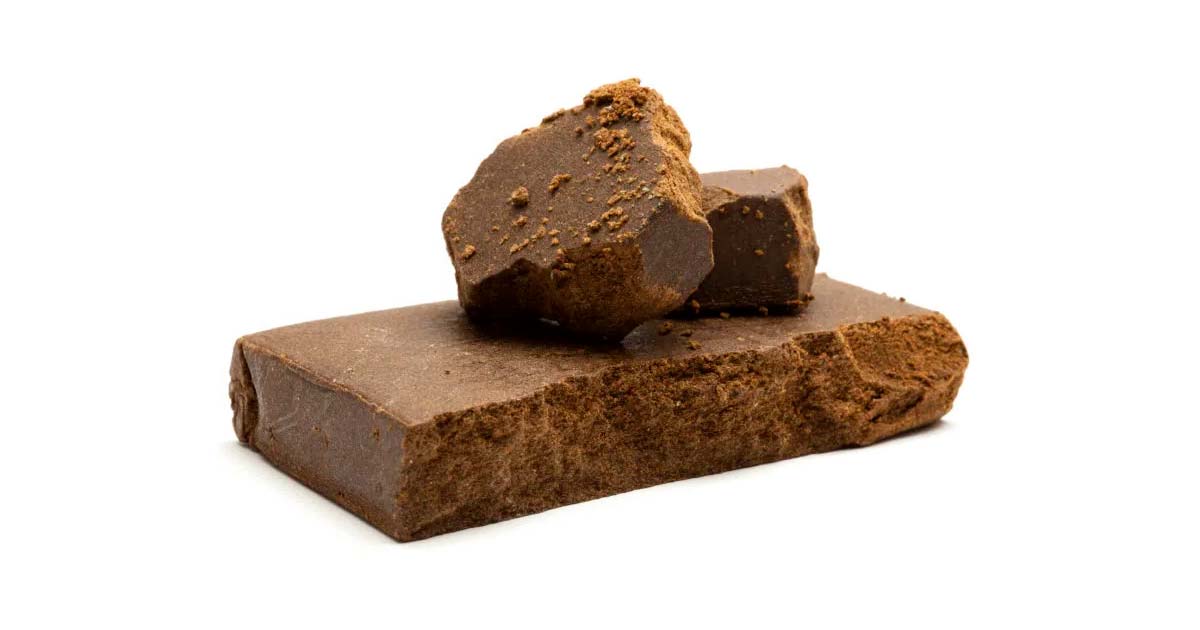
The hashish is a cannabis concentrate produced by pressing or rubbing together the resin glands from a cannabis plant to make bricks, slabs, or rolled pieces.
Although hashish is popular today, it has a long and fascinating history—if you enjoy legends of assassins, sheikhs, and generals from Persia, Egypt, and other exotic places. Read on to learn more about the history of hashish, the original cannabis concentrate.
The Origins of Hashish
The history of cannabis use for its anesthetic properties dates back to the Neolithic period, around 4,000 years before our era. The use of hashish began somewhat later in Persia (primarily in Iran) and in Central Asia (primarily in Afghanistan, Tajikistan, Turkmenistan, and Uzbekistan). It is likely that hashish, like cannabis, traveled along the Silk Road from East Asia to the Middle East.
At first, it was most likely used as incense rather than for other purposes. Incense, such as that made from frankincense and myrrh, was highly prized in ancient times. These substances were also resins that had been used for centuries as medicines and in religious ceremonies.
The charas, or resin produced by gently rubbing growing cannabis plants, was the earliest form of hashish. But when agriculture emerged around 9000 BCE in India, woven sieves were developed to separate the grains from the plants.
These same sieves were used to separate the cannabis resin from the rest of the harvested and dried plant, thus creating the first hashish, according to the eminent hashish expert Frenchy Cannoli. Charas is still produced, mainly in India, by rubbing live plants by hand. Hashish is distinguished by the fact that it is sifted—either by hand or mechanically—from dried cannabis.
In ancient times
One of the earliest references to hashish can be found in *The Book of Poisons* by the Iraqi alchemist Ibn Wahshiyya, written in the 10th century. There are also 11th-century Muslim texts in which religious and secular leaders debate its usefulness. Shortly thereafter, a story about hashish use was included in *One Thousand and One Nights*. Hashish was known and used in what is now Iran and throughout the Arabian Peninsula, although the inhabitants seem to have attributed responsibility for introducing this practice to the region to the Mongols and the Sufis.
Then there are the historical legends of the Nizari Ismailis, better known as the Order of the Assassins or the Hashishin. The Assassins, who had strongholds in Persia and Syria, were a religious sect formed in the late 11th century, around 1090 CE. The name «Assassins» is «Hashâshīn» in Persian and «asāsīn» in Arabic. Legends exist according to which the group’s founder, Hassan-e Sabbāh (also spelled Hasan-i Sabbah), consumed hashish and supplied it to his disciples to instill loyalty to the group. Scholars debate the validity of these accounts, arguing that the word 'Hashishin» is in fact a misnomer. Hassan-e Sabbāh is said to have referred to his followers as »asāsīyūn,« which means »people faithful to the foundations [of the faith].”.
It is believed that the sect was mistakenly called «Hashishin» in Arabic, which means «hashish users,» and that this was the origin of the word «assassin.» It has been said that the Assassins were described as hashish users and called “Hashishin” pejoratively by rival sects, and that these descriptions were not based on facts.
Although no archaeological or written records clearly indicate whether the Assassins consumed hashish as part of their traditions, the legend itself was written around 1210 CE by Arnold of Lübeck. The historical documentation of this legend from the early 13th century establishes a link between the region of Persia and hashish, and provides descriptions of the cannabis concentrate and its effects.
Meanwhile, in 1206 CE, Genghis Khan had united the Mongol tribes and led them from Russia to Persia and Central Asia, bringing with them the use of cannabis and hashish.
In the same century, Ibn al-Bayṭār, a scientist born in what is now the province of Málaga, Spain, described an intoxicating substance from Egypt that he referred to as «hashishah.» ” In the following century, in 1378 CE, a public proclamation announced that the consumption of hashish was prohibited by Soudoun Sheikhouni, an Ottoman emir of Egypt. In his edict, he ordered the destruction of all cannabis plants and the punishment of anyone consuming hashish by imprisonment and the pulling out of their teeth.
The use of hashish continued to grow in popularity in Egypt until the end of the medieval period and throughout the time it was an administrative division of the Ottoman Empire, despite the authorities’ prohibition policies and severe punishments.
Once it reached Egypt, its spread continued. Berber tribes in North Africa are believed to have introduced hashish to one of its current strongholds, Morocco. However, hashish production did not take off in the country for some time.
Hashish in the Modern Era
Hashish use continued to grow, and the primary method of consumption shifted from ingestion to smoking with the introduction of tobacco in the 1500s. During the 18th and 19th centuries, advances in production methods led to increased production and distribution, while demand for hashish grew.
In 1798, during the French occupation of Egypt, Brigadier General Napoleon Bonaparte banned the use of cannabis and hashish and ordered the public burning of any hashish entering the country. He believed that the use of hashish and cannabis led to mental disorders, excessive behavior, and interfered with rational thinking. Despite Bonaparte’s efforts, his own French troops in the Army of the Orient, as well as a group of scientists, engineers, and artists from the Commission of Sciences and Arts brought hashish back to France after serving in Egypt.
The Club des Haschischins was formed in Paris in 1843. The group met monthly at the Hôtel Pimodan—now the Hôtel de Lauzun—to experiment with and explore the effects of hashish, as club members were interested in the possibility that it might enhance their artistic talent and ingenuity. A number of participants were part of the Parisian intelligentsia, including famous writers (Alexandre Dumas, Théophile Gautier, Victor Hugo, Honoré de Balzac), painters (Eugène Delacroix), and other members of Paris’s intellectual elite.
The Dr. Jacques-Joseph Moreau, a psychiatrist, was another notable member of the club. He wrote the first medical publication on the effects of a drug on the human nervous system. Moreau wanted to learn how to treat mental illnesses; he gained a great deal of firsthand knowledge about hashish through self-experimentation. His book, titled *On Hashish and Mental Illness: Psychological Studies*, was published in 1845 and received an honorable mention from the Academy of Sciences in 1946. Recognition of Dr. Moreau’s work helped to establish and legitimize hashish, supporting its potential as a medical treatment within the scientific community.
Starting in the mid-1950s, hippies from Western countries began traveling from the United Kingdom, France, Germany, and Italy to India and Thailand, passing through Central Asia, on what was known as the Hippie Trail or the Overland. One of the main attractions of this trip was the opportunity to find drugs that were readily available, inexpensive, and legal, particularly cannabis and hashish. In the 1960s, the Hashish production in Morocco really took off, partly thanks to the hippie scene.
The history of hashish is somewhat difficult to pinpoint with certainty. Some sources claim that the oldest continuous tradition of hashish production is found in Afghanistan, which is now the largest producer of high-quality hashish. But hashish continues to be produced in India, Nepal, and other regions where it originated.
Morocco and Spain certainly play a part in this, but also California and other regions of the United States. The legalization of cannabis has spread, as have cultivation and interest in resin production, including hashish, a form that was once popular among the Mongols, Persians, and hippies.








Medical Cannabis and Driving: New South Wales Ends Automatic Penalties for THC

China's Yongji Health Takes Control of Tasmanian Botanics

Autism and Cannabis: Results from the First Placebo-Controlled Trial of NTI164

Which countries legalized medical cannabis before France?

From the boom in dispensaries to a purely medical approach: Thailand is revising its cannabis policy

South Korea is preparing to begin local production of medical cannabis to meet rising demand

In the United States, cannabis use among high school students has reached an all-time low

Medical cannabis use surges by 64 % in Denmark

Canopy Growth Enters the U.K. Market with Four Canadian Strains

