Where does cannabis come from?
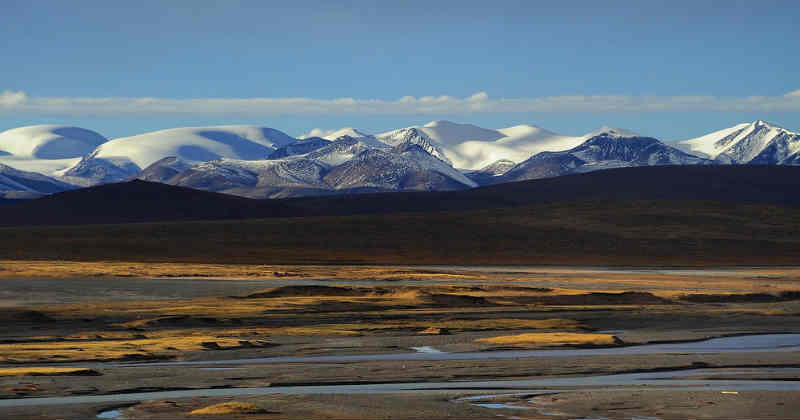
We know that cannabis has been used for thousands of years but we don't know when the plant first appeared on earth. Scientists have attempted to answer this question and determine its origin. According to them, cannabis appeared 28 million years ago on the Tibetan plateau, some 3 kilometers above sea level.
Once upon a time, there was cannabis
Cannabis pollen was first discovered in India, then in Japan, where it dated back 32,000 and 12,019 years respectively. Researchers of all stripes agree that cannabis originated somewhere in Central Asia, but none has yet ventured to determine precisely where and when.
Researchers at the University of Vermont have cross-referenced archaeological and geological studies detecting the presence of fossilized pollen in the soil, in an attempt to define a geographical area and an era. Cannabis is thought to have appeared 28 million years ago, in other words, between the extinction of the dinosaurs and the supposed appearance of the human species. this study in the newspaper Vegetation History and Archaeobotany.
This research proved complex, as cannabis pollen is very similar to hop pollen. In fact, the last common ancestor of cannabis and hops dates back to this period. The two species then took different evolutionary paths. The researchers differentiated between the two pollens by analyzing fossilized pollen from surrounding plants to determine whether the environment was more conducive to the growth of hops or cannabis.
In fact, they started from the observation that the two plants do not grow in the same habitat: the cannabis plant prefers an open, grassy, treeless environment, whereas hops tend to grow in forests. Hop pollen is therefore generally found alongside tree pollen. Thus, they deduced that cannabis appeared on the Tibetan Plateau near Lake Qinghai, which lies at 3,200 metres above sea level.
According to the researchers, development of the Tibetan plateau and climatic conditions would have favoured the emergence and development of the cannabis plant in Asia. «The Tibetan Plateau was born out of the collision between India and Asia, so in a way, we can thank tectonic plates for the evolution of cannabis,» explains John McPartland, director of the research.
The precision of the techniques used was, however, criticized by Robert Clarke, a consultant with the BioAgronomics Group in Los Angeles. According to him, trees can grow very well on lake shores in this type of environment, and cannabis can therefore also be found alongside tree pollen. What's more, the formation time and, by extension, the altitude and climatic conditions of the Tibetan Plateau at a given time are controversial.
Did our prehistoric ancestors use cannabis?
Cannabis pollen was found in the floor of the Denisova Cave in Siberia. It was in this cave that Denisova Man, an extinct species of the genus Homo that preceded Homo Sapiens Sapiens, was first identified from fossils. It would appear that this man was already using cannabis.
The Qinghai lake lies a few hundred kilometers north-west of the Baishiya Karst cave, which we know was visited by Denisova man 160,000 years ago. Is it possible that it was on this occasion that Denisova discovered the cannabis that grew wild in the area?
Jean-Jacques Hublin of the Max Planck Institute for Evolutionary Anthropology doubts this. He points out that 160,000 years ago, the region was in the middle of an ice age, which may have prevented the development of certain vegetation, including cannabis.
In any case, the original cannabis probably had little in common with the one we know today, which is the fruit of hundreds of years of selection and natural cross-breeding. Its THC content must also have been fairly low compared with today's varieties, but still less than our own. industrial hemp French.









JIHE 2026: Japan’s Largest Trade Show Dedicated to Hemp and CBD Returns to Tokyo with More Than 100 Industry Players
New Caledonia: The Courts Clear the Way for the Return of CBD

The Brazilian medical cannabis market continues to grow

Morocco: Three Cannabis-Based Medications Approved for the Treatment of Epilepsy

Canopy Growth Receives New EU-GMP Certification to Strengthen Its Presence in Europe

Three years after legalizing medical cannabis, Albania continues to establish regulations for it

The first plant-based medical THC spray arrives in the United Kingdom

Medical Cannabis in Germany: THC Prices Vary by a Factor of 12

France already has 3,000 cannabis retail outlets. None of them are legal.

