
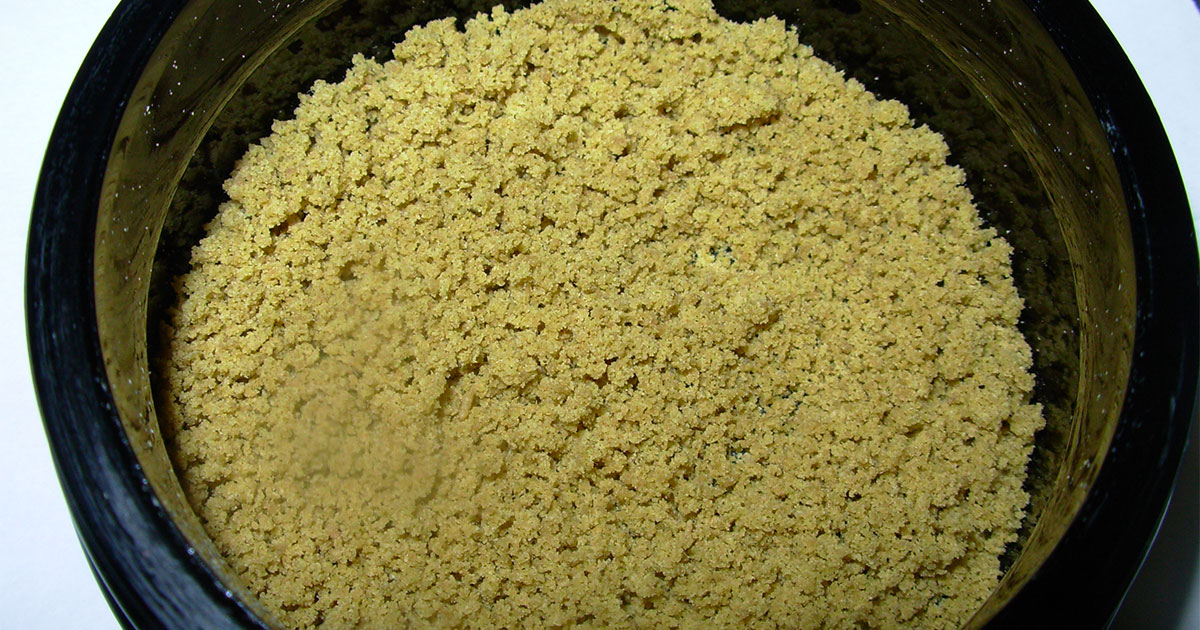
Bubble Hash (Ice Hash): definition, manufacture and fullmelt grades
The bubble hash, also known as ice water hash / ice hash or ice-o-lator, is one of the purest and most respectful forms of hashish. Produced without chemical solvents, using only iced water and sieves, it concentrates cannabis trichomes while preserving their cannabinoid profile. terpenes.
Its name comes from its characteristic reaction to heat: quality bubble hash forms bubbles on its surface when heated, a sign of high trichome purity. The phrase that has become a cult in the community, «if it ain't bubble, it ain't worth the trouble», sums up the reputation of this concentrate.
History: from Skunkman to Bubbleman
Ice hash techniques were popularized in the 1980s by Sam the Skunkman (aka Sadhu Sam or David Watson), a pioneer in the seed industry, after observing that resin glands sink in water. In 1987, he published in the High Times Magazine an advertisement offering advice on home water extraction.
His work paved the way for the first automated sieving machines in the 1990s. It was then that Marcus «Bubbleman» Richardson, Canadian entrepreneur and activist, who revolutionized the practice by developing the Bubble Bag, the first multi-bag filtration kit marketed in 1999. Three bags of different micron sizes enabled trichomes to be broken down by size and the purest glands to be isolated.
The bubble hash was popularized by Frenchy Cannoli, a Franco-American master hashmaker who helped codify and disseminate ice-water extraction techniques. He reached the height of his popularity in the early 2000s, before the arrival of BHO (butane hash oil) and other solvent extractions diversified the concentrate market.
Since the mid-2010s, bubble hash has undergone a veritable revival, driven by the rise of solvent-free extractions and new techniques that have sublimated the original art: the hash WPFF (Whole Plant Fresh Frozen) and Piattella (cold cure ice hash) are today's most successful expressions.
What is bubble hash?
Bubble hash is a cannabis concentrate obtained by mechanically separating the trichomes using cold water and no chemical solvents. Visit trichomes, the small resinous glands that line the flowers and leaves of cannabis plants and in which the active ingredients are concentrated. THC, the CBD and terpenes, become fragile in contact with cold, and easily detach from plant matter when shaken in an ice bath.
The result is a powder or paste that varies in color from off-white to golden beige or even brown, depending on the variety and degree of purity. Texture can range from sandy and granular to slightly creamy, depending on the trichome fractions recovered and drying conditions.
How is bubble hash made?
The process is based on a simple principle: plunge the cannabis into very cold water to weaken the trichomes, shake them loose, then filter them through a series of different-sized sieves.
What you need
- From bubble bags (filter bags) with different mesh sizes, generally sold in kits of 4 to 8 bags (25, 45, 73, 90, 120, 160, 190, 220 microns).
- Two large 10-20 liter buckets
- Plenty of ice (or dry ice for a more intensive version)
- A manual or electric agitator
- Quality cannabis: fresh or dried flowers, or trim rich in trichomes
Starting material: dried vs. WPFF
The quality of bubble hash depends first and foremost on the starting material. Cannabis dried and cured is the most accessible and enables good extraction, but some of the terpenes have already been lost during drying. The WPFF (Whole Plant Fresh Frozen), freshly cut whole plant, frozen immediately after harvesting, preserves the full terpene profile of the living plant and produces an aromatically superior bubble hash, at the cost of more demanding cold logistics.
Manufacturing stages
- Preparing the ice bath Fill the first bucket with very cold water and ice. The temperature should be as close to 0°C as possible. Introduce the cannabis (fresh-frozen or dried) and leave for 10 to 15 minutes to allow the cold to weaken the trichomes.
- Agitation Gently shake the mixture for 15-20 minutes. Mechanical agitation loosens the trichomes from the plant material. The intensity of agitation is a key parameter: too vigorous, and the plant material is stripped off, reducing purity; too gentle, and the yield is insufficient.
- Cascade filtration Pour the liquid into the second bucket, fitted with interlocking bubble bags, from the largest mesh size (220 microns at the top) to the smallest (25 microns at the bottom). Each bag holds a different fraction of trichomes. Lift the bags one by one, starting with the largest, wring out gently, and collect the hash deposited at the bottom of each bag using a spatula or card.
- Fractional collection Each bag produces a distinct fraction of varying quality and composition. The 73-120 micron fractions are generally the richest in pure trichome heads and produce the best quality hash. The coarser fractions (160-220 microns) contain more plant matter and are of inferior quality.
- Drying The collected hash is spread out in a thin layer on greaseproof paper or a tray, and dried cold, ideally in a cold room or an air-conditioned room between 15°C and 18°C, away from light. Insufficient drying encourages mould growth; drying too hot degrades the terpenes. Drying time varies from 24 hours to several days, depending on the thickness of the wafers.
The micron principle
The aim of the ice hash is to separate the trichome heads from the rest of the plant. The mesh size of the sieves, measured in microns (µm), determines which trichome fractions are recovered.
The captive-pedicellate trichomes have heads measuring between 20 and 125 microns depending on cultivar and plant maturity. Different bag sizes filter different fractions:
| Sieve size | What is recovered | Quality |
|---|---|---|
| 25-45 µm | Isolated glands, very small heads | High - little plant matter |
| 70-90 µm | Complete trichome heads | Optimal - best purity/yield ratio |
| 90-120 µm | Complete trichomes with part of a stem | Good - full melt possible |
| 120-160 µm | Coarse fraction with plant debris | Weaker - culinary use |
Bags for 70-120 µm generally produce the best fractions for the dabbing. Finer fractions (25-45 µm) are purer but less abundant. The larger fractions (>120 µm) recover more plant matter and are more likely to be used for cooking or for pressing. rosin.
Star rating: how to assess quality?
Bubble hash is rated on a scale of 1 to 6 stars according to its purity and heat behaviour.
| Stars | Qualification | Behavior |
|---|---|---|
| ⭐⭐⭐⭐⭐⭐ (6) | Full melt | Full-bottom, no residue |
| ⭐⭐⭐⭐⭐ (5) | Full melt | Almost complete bottom, minimal residue |
| ⭐⭐⭐⭐ (4) | Half melt | Partially melted, slight carbonized residue |
| ⭐⭐⭐ (3) | Half melt | Half-bottom, noticeable residue |
| ⭐⭐ (2) | Non-melt | Does not melt well, lots of residue |
| ⭐ (1) | Non-melt | Does not melt, for joint use only |
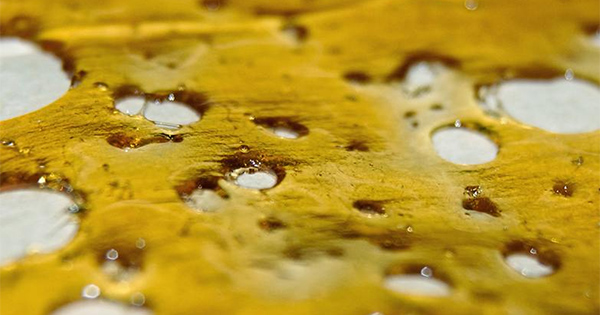
The fullmelt is the holy grail of ice hash: a concentrate that melts completely into a puddle of golden oil, leaving no charred residue. According to Bubbleman, it starts with solid trichome heads that liquefy on heating «into a golden oil that bubbles, bubbles and dances». Reaching this level requires exceptional raw material (cultivars with large trichomes), impeccable technique and usually a well-isolated 70-90 µm fraction.
A hash full melt (5-6 stars) is pure enough to be consumed directly on a nail or a banger. It's this level of quality that serves as the starting material for making Piattella or live hash rosin.
It's important not to confuse mesh size and star rating: a small-micron fraction (25-45µ) does not automatically produce a 6-star hash. The rating primarily reflects trichome purity and the absence of plant matter, whatever the fraction.
How to eat bubble hash
Bubble hash is one of the most versatile of concentrates: its consistency and purity vary according to the note, making it suitable for a variety of consumption modes.
In joint hash: the most common and accessible method. The hash is crumbled over dry cannabis before rolling, or rolled into a thin strand to be placed along the side of the plant. seal. Suitable for all grades of bubble hash, including half-melt fractions.
Spray the vaporizers compatible concentrates accept bubble hash from 4 stars upwards. The ideal temperature is between 170°C and 210°C to preserve terpenes. Below this temperature, the yield is light; above this temperature, the aromas begin to degrade.
On nail or banger (dabbing) hash: reserved for full melt fractions (5-6 stars). The hash is applied with a dabber on a nail heated between 300°C and 400°C for a low temp dab that preserves terpenes. A bubbler can also be used. Fractions below 5 stars leave too much carbonized residue for this method.
Pipe or bong Bubble hash: with a small metal or glass filter, bubble hash can be consumed in a water pipe. This method is suitable for all qualities.
In edibles Bubble hash can be decarboxylated and infused in fat to prepare edibles. Its cannabinoid concentration makes it effective in small doses.
Flower topping Ice hash: sprinkle ice hash over flower in a bowl or joint to increase potency, ideal for cooking grade or half melt.
Rosin pressing ice hash can be hot-pressed between plates to produce hash rosin, one of the most sought-after concentrates on the legal market, combining the purity of solvent-free extraction with the ideal consistency of rosin.
Bubble hash vs. other concentrates
| Bubble hash | Dry sift / kief | BHO / solvents | Rosin | |
|---|---|---|---|---|
| Solvent | None (water) | None (mechanical) | Butane / CO₂ | None (heat/pressure) |
| Purity | Very high | High | Variable | Very high |
| Terpene profile | Excellent (WPFF) | Good | Variable | Very good |
| Equipment required | Bubble bags, buckets, ice | Screens, frames | Specialized equipment | Rosin press |
| Risk | Low | Low | High (flammable) | Low |
| Use as a base | Piattella, live hash rosin | Temple balls, charas | Shatter, wax, sauce | Direct consumption |






CBD is said to promote athletic recovery, without improving performance

294 cannabis clubs in Chile: a booming movement with uneven distribution

Chronic Sciatica: New York Approves First Clinical Trial of a THC-Based Medication

United States: The DEA is accelerating the integration of medical cannabis at the federal level

Florida is nearing one million patients using medical cannabis

Uruguay Revives Its Plan to Allow Tourists to Legally Access Cannabis

In Brazil, researchers are developing an innovative CBD eye drop

Autism: Medical Cannabis Is Linked to Reduced Anxiety

The $28 billion U.S. hemp market remains under threat

