
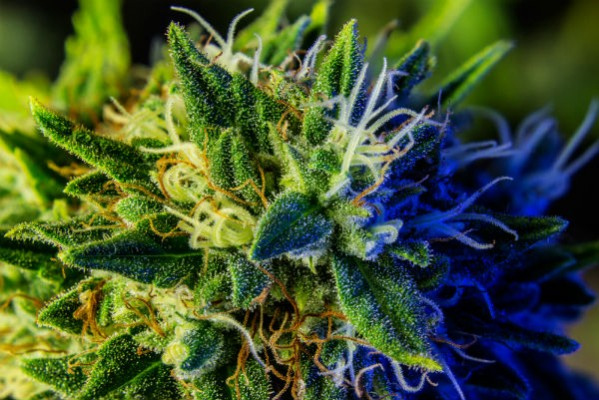
What are trichomes and why are they so important?
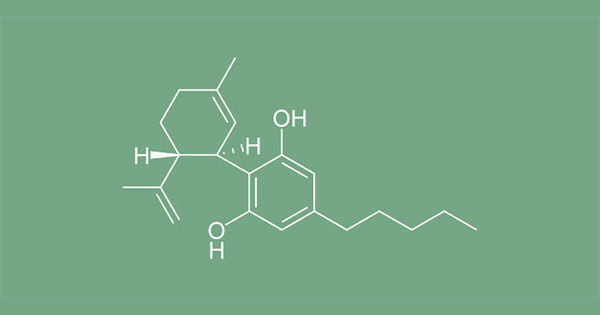
Whether we consider the recreational or medical benefits of cannabis, its therapeutic value comes from cannabinoids and terpenes, molecules that provide relief for a wide range of conditions, from depression to intestinal problems and certain forms of epilepsy.
But where do these compounds come from?
Cannabinoids and terpenes are produced in small resin glands found on the flowers and main leaves during the flowering stage of cannabis plants: the trichomes. From Ancient Greek trikhōma («hair growth»), this term refers to tiny, mushroom-shaped protrusions visible on the surface of the buds, small leaves, and, to a lesser extent, even on the stem. Although relatively complex, trichomes are primarily composed of a stalk and a head. It is inside the head that cannabinoids such as THC.
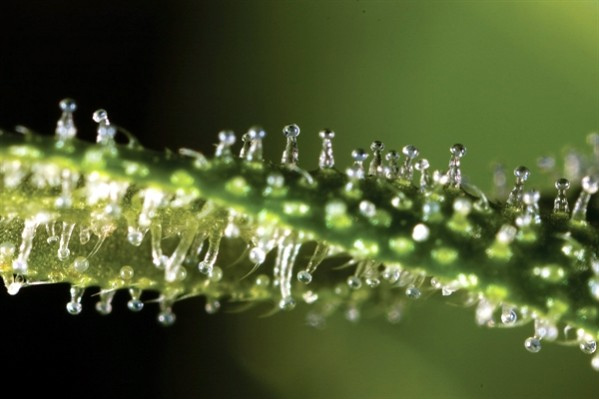
Bulbous trichomes
The 3 Types of Cannabis Trichomes
There are three types of trichomes, which differ in size, shape, and function:
Bulbous trichomes are the smallest (10 to 30 microns) and virtually invisible to the naked eye, even with a standard magnifying glass. They are present across the entire surface of the plant and are believed to be the first to form during development.
Sessile capitate trichomes are medium-sized. They have a spherical head that sits directly on the surface of the leaf, without a long stem. More numerous than the bulbous varieties, they contribute to cannabinoid production but are less productive than the third type.
Stalked capitate trichomes (capitate-stalked) are the largest (60 to 100 microns), the most visible, and by far the most important. These are the ones we see with the naked eye or under a magnifying glass on cannabis flowers, and it is in their buds that the bulk of THC, CBD, and terpenes is concentrated. They are primarily concentrated on the calyxes and bracts of female flowers.
The Cannabinoid Factory
Chemical substances called vacuoles and plastids (which contain terpene precursors) are produced in the trichome stalks and migrate to the gland head. Once at the head, ultraviolet (UV) rays interact with these precursors to trigger the biosynthesis of cannabinoids. This mechanism explains why plants exposed to the right wavelength, light intensity, and duration produce a greater volume of cannabinoids.
It should be noted, however, that a dense coating of trichomes alone does not guarantee the potency of cannabis. The presence of resin glands is a good sign, but these glands can contain widely varying amounts of THC, CBD and other cannabinoids, depending on the genetics and growing conditions.
From a biological standpoint, trichomes also serve the function of defense mechanism : Their sticky texture and chemical composition make them a deterrent to predatory insects, certain fungi, and environmental stressors such as wind or low humidity.
A Maturity Indicator for Growers
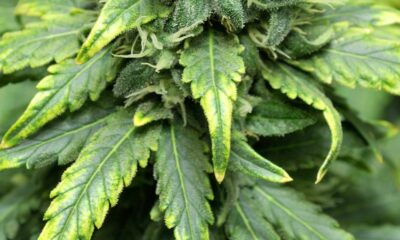
The color of the trichomes is one of the most reliable indicators for determining the ideal harvest time. There are generally three stages:
- Clear/translucent trichomes : The plant is not yet mature. The cannabinoids are still developing. Harvesting at this stage will produce a very cerebral but relatively mild effect.
- Milky/opaque trichomes : This is when THC production peaks. Most extractors and growers aiming for a euphoric experience harvest at this stage, or just as the buds begin to turn amber.
- Amber-colored trichomes : THC begins to break down into CBN (cannabinol), a cannabinoid with more sedative effects. The more amber there is, the more physical and relaxing the effect will be. A ratio of 20 to 30 % of amber is often sought after for balanced effects.
Observation is best done with a 60x–100x magnifying glass (or a USB microscope) to clearly see the color of the trichome heads. A 30x jeweler's loupe will do in a pinch.
The Source of Kief, Hash, and Extracts
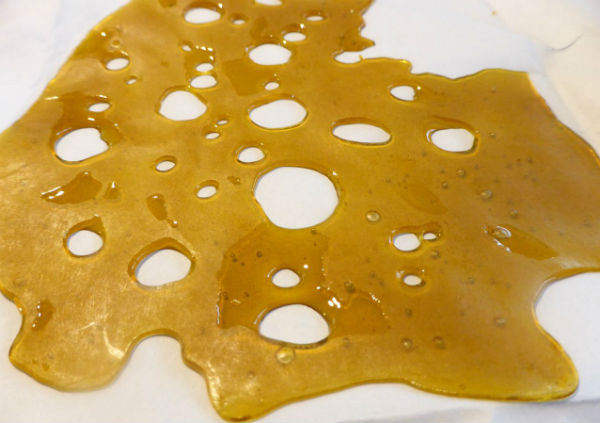
BHO
Since trichomes contain virtually all of the plant’s cannabinoids and terpenes, they serve as the raw material for all forms of extraction and concentrates.
The kief is the simplest form: it consists of decapitated trichome heads, harvested by sifting. The hashish is a similar extraction method, pressed to condense the trichomes into a compact resin.
The bubble hash is made by immersing cannabis in ice-cold water: the cold weakens the trichomes, which detach when gently agitated and are collected by sifting. When the starting material is a whole, freshly frozen plant—a process called WPFF (Whole Plant Fresh Frozen) — The trichomes retain their full terpene profile, producing hash of superior aromatic quality.
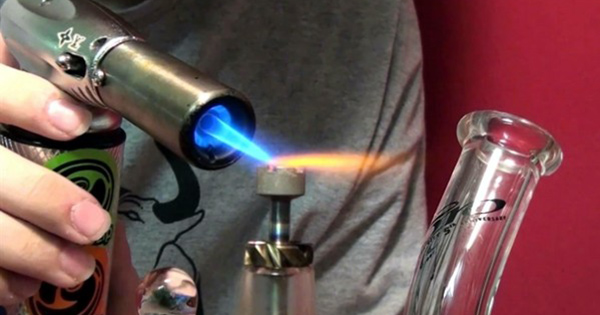
The cannabis extractions Like shatter, BHO (butane hash oil), and wax, these products use solvents to extract resin from trichomes and produce very potent concentrates.
Despite the classic imagery of cannabis leaves and flowers, it is the invisible trichomes that contain most of the plant’s medical and recreational value.









CBD is said to promote athletic recovery, without improving performance

294 cannabis clubs in Chile: a booming movement with uneven distribution

Chronic Sciatica: New York Approves First Clinical Trial of a THC-Based Medication

United States: The DEA is accelerating the integration of medical cannabis at the federal level

Florida is nearing one million patients using medical cannabis

Uruguay Revives Its Plan to Allow Tourists to Legally Access Cannabis

In Brazil, researchers are developing an innovative CBD eye drop

Autism: Medical Cannabis Is Linked to Reduced Anxiety

The $28 billion U.S. hemp market remains under threat

