
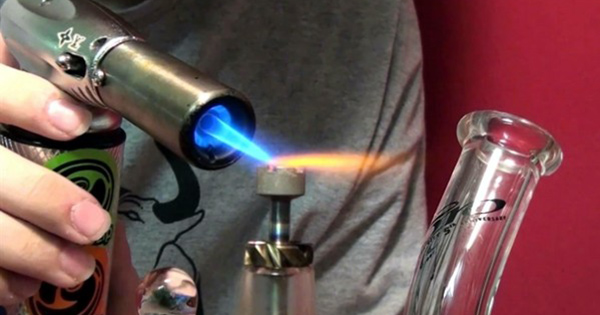
What is dabbing?
The dabbing is the vaporization of a cannabis concentrate (shatter, wax, rosin, BHO on a heated surface called the nail or banger, using a dab rig. The vapor produced is inhaled through the rig's water chamber. This is the way to consume the benchmark concentrates - powerful, aromatic, without combustion.
Dabbing emerged in American cannabis culture in the years 2000-2010, and has become a practice in its own right, driven by the development of legal markets and the democratization of quality concentrates.
Why daber?
The concentrates used for dabbing generally contain between 60 and 90% of THC compared with 15 to 30% for flowers. A single dose can therefore deliver the equivalent of an entire joint in a matter of seconds. This is the method of choice for experienced, high-tolerance users, and for some medical cannabis patients seeking rapid relief from pain or nausea.
Technically, dabbing has fewer negative health effects than combustion: no carbon monoxide, no tar. But the potency of the concentrates makes it a practice reserved for consumers with a good experience of cannabis. It is not recommended for beginners.
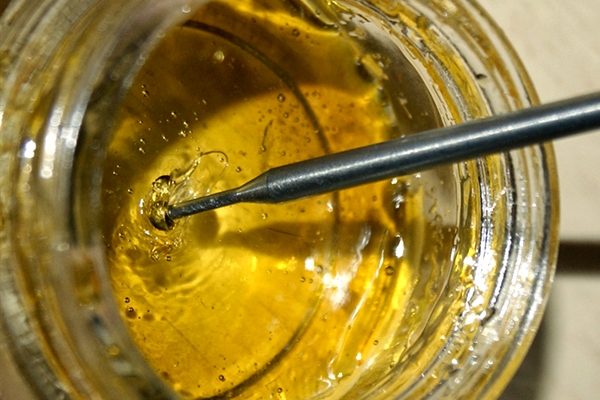
Dabbing equipment
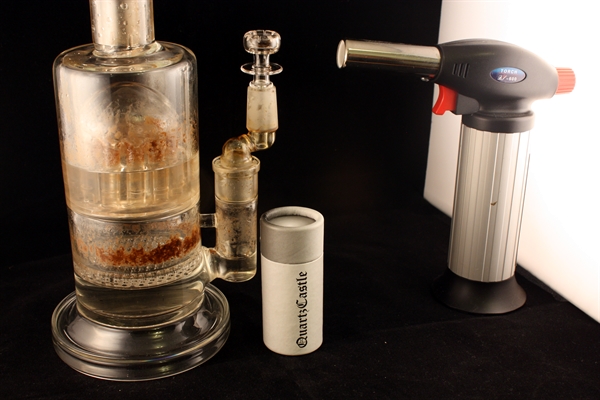
A dab station includes :
- A dab rig: the specialized bong with water chamber
- A banger or nail: the heated surface that receives the concentrate
- A dabber the tool for picking up and depositing concentrate
- A torch gas-powered (or electric e-nail)
- A carb cap to optimize vaporization at low temperatures
- A dab mat for protecting the surface and fitting accessories
Banger materials: which one to choose?
| Material | Resistance | Heat retention | Taste | Price |
|---|---|---|---|---|
| Quartz | Good | Average | Excellent | Medium |
| Titanium | Very good | High | Good | High |
| Ceramics | Average | Good | Very good | Medium |
| Glass | Low | Low | Excellent | Low |
The quartz is now the reference standard for the vast majority of consumers: excellent aroma, good resistance to thermal shock, easy to clean. The titanium is virtually indestructible but can impart a slight metallic taste - more suitable for intensive use. The glass is the least expensive but the most fragile.
Low temp dab vs high temp dab: the essential distinction
This is the central debate of modern dab culture.
High temp dab (>400°C): the banger is heated to red-hot and used immediately or after a very short wait. Vaporization is complete and instantaneous - dense vapor cloud, powerful effect - but the terpenes are burned before being inhaled. The taste is less present, and the steam can be harsh. This method is not recommended, as it degrades aromatic compounds and can produce undesirable by-products at very high temperatures.
Low temp dab (300-380°C): the banger is heated, then left to cool for 30-60 seconds before the concentrate is deposited. Vaporization is slower, the steam softer and more aromatic. The use of a carb cap placed on the banger after deposition creates a low pressure that allows the concentrate to vaporize at an even lower temperature, maximizing terpene preservation.
Today, low temp dab is the method recommended by connoisseurs - for its aromatic quality, gentle steaming and preservation of the flavour.’entourage effect.
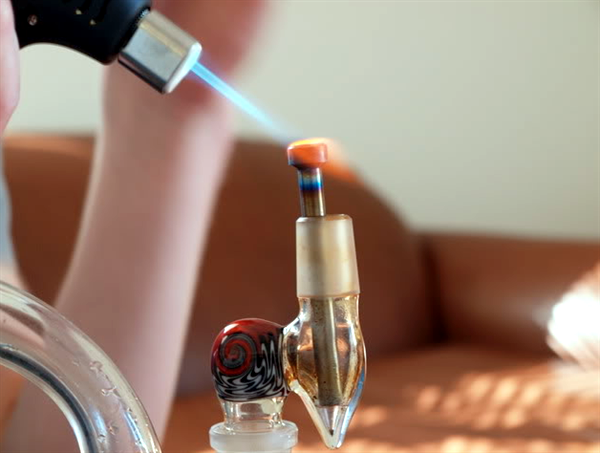
How to daber: steps
With torch and quartz banger:
- Fill the dab rig lightly with water
- Prepare a small dose of concentrate on the dabber (the size of a grain of rice to start with).
- Heat banger with torch - 30 to 45 seconds depending on thickness
- Wait for cooling: 30 to 60 seconds (for a low temp dab)
- Place the concentrate on the inside wall of the banger by turning the dabber.
- Put the carb cap on immediately and inhale slowly
- Remove carb cap and finish inhalation
- Clean the hot banger with a cotton swab soaked in isopropyl alcohol.
With e-nail :
Set the temperature directly (300-380°C for low temp), wait for the banger to reach a stable temperature, then proceed as above from step 5. L’e-nail eliminates the torch and variable cooling time - temperature is constant and reproducible.
E-nail vs torch: advantages and disadvantages
| Torch + banger | E-nail | |
|---|---|---|
| Price | Low (€30-100) | High (€100-300) |
| Temperature control | Approximate | Precise and consistent |
| Practical | Mobile | Fixed (connected) |
| Risk | Possible burns | Very low |
| Ideal for | Occasional use, mobility | Regular use, patients |
Concentrates with or without solvent
Concentrates for dabbing are either solvent-extracted (BHO, PHO, EHO) or solvent-free extractions (rosin, bubble hash in a hurry, kief pressed). More sensitive patients, or those concerned about the presence of solvent residues, naturally turn to solvent-free concentrates. A certificate of analysis (COA) certifies the absence of residues on legal markets.









CBD is said to promote athletic recovery, without improving performance

294 cannabis clubs in Chile: a booming movement with uneven distribution

Chronic Sciatica: New York Approves First Clinical Trial of a THC-Based Medication

United States: The DEA is accelerating the integration of medical cannabis at the federal level

Florida is nearing one million patients using medical cannabis

Uruguay Revives Its Plan to Allow Tourists to Legally Access Cannabis

In Brazil, researchers are developing an innovative CBD eye drop

Autism: Medical Cannabis Is Linked to Reduced Anxiety

The $28 billion U.S. hemp market remains under threat

