
Thrips and red spiders: how to protect your cannabis plants
Parasites are one of the main causes of failure in cannabis cultivation. Among them, two species are always present: the thrips and red spiders (mites). Discreet, quick to spread and difficult to eliminate once established, they can destroy an entire garden in a matter of weeks. Here's how to identify, distinguish and get rid of them.
Red spiders (Tetranychus urticae)
Identification
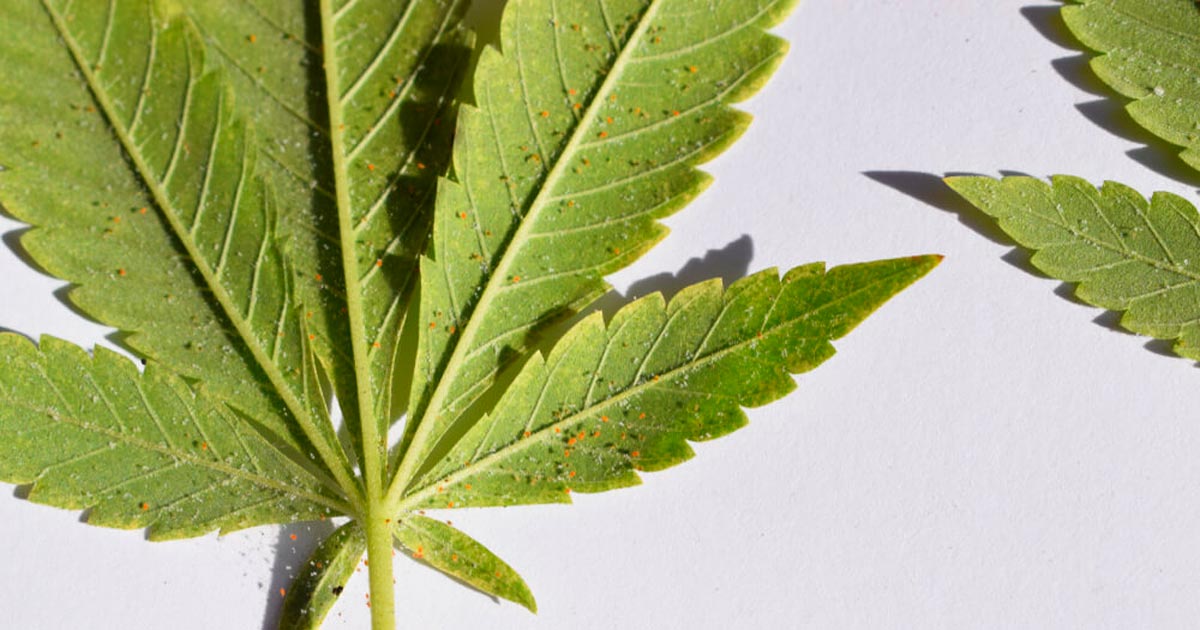
The red spider is not really a spider, but a mite in the Tetranychidae family. Measuring 0.3 to 0.5 mm, it is virtually invisible to the naked eye. Its color varies from greenish yellow to orange-red, depending on the season and stage of development.
The first signs of infestation are visible on the leaves before the insect itself can be observed:
- Small yellow or white dots on the upper surface of the leaves: feeding punctures
- Yellowing leaves then turn brown, starting at the edges
- Fine fabrics between leaves and stems, a sign of advanced infestation
- Mosaic decoration on the leaf blade
To confirm, turn over a suspect leaf and examine it with a magnifying glass; you'll see tiny moving dots on the underside.
Favorable conditions
Red spiders proliferate in any environment hot and dry At temperatures above 27°C and humidity below 40%, their reproductive cycle goes into overdrive. A female can lay up to 200 eggs in two weeks, and an egg hatches in 3 days at high temperatures. This is why an infestation can go from a few individuals to a massive colony in less than a week.
Treatment
As a preventive measure Maintain hygrometry between 50 and 70% and temperatures below 26°C. Regularly clean the growing area. Avoid water stress, which makes plants more vulnerable.
Curative :
- Insecticidal soap (Castile soap diluted to 2%): sprayed on the underside of leaves, it suffocates adult mites and larvae. Apply every 3 days for 2 weeks.
- Neem oil A natural endocrine disrupter that prevents reproduction. Effective as a preventive measure and in the early stages of infestation. Avoid during advanced flowering (risk of altering aromas).
- Natural predators : Phytoseiulus persimilis is a predatory mite specific to Tetranychidae, highly effective in controlled cultivation. Introduction of around 50 individuals per m² at the first signs of infestation.
- Pyrethrum Fast-acting natural insecticide. Effective but not persistent, to be combined with other methods.
What no longer works Red spiders rapidly develop resistance to synthetic acaricides. Rotating treatments is essential to avoid immunization.
Thrips (Frankliniella occidentalis and others)
Identification
Thrips are tiny, elongated insects 1-2 mm long, pale yellow to dark brown in color, depending on species and stage. They move quickly when a leaf is disturbed - often the first sign to alert the grower.
Characteristic symptoms :
- Silver or white stripes on leaves, traces of skin scraping during feeding
- Small blackheads scattered on leaves, adult droppings
- Deformed or curled leaves in case of infestation on young shoots
- Damage to flowers thrips invade calyxes and trichomes during flowering, directly reducing harvest quality
Thrips are also virus vectors (including the Tomato spotted wilt virus) which can cause irreversible damage to plants.
Favorable conditions
Thrips appreciate environments hot and humid, unlike red spiders, with an ideal temperature of around 25°C and a hygrometry of 60-80%. They spread easily via new plants introduced into the garden, and unsanitized clothing and tools.
Treatment
As a preventive measure Systematically inspect all new plants prior to introduction. Place yellow or blue sticky traps (thrips are attracted by these colors) to detect early infestations. Keep the area clean.
Curative :
- Spinosad biological insecticide derived from soil bacteria (Saccharopolyspora spinosa), highly effective against adult thrips and larvae. Approved for organic farming. Dilute and spray over the whole plant.
- Neem oil Effective on larvae, less so on adults. To be combined with other treatments.
- Natural predators : Amblyseius cucumeris is a predatory mite of first-stage thrips larvae. Orius laevigatus (chinch bug) attacks adults. Use in combination to cover all stages.
- Azadirachtin (concentrated neem extract): growth disrupter, prevents larvae from moulting. Highly effective on young stages.
- Pyrethrum Shock action on adults, with no persistence.
Comparison table: red spiders vs. thrips
| Red spiders | Thrips | |
|---|---|---|
| Size | 0.3-0.5 mm | 1-2 mm |
| Visibility | Virtually invisible to the naked eye | Visible, moves fast |
| Symptoms | Yellow spots, webs, yellowing | Silver stripes, black dots |
| Favorable conditions | Hot and dry (>27°C, <40% RH) | Hot and humid (~25°C, 60-80% RH) |
| Propagation speed | Very fast | Fast |
| Virus vector | No | Yes |
| Main treatment | Insecticidal soap, neem oil, predators | Spinosad, predators, azadirachtin |
General precautions
In bloom Avoid oil treatments (neem, soap) after the 4th-5th week of flowering, as residues can alter the taste and aroma of the final harvest, and essential oils are difficult to remove from trichomes. Use biological predators at the end of flowering.
Treatment rotation Never use the same product for more than two consecutive applications, as spider mites and thrips quickly develop resistance. Alternate modes of action.
Garden hygiene Prevention remains the best weapon. Disinfection of tools, quarantine of new plants, permanent sticky traps, regular checking of the underside of leaves: these habits prevent the vast majority of infestations.
Clones as mentioned in our article on cannabis clones, As thrips and red spider mites are the most common parasites introduced via cuttings, systematic quarantine for 1 to 2 weeks is essential.












The Brazilian medical cannabis market continues to grow

Morocco: Three Cannabis-Based Medications Approved for the Treatment of Epilepsy

Canopy Growth Receives New EU-GMP Certification to Strengthen Its Presence in Europe

Three years after legalizing medical cannabis, Albania continues to establish regulations for it

The first plant-based medical THC spray arrives in the United Kingdom

Medical Cannabis in Germany: THC Prices Vary by a Factor of 12

France already has 3,000 cannabis retail outlets. None of them are legal.

Morocco's exports of legal cannabis have expanded to 15 countries

Aurora Cannabis Doubles Its Production Capacity in Germany

