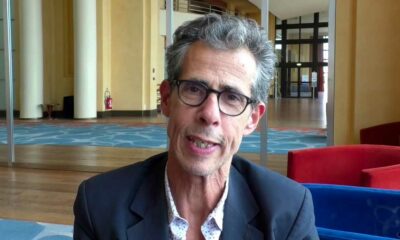
Raphael Mechoulam presents a revolutionary technology for synthesizing acid cannabinoids

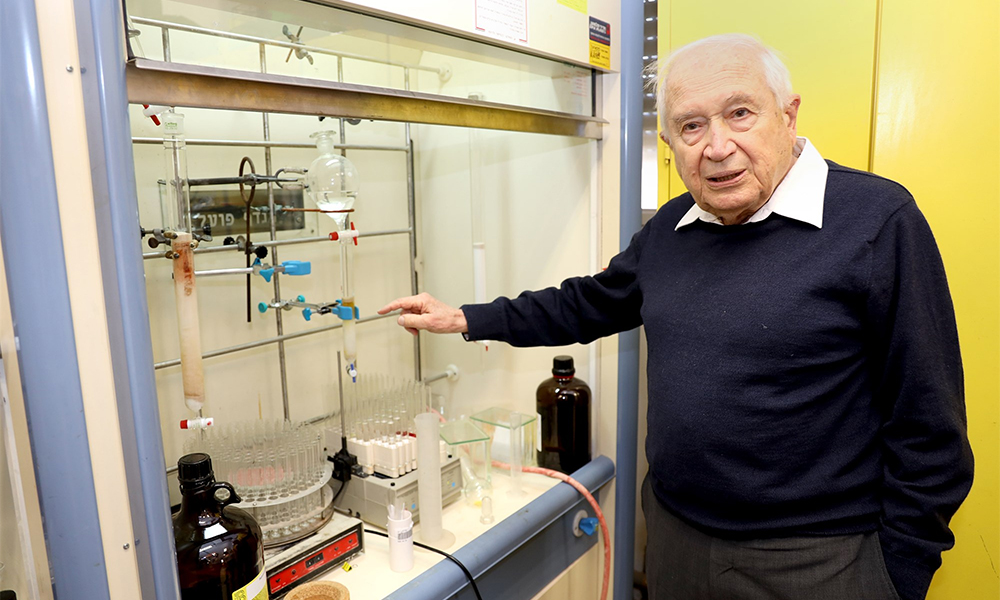
Raphael Mechoulam, the father of medical cannabis, often expressed his disappointment after being the first to synthesize CBD and THC in 1963 and 1964, and then to conduct clinical trials on CBD and epilepsy in 1980. In fact, the scientific community never really took an interest in his work until the case of Charlotte Figi does not bring CBD back into the spotlight in the treatment of childhood epilepsy.
«We could have helped a lot of children with the cannabidiol »for many years," he laments, attributing the delay to a lack of acceptance of his research. He hopes, however, that his latest discovery will find applications more quickly.
Raphael Mechoulam presented last Monday a process for creating synthetic and stable cannabinoid acids, including the acid forms of CBD and THC, for the development of drugs to treat conditions such as psoriasis, arthritis, anxiety, and inflammatory bowel disease.
The research is the result of a collaboration between an American startup called EPM, Mechoulam, six Israeli universities, the United Kingdom, and Canada, the world’s largest manufacturer of topical creams, and a publicly traded laboratory company.
Multiple applications
In a study published in 2018 by the British Journal of Pharmacology, Mechoulam and his co-authors described a synthetic compound, cannabidiolic acid methyl ester (referred to as HU-580 in the paper), which would prove to be more effective than CBD. Initial clinical trials did indeed show that the acid form of CBD produced results equivalent to—or even superior to—existing treatments, without the side effects, suggesting «a drug capable of treating certain types of nausea and anxiety.».
L’cannabidiol acid (CBDa) of natural origin is 1,000 times more powerful that CBD, through its ability to bind to a specific serotonin receptor, alleviates nausea and anxiety. Its main drawback is that it is highly unstable and breaks down when exposed to heat—for example, when cannabis flowers dry out or are burned—a process known as decarboxylation.
«It's an interesting molecule that potentially has no side effects,» said Dan Peer, executive director of the Center for Translational Medicine and director of the Center for Cancer Biology Research at Tel Aviv University.
«It works like a steroid. If it doesn’t have any harmful effects, you have an alternative, which is great,» Peer said, referring to the results of the tests he had conducted on cannabinoid acids and inflammatory bowel diseases.
Ziva Cooper, research director at the’UCLA Cannabis Research Initiative, said that EPM’s research confirms what many people in the field have long suspected about cannabinoid acids, but had been unable to confirm due to their instability.
«Their work is quite innovative and is firmly grounded in what we know about the potential therapeutic effects of cannabinoids,» Cooper said, adding that the compound could be particularly effective for pain management. Cooper said that while more trials are needed to determine the molecule’s efficacy and safety in humans, EPM’s results so far are «quite encouraging.».
The implications of this discovery are about as far-reaching as those related to the cannabis plant. Only clinical trials will determine which indications will actually be effective.
EPM has already conducted research on human cells and rats and studied the effect of its molecules on patients with inflammatory bowel disease, skin diseases, and metabolic disorders, finding efficacy rates similar to those of steroids or other medications, without the significant side effects that these drugs can cause. They hope to quickly incorporate their active ingredients into finished products.





















Germany: Pharmacists Propose a Pilot Program to Sell Recreational Cannabis in Pharmacies

France Is More Reluctant to Legalize Cannabis Than the EU Average, According to a New EUDA Survey

Scientists Create Cannabinoid-Free Hemp

MediPharm is preparing to launch its cannabis inhaler in Europe

Sensi Seeds and High Times are teaming up to launch five new cannabis strains

Brains Bioceutical is aiming for the Nasdaq with a valuation of $750 million

CBD in French Polynesia: Sublingual Oils Soon to Be Available Over the Counter

Cannabis legalization in Mexico returns to the Senate after five years of political deadlock

Massachusetts Gives the Green Light to Drive-Thru Cannabis Sales

Finland Wants to Legalize Cannabis Based on the German Model
-
 Cannabis in Quebec4 weeks ago
Cannabis: What France Could Learn from Quebec, Eight Years After Legalization
-
Cannabis in New Zealand4 weeks ago
Chronic Pain: New Zealand Is Testing Cannabis to Improve Sleep
-
Cannabis in France4 weeks ago
Dr. Pascal Douek, a tireless advocate for medical cannabis in France, has died
-
Cannabis in France4 weeks ago
Medical cannabis: The Greens introduce two amendments to accelerate its widespread adoption
-
Cannabis in Canada4 weeks ago
A Canadian study reveals the pleasant psychotropic effects of high-dose CBD
-
Studies on cannabis4 weeks ago
More THC, barely any additional effects: A new study challenges common assumptions about the potency of cannabis
-
Cannabis in Argentina4 weeks ago
The Argentine province of Chubut is creating its own framework for medical cannabis
-
Cannabis in France3 weeks ago
Medical Cannabis: Patients Issue a Formal Notice to the Government to Break the Deadlock













You must be logged in to post a comment Login