
Raphael Mechoulam presents a revolutionary technology for synthesizing acid cannabinoids

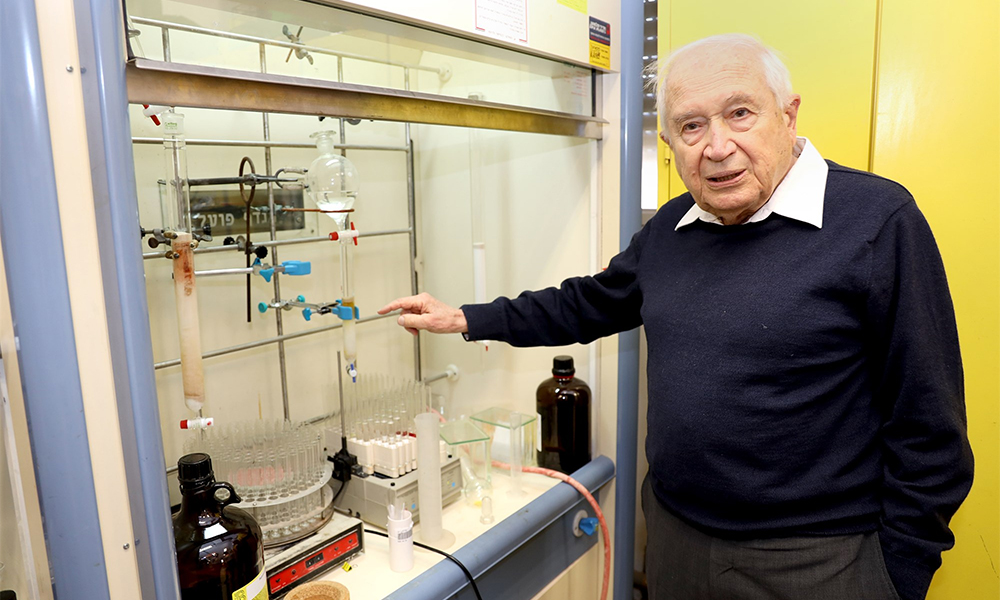
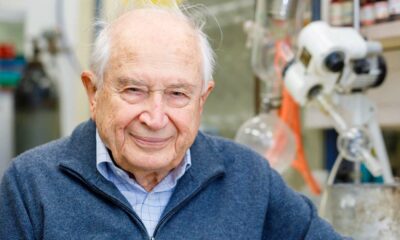
Raphael Mechoulam, the father of medical cannabis, often expressed his disappointment after being the first to synthesize CBD and THC in 1963 and 1964, and then to conduct clinical trials on CBD and epilepsy in 1980. In fact, the scientific community never really took an interest in his work until the case of Charlotte Figi does not bring CBD back into the spotlight in the treatment of childhood epilepsy.
«We could have helped a lot of children with the cannabidiol »for many years," he laments, attributing the delay to a lack of acceptance of his research. He hopes, however, that his latest discovery will find applications more quickly.
Raphael Mechoulam presented last Monday a process for creating synthetic and stable cannabinoid acids, including the acid forms of CBD and THC, for the development of drugs to treat conditions such as psoriasis, arthritis, anxiety, and inflammatory bowel disease.
The research is the result of a collaboration between an American startup called EPM, Mechoulam, six Israeli universities, the United Kingdom, and Canada, the world’s largest manufacturer of topical creams, and a publicly traded laboratory company.
Multiple applications
In a study published in 2018 by the British Journal of Pharmacology, Mechoulam and his co-authors described a synthetic compound, cannabidiolic acid methyl ester (referred to as HU-580 in the paper), which would prove to be more effective than CBD. Initial clinical trials did indeed show that the acid form of CBD produced results equivalent to—or even superior to—existing treatments, without the side effects, suggesting «a drug capable of treating certain types of nausea and anxiety.».
L’cannabidiol acid (CBDa) of natural origin is 1,000 times more powerful that CBD, through its ability to bind to a specific serotonin receptor, alleviates nausea and anxiety. Its main drawback is that it is highly unstable and breaks down when exposed to heat—for example, when cannabis flowers dry out or are burned—a process known as decarboxylation.
«It's an interesting molecule that potentially has no side effects,» said Dan Peer, executive director of the Center for Translational Medicine and director of the Center for Cancer Biology Research at Tel Aviv University.
«It works like a steroid. If it doesn’t have any harmful effects, you have an alternative, which is great,» Peer said, referring to the results of the tests he had conducted on cannabinoid acids and inflammatory bowel diseases.
Ziva Cooper, research director at the’UCLA Cannabis Research Initiative, said that EPM’s research confirms what many people in the field have long suspected about cannabinoid acids, but had been unable to confirm due to their instability.
«Their work is quite innovative and is firmly grounded in what we know about the potential therapeutic effects of cannabinoids,» Cooper said, adding that the compound could be particularly effective for pain management. Cooper said that while more trials are needed to determine the molecule’s efficacy and safety in humans, EPM’s results so far are «quite encouraging.».
The implications of this discovery are about as far-reaching as those related to the cannabis plant. Only clinical trials will determine which indications will actually be effective.
EPM has already conducted research on human cells and rats and studied the effect of its molecules on patients with inflammatory bowel disease, skin diseases, and metabolic disorders, finding efficacy rates similar to those of steroids or other medications, without the significant side effects that these drugs can cause. They hope to quickly incorporate their active ingredients into finished products.






















CBD is said to promote athletic recovery, without improving performance

294 cannabis clubs in Chile: a booming movement with uneven distribution

Chronic Sciatica: New York Approves First Clinical Trial of a THC-Based Medication

United States: The DEA is accelerating the integration of medical cannabis at the federal level

Florida is nearing one million patients using medical cannabis

Uruguay Revives Its Plan to Allow Tourists to Legally Access Cannabis

In Brazil, researchers are developing an innovative CBD eye drop

Autism: Medical Cannabis Is Linked to Reduced Anxiety

The $28 billion U.S. hemp market remains under threat

Jamaica Eases Small Farmers' Access to the Cannabis Market
-
 Business6 days ago
The legal cannabis market in New York exceeds 4 billion $ in revenue
-

 Cannabis in France2 weeks ago
Which countries legalized medical cannabis before France?
-
Business2 weeks ago
South Korea is preparing to begin local production of medical cannabis to meet rising demand
-
Cannabis in the Netherlands4 weeks ago
One year after the launch of the Dutch cannabis experiment, the first trends are emerging
-
Cannabis in Thailand2 weeks ago
From the boom in dispensaries to a purely medical approach: Thailand is revising its cannabis policy
-
Cannabis in France4 weeks ago
French medical cannabis remains stalled at the Ministry of Health
-
Cannabis in Argentina3 weeks ago
Argentina Opens Its Market to Hemp Flowers Containing 1% of THC
-
Cannabis and driving2 weeks ago
Medical Cannabis and Driving: New South Wales Ends Automatic Penalties for THC















You must be logged in to post a comment Login