Israel aims to lead the high-tech cannabis industry

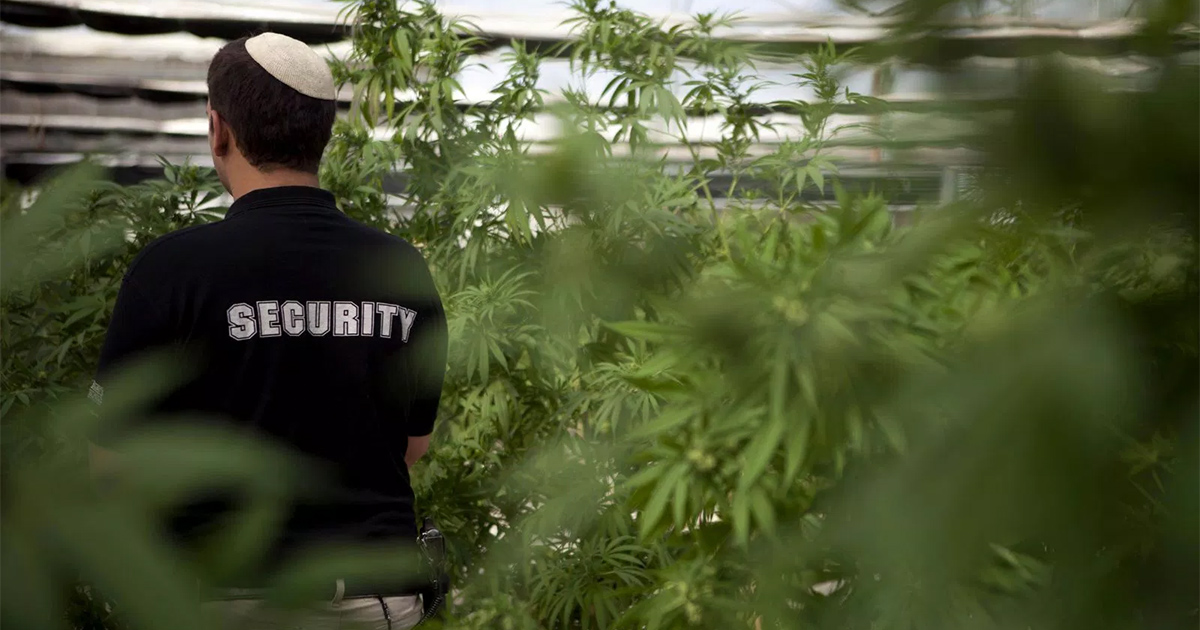
«Even if we love a lot of cannabis, », it's a non-smoking event." The warning kicked off the first day of presentations and roundtables at Cannatech, a 3-day conference on the cannabis industry that took place in early March in Israel. No space cookies were served at lunch; instead, there were pitas and Turkish borekas.
As legalization slowly takes hold in Israel, and with cannabis entrepreneurs and enthusiasts eyeing a global market that could reach tens of billions of dollars, the aim of this second edition of Cannatech was to establish this small country as a hub of expertise in the fields of technology, medicine, and agriculture.
Some Israeli start-ups have already made their mark. Syqe Medical has developed an inhaler capable of precisely controlling cannabis doses and recently announced a $20 million investment from Philip Morris. Eyebna isolates and develops cannabis strains suited for specific conditions. The medical cannabis grower Tikkun Olam developed a plant without psychoactive effects. And Kalytera wants to develop drugs to treat osteoporosis by synthesizing certain chemical compounds from cannabis.
«We want to build a canna-tech, just as there is already financial, advertising, and all other tech for which Israel is known,» says Clifton Flack, co-founder of iCan, the event organizer.
And Israel has the means to do so. He is an Israeli, Rafael Mechoulam, who first isolated THC, the psychoactive substance in cannabis, in 1964. A major figure in the current industry, Mechoulam stressed the need for more studies on cannabis. The use of cannabis as a treatment was legalized in Israel in 1993 and began to spread in 2007, while recreational use remains illegal.
Today, 22,000 patients have medical cannabis prescriptions. In January, the ultra-Orthodox Minister of Health said to eliminate waiting times for treatment by boosting the supply of medical cannabis, making it easier to prescribe, and increasing the number of licensed farms (there are currently 8) and distributors.
An argument in favor of Israel, at least for now, is that scientific research and clinical trials involving cannabis are permitted, unlike in the United States where federal prohibition prevents most studies.
«Everything is being done here to become the epicenter of cannabis research,» says Flack.
The drawback, however, is that with a population of only 7 million people, Israel has a limited patient pool for clinical trials, as well as a restricted market for cannabis products. And since it is illegal to export the plant or seeds, there is no hope of being able to sell them abroad.
The opportunity would then lie in exporting know-how and techniques. The challenge would be to match the expertise developed in Israel with international companies that would use it in foreign markets.
«The main opportunity in Israel is for investment funds to come and get involved in the scientific research developed here. But it's a field that needs time and is capital-intensive,» says Eli Gordis, speaking at Cannatech, where he co-founded Alta Fund, a private equity firm. «Our short-term interest is to find companies that are using what has been developed over the last 10 or 20 years, and to find companies in the United States that sell in the medical or recreational market and would like to tap into the cultivation techniques developed here.».
The cannabis tech sector remains limited for now. While some Israeli startups have already raised billions of dollars in annual investment, cannabis-related businesses have only attracted a few tens of millions of dollars, mainly from angel investors rather than investment funds.
«Institutional investors are not touching it because it's still illegal under federal law,» says Jeffrey Friedland, president of Intiva, a Colorado-based company that has made some investments in Israel, Canada, and the United States. «Slowly, some smaller institutions are testing the waters and starting to get involved, but it remains a challenge.»
In fact, most of the large Israeli investment funds were absent from the conference, which surprised no one. Most of these funds do not get involved in agri-tech.
Israel's entrepreneurial culture and its world-renowned programs in plant science position the country to capture the attention of investors and multinationals involved in agri-tech, but it will take time, especially to test potential medical uses and cultivation techniques.
Via http://qz.com/637973/israel-wants-to-be-the-tech-hub-for-the-world-cannabis-industry/













«Vincy Gold»: Humboldt Seed Company on the Hunt for Saint Vincent Sativas

Cronos Completes the Acquisition of CanAdelaar for 57.5 million euros

Cannabis with a "bloody" twist: Discover Sensi True Blood and Sensi Sangria, the two new strains from Sensi Seeds

Hemp: The Council of the EU Takes a Stand on New Production and Marketing Rules

Missouri's legal cannabis market accounts for 93 % of consumer spending

THC Gummies: How to Read a Certificate of Analysis Before Buying

British patients now have access to THCV-rich cannabis flowers

Spain: Medical Cannabis Is Coming to About 50 Hospitals

JIHE 2026: Japan’s Largest Trade Show Dedicated to Hemp and CBD Returns to Tokyo with More Than 100 Industry Players

New Caledonia: The Courts Clear the Way for the Return of CBD
-
 Business3 weeks ago
The legal cannabis market in New York exceeds 4 billion $ in revenue
-

 Cannabis in France4 weeks ago
Which countries legalized medical cannabis before France?
-
Cannabis in France1 week ago
France already has 3,000 cannabis retail outlets. None of them are legal.
-
Business4 weeks ago
South Korea is preparing to begin local production of medical cannabis to meet rising demand
-
Cannabis in the U.S.1 week ago
A DEA report confirms that there are no fatal cannabis overdoses
-
Cannabis in Thailand4 weeks ago
From the boom in dispensaries to a purely medical approach: Thailand is revising its cannabis policy
-
Cannabis and driving4 weeks ago
Medical Cannabis and Driving: New South Wales Ends Automatic Penalties for THC
-
Cannabis in France3 weeks ago
France’s Drug Policy Chief Defends Cannabis Prohibition... and Runs Into the Facts
















You must be logged in to post a comment Login