Can HHC really be banned in France?

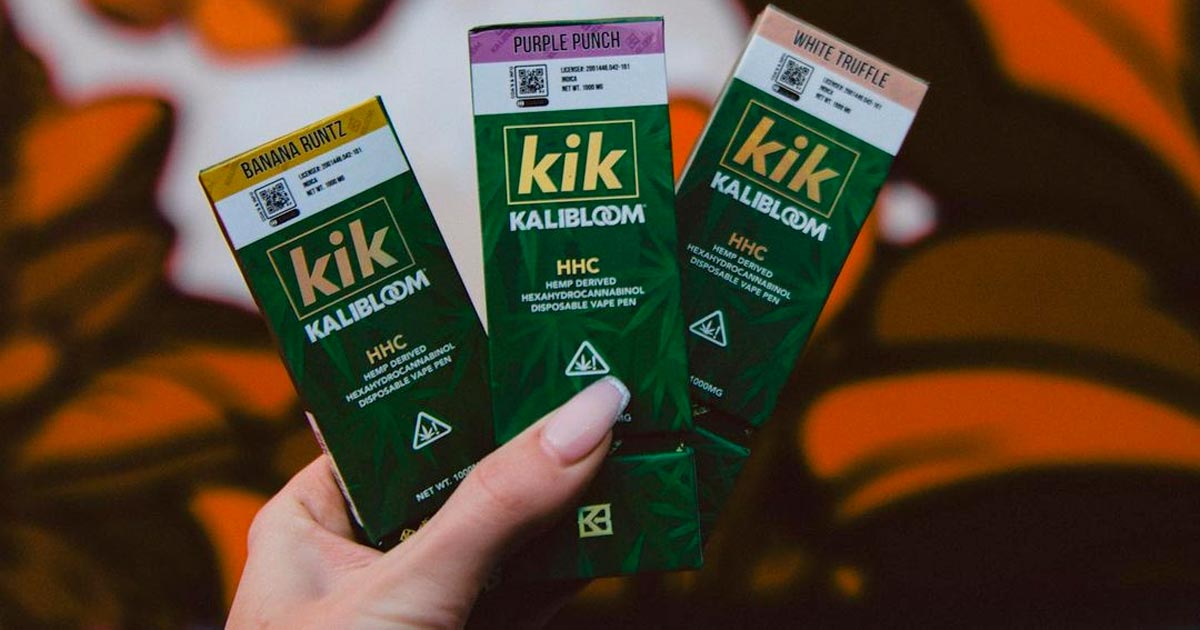
French Health Minister François Braun announced on Monday, May 15, that the sale of products containing hexahydrocannabinol (HHC), should be banned soon.
«I think it’s a matter of weeks,» the minister said when asked on Franceinfo about a possible ban on HHC. But is it really as easy to ban HHC in France as it is to say so on a TV show?
HHC in Europe
In a technical report In its April report, the European Monitoring Center for Drugs and Drug Addiction (EMCDDA), which compiles information on drugs and drug addiction, notes that HHC is not included on the lists of the 1961 and 1971 United Nations conventions, which are used to ban cannabis. In the European Union, HHC is currently being monitored by the EMCDDA as a new psychoactive substance through its early warning system.
The report notes that the pharmacological and behavioral effects of HHC in humans have not been studied, although anecdotal reports from users indicate that its effects are similar to those of cannabis and Δ9-THC. According to the EMCDDA, HHC does not appear to have any documented legitimate uses.
As of the date of the report, no member state had «regulated»—that is, banned—HHC. Meanwhile, the Finland, theAustria or Switzerland has done so.
Ban HHC in France
On what grounds, then, could such a ban be based? In an article from Ouest-France, Anne Batisse, director of the Addictovigilance Center in Paris (AP-HP), explains that «France classifies substances based on health complications, but we still have very little data on HHC.»
And that is likely where the complexity lies. From a legal standpoint, Yann Bisiou, a specialist in drug law, explains that the ban on HHC in France is likely based on its classification as a narcotic.
To do so, it must either already be included in the list of controlled substances—for example, in the cyclohexylphenols category— as had been mentioned at one point, and the HHC issue is resolved.
Either it isn’t one, in which case banning it could take longer. In that case, the ban would be based «on the need to prove the risk to public health and/or the risk of addiction.» That would mean it would take several months, or even years, to conduct the necessary studies.
The Ministry of Health stated to the World that «investigations are being launched at regional drug monitoring centers to determine the effects of the substance,» with results expected in «June.».
To date, reports have been received from drug dependence assessment and information centers regarding ’psychoactive effects in a person following inhalation of CBD containing HHC,» according to the General Directorate of Health, as reported by *Le Monde*.
According to Anne Batisse, «the danger [of HHC] lies primarily in the fact that uninformed users could rush to try this so-called «legal» cannabis without any guidance on its use, unaware that this substance can cause accidents and that not all of its risks are yet known.».
For their part, advocacy groups are warning about the risks posed by heavy metals and solvent residues, as well as the lack of traceability and transparency regarding the origin and manufacturing of HHC. These are arguments that were once used against… CBD.





















«Vincy Gold»: Humboldt Seed Company on the Hunt for Saint Vincent Sativas

Cronos Completes the Acquisition of CanAdelaar for 57.5 million euros

Cannabis with a "bloody" twist: Discover Sensi True Blood and Sensi Sangria, the two new strains from Sensi Seeds

Hemp: The Council of the EU Takes a Stand on New Production and Marketing Rules

Missouri's legal cannabis market accounts for 93 % of consumer spending

THC Gummies: How to Read a Certificate of Analysis Before Buying

British patients now have access to THCV-rich cannabis flowers

Spain: Medical Cannabis Is Coming to About 50 Hospitals

JIHE 2026: Japan’s Largest Trade Show Dedicated to Hemp and CBD Returns to Tokyo with More Than 100 Industry Players

New Caledonia: The Courts Clear the Way for the Return of CBD
-
 Business3 weeks ago
The legal cannabis market in New York exceeds 4 billion $ in revenue
-
Cannabis in France1 week ago
France already has 3,000 cannabis retail outlets. None of them are legal.
-
Cannabis in the U.S.2 weeks ago
A DEA report confirms that there are no fatal cannabis overdoses
-

 Cannabis and driving4 weeks ago
Medical Cannabis and Driving: New South Wales Ends Automatic Penalties for THC
-
Cannabis in France3 weeks ago
France’s Drug Policy Chief Defends Cannabis Prohibition... and Runs Into the Facts
-
Studies on cannabis2 weeks ago
Cannabis Oil and Endometriosis: A Promising Study for Pain Relief
-
CBD3 weeks ago
In Brazil, researchers are developing an innovative CBD eye drop
-
Business1 week ago
Tilray is accelerating its operations in Europe thanks to a license in Portugal















You must be logged in to post a comment Login