Czech Republic finally bans HHC

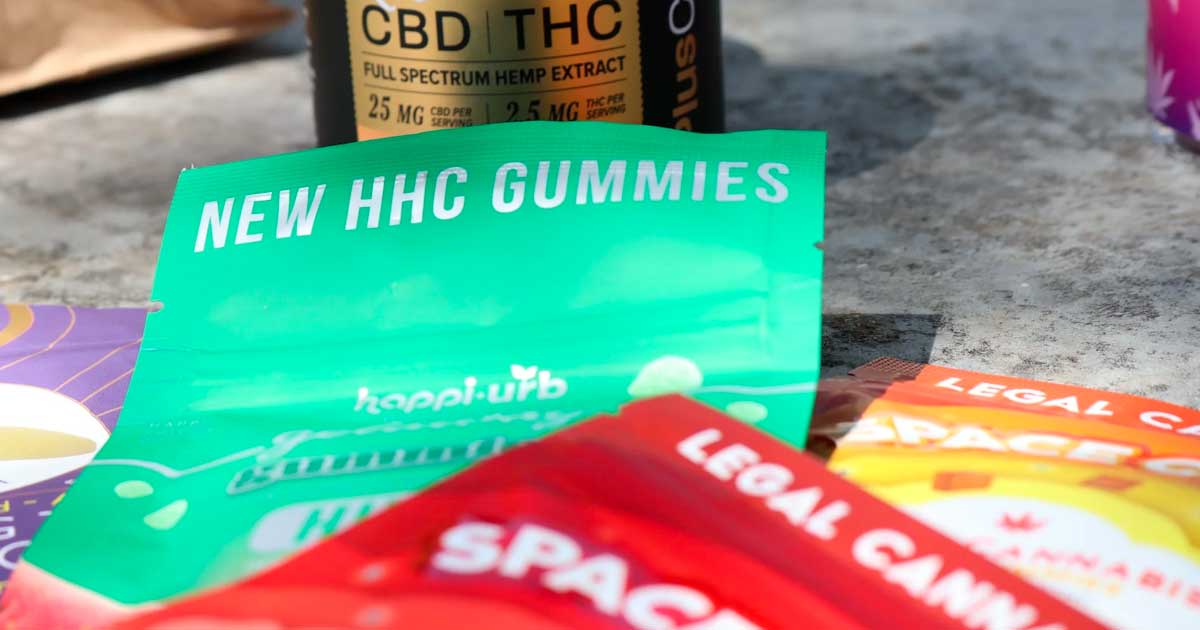
Until now, the Czech Republic had preferring to regulate HHC rather than ban it. But the growing number of overdoses resulting from the use of these products has prompted calls to restrict their sale. On February 7, the government announced that it would add HHC to the list of banned substances, making its sale illegal.
Prior to this, there were no restrictions on the use or sale of HHC-containing products in the country, including vaping liquids, oils and candies, which have become increasingly popular in recent years.
Some experts believe that this measure is counter-productive, and suggest that regulation would be preferable. «If you simply ban [a substance], it's replaced by something else, perhaps worse, almost immediately. We saw it in France; they banned HHC last year and a few months later, new substances appeared on the market to replace it,» Jindrich Voboril, Czech national anti-drug coordinator, told the newspaper The Lancet.
«Banning something also immediately creates a black market. It's better to regulate and allow the least risky product on the market,» he added.
The HHC was first synthesized in 1940, but it has only recently appeared on the world's drug markets, in the United States at the end of 2021, and in Europe the following year. Synthesized from cannabidiol, its effects are broadly similar to those of THC, the main psychotropic substance in cannabis. HHC is not listed in the United Nations drug conventions of 1961 and 1971. Where it is not banned, it is often sold openly as a legal substitute for cannabis.
Since publication, last year, A report by the European Monitoring Centre for Drugs and Drug Addiction (EMCDDA) on HHC and its potential risks, many European countries, including the UK, France, Finland, Austria, Denmark, Sweden and Greece have banned or restricted sales.
Experts say that data on HHC is extremely limited - in particular, the EMCDDA report was based on a small number of laboratory studies - and that its potential risks are poorly understood.
«In terms of risks, we know little, but it's reasonable to assume it will have a similar risk profile to THC. HHC-based products won't be safe - no drug is - but at least with cannabis, we know its risks,» said Steve Rolles, senior policy analyst at the Transform Drug Policy Foundation, to The Lancet.
«Edible products that look like candy are a very bad idea. If you have drugs that look like candy, is the increase in child poisoning cases surprising?»
Daniel Nasrallah, assistant professor at Roanoke College in Virginia, who has conducted research on HHC products, told The Lancet that many commercial HHC producers do not disclose the chemical methods they use. The HHC is synthesized by hydrogenation, This traditionally involves the use of a transition metal catalyst. Transition metals are toxic at low concentrations when consumed.
Mr. Nasrallah pointed out that his research looked at the certificates of analysis for over 60 commercially available HHC products, and revealed that none of them indicated whether tests had been carried out for the common transition metals used in hydrogenation.
«HHC consumers should be concerned about the potential presence of toxic metals in HHC products. Because of the processes likely involved in the manufacture of HHC and the absence of these tests, we simply don't know if the products contain them,» he said.
HHC is therefore set to be added to the list of banned substances in the Czech Republic in the coming weeks. However, the government has stated that the ban will be temporary until the adoption of a law currently before parliament, which could authorize the sale of HHC-based products under strict regulations.
Mr. Voboril, who was involved in drafting the bill, said the legislation would involve, among other restrictions, sales being limited exclusively to licensed specialty stores, although HHC products in edible form would be banned.
«Regulation would be preferable to a ban. We can regulate to prevent sales to minors and in stores near schools and restaurants; we can control the content of the products - no other toxins, heavy metals - as well as advertising and packaging, so that the products are not attractive to children,» said Tomas Jandac, a specialist in pediatric addictions at Charles University Medical School in Prague.





















Medical Cannabis in Germany: THC Prices Vary by a Factor of 12

France already has 3,000 cannabis retail outlets. None of them are legal.

Morocco's exports of legal cannabis have expanded to 15 countries

Aurora Cannabis Doubles Its Production Capacity in Germany

Tilray is accelerating its operations in Europe thanks to a license in Portugal

Boston will host the 10th annual State of the Cannabis Industry Conference on October 26

A DEA report confirms that there are no fatal cannabis overdoses

A British patient is challenging the NHS's refusal to reimburse medical cannabis

October 2026 CBD Highlights: 10 Strains and Hash to Discover from 5 French Producers

CBD in France: Traceability, Retail Stores, THC and Driving… What the New Bill Proposes
-
 Business2 weeks ago
The legal cannabis market in New York exceeds 4 billion $ in revenue
-

 Cannabis in France3 weeks ago
Which countries legalized medical cannabis before France?
-
Business3 weeks ago
South Korea is preparing to begin local production of medical cannabis to meet rising demand
-
Cannabis in Thailand3 weeks ago
From the boom in dispensaries to a purely medical approach: Thailand is revising its cannabis policy
-
Cannabis and driving3 weeks ago
Medical Cannabis and Driving: New South Wales Ends Automatic Penalties for THC
-
Autism3 weeks ago
Autism and Cannabis: Results from the First Placebo-Controlled Trial of NTI164
-
Cannabis in France2 weeks ago
France’s Drug Policy Chief Defends Cannabis Prohibition... and Runs Into the Facts
-
CBD1 week ago
In Brazil, researchers are developing an innovative CBD eye drop
















You must be logged in to post a comment Login