The discovery of CBD derived from hops is actually a scam

We told you last time of Doctor Bomi Joseph, who had supposedly discovered how to extract CBD from hops. Pot Network has just unmasked the doctor [editor's note: article since withdrawn online] who is in fact an inveterate swindler. The scammer managed to convince numerous newspapers to relay the discovery, and even sealed distribution deals with two companies that marketed his famous hop-derived CBD oil.
A bogus discovery
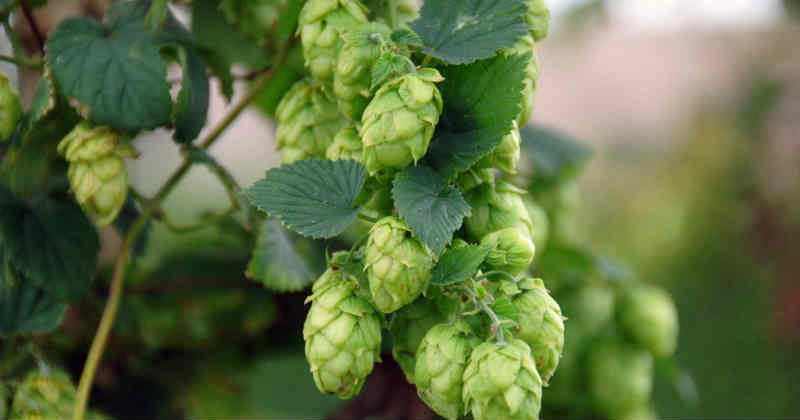
Joseph claims to have discovered a unique variety of hops in India with a gene for CBD formation: the’Humulus Kriya. He then cultivated the plant selectively to maximize CBD levels and create a variety high enough in CBD to make extracts. These extracts were patented under the brand name ImmunAg™. Thanks to this alleged discovery, he has been the subject of numerous press articles and has concluded agreements with two listed companies: Isodiol and Medical Marijuana Inc.
His CBD oil is still on sale - at the time of writing - at Medical Marijuana Inc under the name Real Scientific Humulus Oil. Marketing emphasizes that CBD is not derived from cannabis and is therefore not subject to the same restrictions and contains no trace of THC. For Dr. Volker Christoffel, who has spent decades studying the chemical composition of cannabidiol and works as a peer reviewer in the renowned scientific journal Journal of Ethnopharmacology: «It's all bullshit. The whole hops-derived CBD thing is nonsense».
Dr. Volker Christoffel first explains that hops and cannabis do indeed have phylogenetic similarities, and that it is theoretically possible to find genes for cannabinoid formation in hop varieties. On the other hand, he points out that cannabinoids would only be present in trace form, and that it would be impossible to make commercial use of them. The doctor further explains that it is not possible for a plant to develop CBD without also developing THC because the two molecules are synthesized together during plant development.
Plagiarized research
However, it wasn't his scientific inconsistencies that exposed Dr. Joseph, but his shameless plagiarism. He would take articles found in reputable scientific journals and publish them, partially modified, through his own journal: the Journal of Medical Phyto Research. His articles have never been verified or confronted by peers.
He plagiarized Dr. Christoffel, word for word at 72%, in an article entitled Identification of cannabidiol from Humulus Kriya using x-ray crystallography. Another article entitled Bioactive cannabidiol more greatly reduces valvular interstitial cell calcification when combined with ß-Caryophyllene, and α-Humulene turned out to be copied at 30% from an article with a similar name. Ditto for his article Cannabinoids (CBD) as adjuvant therapy for pancreatic cancer which turned out to be a carbon copy of an article of the same name.
With this display of scientific knowledge, complicated to grasp for the uninitiated, Bomi Joseph has succeeded in winning the confidence of industry. For researchers, however, it's not enough: «It's incredible insolence on the part of Mr. Cushing [co-author] and Mr. Bomi Joseph. Their work is not published in a controlled journal, but in a private journal with a scientific-sounding but meaningless name that acts as a cover. This «publication» is pure marketing.
A habitual swindler
Confronted by Potnetwork, the professor denied plagiarism and blamed his co-author Donish Cushing. The existence of the latter is doubtful, as is that of Revi Kumar Shastri, another alleged «collaborator» of the professor. There is no trace of these individuals or their connection with Bomi Joseph's company on the Internet. Worse still, in January, Bomi Boban Joseph pleaded guilty to fraud charges for applying for a passport under a false name in 2014. That name was that of his «collaborator» Revi Kumar Shastri.
It turns out that Dr. Bomi Boban Joseph is just another fake name, and that the individual in question is actually called Moses Sunith Prasad Joseph. He originally operated in the financial sector. In particular, he is known to the police for having stolen over 20 million dollars from banks such as Wells Fargo Bank, Bank One and Eastman Kodak through his fraudulent venture capital fund, Anila Fund, in the 2000s. He was sentenced to 15 years and 8 months in prison.
So what does this famous oil contain? Probably cannabis-derived CBD, or no CBD at all. On several occasions, Mr. Joseph contacted companies to obtain CBD oil at knock-down prices under the pretext of a study on pancreatic cancer. His company Peak Health Care - presented as a non-profit organization but apparently registered as a commercial body - bought over 3 kilos of molecules (2,000 50mg vials) from Isodiol for $15,000 per kilo, well below the market price. It is possible that he simply resold these oils by changing the labels.






Medical Cannabis in Germany: THC Prices Vary by a Factor of 12

France already has 3,000 cannabis retail outlets. None of them are legal.

Morocco's exports of legal cannabis have expanded to 15 countries

Aurora Cannabis Doubles Its Production Capacity in Germany

Tilray is accelerating its operations in Europe thanks to a license in Portugal

Boston will host the 10th annual State of the Cannabis Industry Conference on October 26

A DEA report confirms that there are no fatal cannabis overdoses

A British patient is challenging the NHS's refusal to reimburse medical cannabis

October 2026 CBD Highlights: 10 Strains and Hash to Discover from 5 French Producers

CBD in France: Traceability, Retail Stores, THC and Driving… What the New Bill Proposes
-
 Business2 weeks ago
The legal cannabis market in New York exceeds 4 billion $ in revenue
-

 Cannabis in France3 weeks ago
Which countries legalized medical cannabis before France?
-
Business3 weeks ago
South Korea is preparing to begin local production of medical cannabis to meet rising demand
-
Cannabis in Thailand3 weeks ago
From the boom in dispensaries to a purely medical approach: Thailand is revising its cannabis policy
-
Cannabis and driving3 weeks ago
Medical Cannabis and Driving: New South Wales Ends Automatic Penalties for THC
-
Cannabis in Argentina4 weeks ago
Argentina Opens Its Market to Hemp Flowers Containing 1% of THC
-
Autism3 weeks ago
Autism and Cannabis: Results from the First Placebo-Controlled Trial of NTI164
-
Cannabis in France2 weeks ago
France’s Drug Policy Chief Defends Cannabis Prohibition... and Runs Into the Facts















You must be logged in to post a comment Login