
Autism and Cannabis: Results from the First Placebo-Controlled Trial of NTI164


Scientific version Consumer version
A CBDA-rich cannabis extract showed encouraging results in a placebo-controlled clinical trial conducted among children and adolescents with autism spectrum disorders (ASD).
Known as NTI164, this experimental treatment has now moved into Phase 3, according to the Australian biotechnology company Neurotech International after announcing that it had administered the first dose to a participant as part of its larger-scale study, dubbed «Beyond Harmony.».
This decision follows the publication of the’HARMONY Phase II/III Trial in a peer-reviewed journal Neurotherapeutics. This randomized, double-blind study compared NTI164 to a placebo and demonstrated statistically significant differences in its primary endpoint as well as in several measures of adaptive functioning, anxiety, and social behavior.
These results come from a relatively small, short-term clinical trial. However, they provide an initial controlled look at a formulation that differs significantly from the CBD-dominant products most commonly studied in cannabinoid research.
What is NTI164, this CBDA-rich cannabis extract?
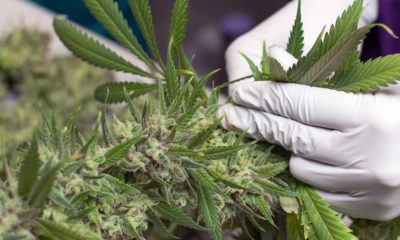
The NTI164 is a standardized, full-spectrum oral cannabis extract developed from exclusive strains of Cannabis sativa. Its most distinctive feature is its cannabinoid profile.
The product under study consists of 62% of cannabidiolic acid (CBDA) and 14% of cannabidiol (CBD), along with much smaller amounts of CBGA (0.44 %), of CBDV (0.06 %) and THC (0,08 %).
This configuration makes the NTI164, above all, a CBDA-rich formulation, rather than a conventional CBD-dominant product. The published study describes the product as containing a combination of CBDA, CBD, and minor cannabinoids, with extremely low levels of THC.
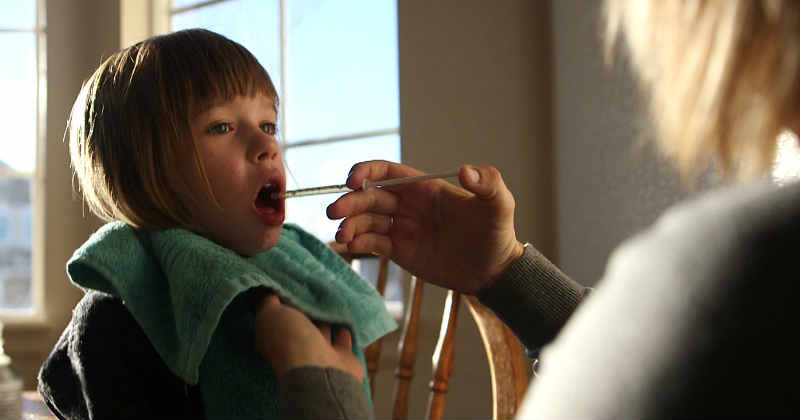
In the HARMONY study, the extract was administered orally twice daily. Participants started with a dose of 5 mg/kg/day, which was gradually increased to a target maximum tolerated dose of 20 mg/kg/day.
What were the specific results of the placebo-controlled HARMONY trial?
The trial enrolled 61 participants with ASD Level II or III, which corresponds to moderate to severe support needs within the study population. Fifty-four of them completed the eight-week double-blind phase and were included in the primary analysis, divided between NTI164 and placebo. Their mean age was slightly over 12 years.
The primary outcome measure was the scale Clinical Global Impression-Severity (CGI-S), a seven-point scale assessed by the clinician that measures the overall severity of the disease.
After eight weeks, the adjusted difference between NTI164 and placebo was -1.65 points (95% CI for %: -2.29 to -1.01; p < 0.001). According to the researchers, the estimated effect corresponded to an improvement of approximately one category on the CGI-S scale.
Differences were also observed on the scale Vineland-3, which assesses adaptive functioning. Compared with the placebo group, the NTI164 group showed statistically significant differences in communication, functional independence, socialization, and the overall adaptive behavior composite score.
The results regarding the social responsiveness were more mixed. Significant differences were observed in social cognition, as well as in restricted interests and repetitive behaviors. The improvements observed in social awareness and social communication did not reach the threshold for statistical significance, while no differences were detected for social motivation. The overall SRS-2 score narrowly missed the conventional threshold for statistical significance, with a p-value of 0.055.
Anxiety improved according to several measures, but not all outcome measures were positive
The HARMONY study also examined emotional and behavioral symptoms using several questionnaires completed by caregivers.
On the’Anxiety, Depression, and Mood Scale (ADAMS), statistically significant differences in favor of NTI164 were observed for depressive mood, social avoidance, general anxiety, and compulsive behaviors. The total ADAMS score also differed significantly from that of the placebo. However, this was not the case for manic/hyperactive behaviors.
A separate questionnaire, specific to autism-related anxiety, yielded equally nuanced results. Uncertainty and separation anxiety improved significantly compared to the placebo, while performance anxiety and anxious arousal did not reach the threshold for statistical significance. The total score came close to the threshold but remained above the conventional threshold, with a p-value of 0.056.
The treatment also did not result in a significant improvement in generalized sleep disorders. Most sleep measures showed only minor differences between the groups, although one specific subdomain reached the threshold for statistical significance.
These mixed secondary results are significant: although the study revealed several encouraging signs, they do not support the conclusion that NTI164 improved all the measures assessed.
What about the security of the NTI164?
The results The findings regarding safety proved to be relatively reassuring within the context of an eight-week study.
A total of 41 adverse events occurred in 26 participants during the double-blind period. The researchers classified them as mild, non-serious, transient, and self-limiting; no serious adverse events were reported.
The most commonly reported events included nausea, headaches, abdominal pain, and anxiety. These events were distributed evenly between the two treatment groups, and the researchers reported no clinically significant changes in laboratory results or vital signs.
Seven of the 61 initial participants did not complete the double-blind phase, including four who stopped treatment because of the product's taste and one because of an intolerance to the oil.
Longer-term and larger-scale trials will be needed to characterize the safety profile in greater detail, particularly if NTI164 is intended for long-term use in a pediatric population.
From 54 participants in a Phase 3 trial that could include up to 200 children
The next trial has now begun. On September 21, 2026, Neurotech International announced that the first participant had received treatment as part of Beyond Harmony, its pivotal Phase 3 trial.
This new trial is being conducted at six sites in Australia and is expected to recruit up to 200 children with ASD. Like HARMONY, this is a randomized, double-blind, placebo-controlled trial, but it uses an adaptive protocol that allows for predefined modifications following interim analyses while maintaining the study’s statistical framework.
The stakes are therefore all the higher. The HARMONY study provides promising controlled results for this CBDA-rich cannabis extract unusual, but the small sample size and the eight-week duration of the placebo-controlled period leave important questions unanswered.
Beyond Harmony will now make it possible to determine whether these results can be replicated in a significantly larger group. In the meantime, the NTI164 remains an experimental treatment, rather than an established cannabinoid-based treatment for autism.
A CBDA-rich cannabis extract showed encouraging results in a placebo-controlled clinical trial conducted among children and adolescents with autism spectrum disorders (ASD).
Named NTI164, this experimental treatment was tested against a placebo as part of the’HARMONY Phase II/III Trial, the results of which were published in a peer-reviewed journal Neurotherapeutics. The researchers reported improvements in several areas, including overall symptom severity, daily functioning, and anxiety.
These results have now led the Australian company Neurotech International to launch a larger-scale Phase III trial. However, NTI164 remains an experimental treatment, and the first study was relatively small in scope and lasted only eight weeks.
What is NTI164?
The NTI164 is an oral cannabis extract made from exclusive strains of Cannabis sativa. Unlike many cannabis-based medications studied in recent years, it is not primarily based on CBD.
Its main cannabinoid is CBDA, or cannabidiolic acid, the natural precursor to CBD found in the cannabis plant.
The formulation contains 62 % of CBDA, 14 % of CBD, 0.44 % of CBGA, 0.06 % of CBDV, and 0.08 % of THC.
The very low THC concentration is particularly important, given that the study involves children. The scientific article describes NTI164 as a full-spectrum extract containing CBDA, CBD, and several minor cannabinoids, with extremely low THC levels.
In the HARMONY trial, NTI164 was administered orally twice daily. Doses were gradually increased over four weeks, up to a maximum tolerated dose of 20 mg/kg/day.
A placebo-controlled study of children with autism
The HARMONY trial initially enrolled 61 children and adolescents with Level II or III autism. Fifty-four of them successfully completed the eight-week double-blind phase.
Participants were randomly assigned to receive either NTI164, or a placebo, without the families, participants, or clinical team knowing which treatment was being administered. The average age of the participants who completed this phase was approximately 12 years.
The main objective was to measure changes using the’Clinical Global Impression of Severity Scale (CGI-S), which allows clinicians to assess the overall severity of a patient's condition.
After eight weeks, the researchers observed a significant difference between the two groups. The adjusted difference was -1.65 points in favor of NTI164, with p < 0.001. According to the authors, this represented an improvement of approximately one point on the seven-point CGI-S scale.
Improvements in Communication and Day-to-Day Operations
The researchers also examined how participants managed their daily activities using the’Vineland-3 Scale.
Compared with the placebo, children receiving NTI164 showed statistically significant improvements in several areas, including communication, life skills, and socialization. The overall adaptive behavior score also improved.
The findings regarding social behavior were less clear.
The NTI164 has been associated with significant improvements in social cognition and restricted or repetitive behaviors. However, differences in social awareness and social communication were not statistically significant, and the researchers found no significant differences in social motivation.
In other words, the study yielded positive results on several measures, but not in all areas examined.
What were the results of the study on anxiety?
Some of the most striking differences were observed in measures related to anxiety and mood.
Using the Anxiety, Depression, and Mood Scale (Anxiety, Depression, and Mood Scale), researchers reported significant differences between NTI164 and the placebo in terms of depressive mood, social avoidance, general anxiety, and compulsive behaviors.
Another questionnaire specifically designed to assess anxiety in children with autism revealed significant improvements in uncertainty and separation anxiety. Other measures, including performance anxiety and anxious arousal, did not reach the threshold for statistical significance.
The researchers also studied sleep, but found no evidence of no significant improvement in overall sleep disturbances compared to the placebo.
What about side effects?
NTI164 was generally well tolerated during this eight-week trial.
The researchers identified 41 adverse events among 26 participants. All were classified as mild, temporary, and non-serious, and No serious adverse events have been reported.
The most common side effects included nausea, headaches, abdominal pain, and anxiety. Side effects were observed in both the NTI164 group and the placebo group, and the researchers found no clinically significant changes in laboratory tests or vital signs.
However, some participants stopped taking part in the study. Four withdrew because they could not tolerate the taste of the product, while another stopped due to an intolerance to the oil.
The NTI164 is now moving into Phase 3
In light of these results, Neurotech International has launched a larger-scale trial titled Beyond Harmony.
The company announced in September 2026 that the first participant had received treatment. The Phase 3 trial will take place at six Australian sites and plans to recruit up to 200 children with autism.
Like the previous study, «Beyond Harmony» will be randomized, double-blind, placebo-controlled. It will evaluate both the efficacy and safety of NTI164 on a larger scale.
The results of the HARMONY study therefore represent an important first controlled trial of this CBDA-rich cannabis extract, but they do not constitute definitive proof of efficacy. The study included only 54 participants in its primary analysis and compared NTI164 with a placebo over eight weeks.
The larger Phase III trial will now need to determine whether these initial results can be replicated in a larger group of children and whether the NTI164 may eventually become a clinically validated treatment option for autism.















Medical Cannabis and Driving: New South Wales Ends Automatic Penalties for THC

China's Yongji Health Takes Control of Tasmanian Botanics

Autism and Cannabis: Results from the First Placebo-Controlled Trial of NTI164

Which countries legalized medical cannabis before France?

From the boom in dispensaries to a purely medical approach: Thailand is revising its cannabis policy

South Korea is preparing to begin local production of medical cannabis to meet rising demand

In the United States, cannabis use among high school students has reached an all-time low

Medical cannabis use surges by 64 % in Denmark

Canopy Growth Enters the U.K. Market with Four Canadian Strains

CBD: Full-Spectrum Extracts Under Threat in Greece
-
 Cannabis and driving2 weeks ago
Cannabis and CBD: French Drivers Can Now Lose Their License Even Without a Positive Test Result
-

 Cannabis in France1 day ago
Which countries legalized medical cannabis before France?
-
Cannabis in France3 weeks ago
Cannabis Legalization: The LFI Bill Has a Major Problem—THC
-
Cannabis in the Netherlands2 weeks ago
One year after the launch of the Dutch cannabis experiment, the first trends are emerging
-
Cannabis in France2 weeks ago
French medical cannabis remains stalled at the Ministry of Health
-
Cannabis in Argentina1 week ago
Argentina Opens Its Market to Hemp Flowers Containing 1% of THC
-
Business2 weeks ago
The United Kingdom Is Moving Closer to a Regulated CBD Market
-
Cannabis in France1 week ago
Rima Hassan: When «Drugs» Become a Political Weapon
















You must be logged in to post a comment Login