

Africa, a complex but promising regional cannabis market

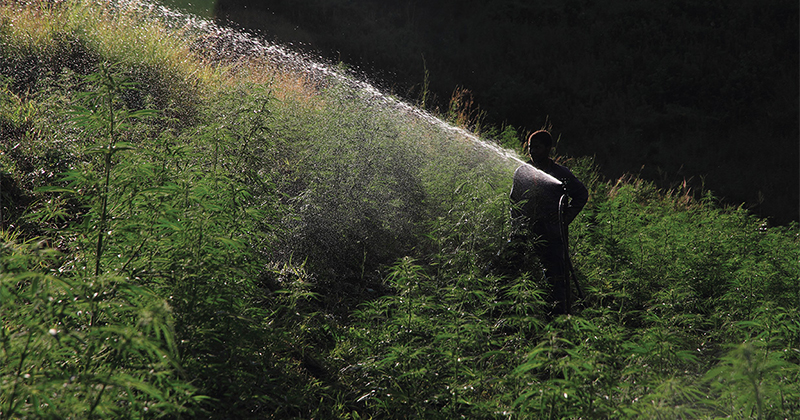
The wave of cannabis legalization in recent decades has mainly affected the Americas, Europe, and Oceania, but is beginning to attract interest Asia and Africa. Africa, a continent of 1.2 billion people, is already emerging as a promising market particularly in terms of production. The African Report by Prohibition Partners sheds light on the current and potential state of the African cannabis market.
An overview
Africa’s legal cannabis industry could be worth more than $7.1 billion annually by 2023—assuming legalization in certain major markets. It is primarily in the production sector that Africa could play a significant role. Although illegal in the vast majority of African countries, cannabis is nonetheless cultivated on a large scale, with production estimated at 38,000 tons per year. With its cheap agricultural labor and availability of arable land, the continent is already attracting the interest of multinational cannabis companies.

On the demand side for medical cannabis, the absence or weakness of national health systems means that access to cannabis-based products—even legal ones—would be limited. Moreover, in many African countries, the medical sector is primarily funded by private donations. This means that treatment choices are guided by the preferences of humanitarian organizations and NGOs, which prioritize more conventional treatments such as vaccination.
In contrast, recreational use is widespread—averaging 13.2% across the continent, which ranks first in cannabis consumption, followed by Oceania and North America. Five of the world’s 30 top cannabis-consuming countries are in Africa: Nigeria ranks third globally, Zambia tenth, Madagascar (14th), Egypt (25th), and Sierra Leone (30th). In total, an estimated 76 million African users obtain their supply on the black market. The region is characterized by low prices.
The Dangers of Monopolization
Most African countries maintain a conservative legal framework regarding cannabis. Nevertheless, some countries have revised their laws on the matter, often from an economic perspective. Indeed, the region is plagued by high unemployment rates and fragile, underdeveloped national economies. Opening up to the cannabis industry could prove beneficial for many countries, but there are serious risks of multinational cannabis companies monopolizing national markets.
In fact, these companies are seeking to relocate their production in order to distribute their products to higher-value markets further north. «Cannabis remains an attractive proposition for multinationals seeking to expand their operations in a region where land and labor are cheap,» the report states. Nevertheless, «due to the weak economic conditions facing many African countries, the legalization of cannabis in the region would be better served by safeguarding local interests.» It would therefore be beneficial for African countries to create frameworks that allow local startups to enter the market and enable the population to access the products.
African Countries and Cannabis
Lesotho is a major producer of cannabis. The country accounts for 70% of the cannabis found in South Africa. In 2008, it became the first country in Africa to regulate medical cannabis. In 2017, it granted his first license for the production, processing, and export of medical cannabis and has since continued to’attract foreign investors. Licensing fees amount to 37,000$ and are prohibitive for small businesses.
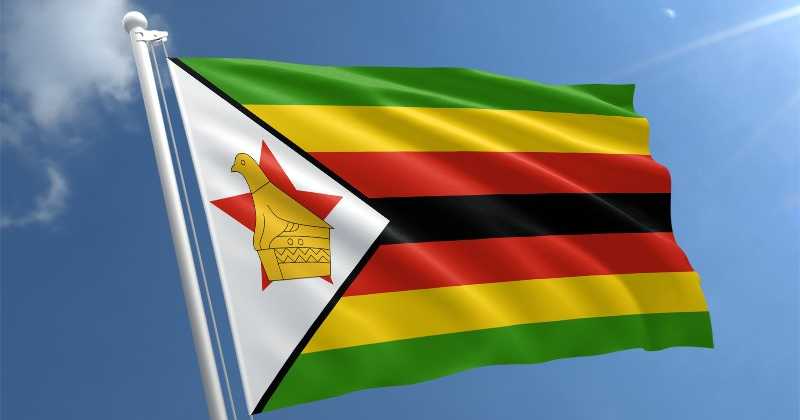
Zimbabwe has become the second country in Africa to legalize the cultivation of cannabis for medical and research purposes. More than 200 local and foreign companies have expressed interest in obtaining a Zimbabwean production license. The government has just recently granted 37. These are the first ones, and they are theoretically reserved for Zimbabwean citizens and residents.
In South Africa, Medical cannabis is legal and the government has issued guidelines for the industry, but no licensing procedures have been established yet. In September 2018, The Constitutional Court ruled The ban on growing cannabis for personal use is unconstitutional. Cannabis remains illegal until the law is amended, but its personal use cannot be penalized.
In Zambia, the legal status of medical cannabis is unclear, to say the least. Its cultivation was legalized in 1993, but contradictions remain in the law, and the legalization has not been fully implemented. It is theoretically possible to obtain a license for medical cannabis, but no licenses have been granted so far. The government has, however, received unsolicited applications for medical cannabis licenses.
Despite the fact that cannabis is illegal, some companies have expressed interest in local cannabis production. This has been the case in Ethiopia, in Swaziland (now eSwatini) and the Congo. In North Africa, cannabis production is common, particularly in Morocco, which is the source of a large portion of the hashish consumed in Europe. This quasi-traditional production is not subject to strict enforcement, even though it is illegal. Furthermore, it would account for 231% of GDP. In Tunisia, a group recently launched a party advocating for the legalization of cannabis.












The «cannabis» fine raised to 500 euros under the RIPOST Act

Sacha Baron Cohen Brings Ali G Back to Life During a Surprise Appearance at Wimbledon

Botswana Paves the Way for Commercial Hemp Cultivation

The First Authorized Medical Cannabis Cultivation in the Canary Islands

Germany Ends Public Health Insurance Coverage for Medical Cannabis Flowers

Cannabis Legalization in Pennsylvania Once Again on Hold

Democratic senators are reviving a bill to legalize cannabis at the federal level in the United States

A THC:CBD oil shows promising results in reducing agitation in people with dementia

San Francisco Allows «Cannabis Cafés»

Kenya Denies Rastafarians the Right to Use Cannabis
-

 Cannabis in Europe4 weeks ago
Bosnia and Herzegovina Continues to Roll Out Medical Cannabis Following Its Legalization
-
Cannabis in France4 weeks ago
France Submits the Long-Awaited Decree on the Reimbursement of Medical Cannabis to the Council of State
-
Cannabis in the U.S.4 weeks ago
The DEA Begins Hearings on the Federal Rescheduling of Cannabis
-
Business3 weeks ago
China Invests $10 Million in Medical Cannabis in Lebanon
-
Cannabis in Thailand4 weeks ago
Thailand Threatens Cannabis Shops with Severe Penalties
-
Cannabis in Australia3 weeks ago
South Australia is working to identify more water-efficient hemp varieties
-
Exchange4 weeks ago
Glass House will be the second U.S. cannabis company to list on the New York Stock Exchange
-
Cannabis in Africa2 weeks ago
Kenya Denies Rastafarians the Right to Use Cannabis












You must be logged in to post a comment Login