Is it possible to register a patent on a variety of cannabis?

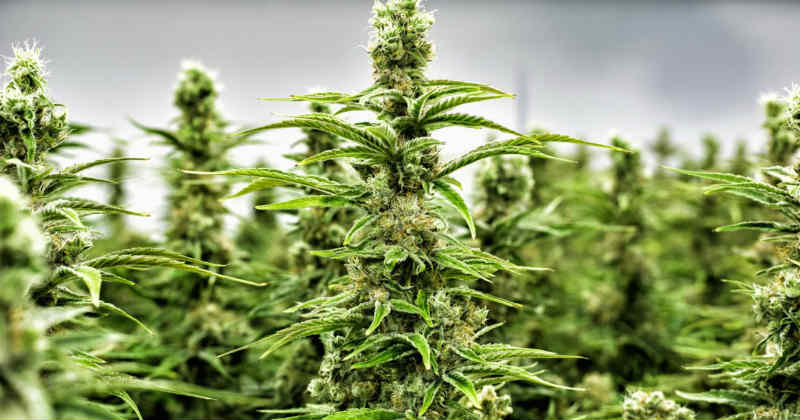
There are several types of patent available to the cannabis industry: utility patents, design patents and plant patents. In this article, we'll focus on plant patents.
In Europe, patents on plants are not permitted. In the USA, however, they are. Are they legitimate? Do they represent a threat? Some see them as recognition of work on cannabis genetics, others as an attempt at monopolization. Newsweed takes stock.
Recognition for breeders?
For breeders who spend years perfecting their genetics, intellectual property rights seem to be emerging as copyright. In an article on the subject, the online magazine Civilized contacted Mario Guzman, founder of Sherbinskis and creator of Gelato, an award-winning variety highly prized by consumers and growers alike. Although Sherbinski is the original creator of the Gelato, Today, it is cultivated by numerous independent growers who have collected seeds.
«A grower's right of ownership over a variety can almost be compared to that between a mother and her child. Even if she created it and gave it life, sometimes the child doesn't grow up with its mother, or loses her along the way in life,» explains Mario Guzman. «The fact that people associate our varieties so much with our brand is what gives us a real right of ownership,» he adds. However, this is not the case for all breeders. Some don't get the recognition they deserve for their creation, and it's to combat undue appropriation that plant patents can be useful.
What rights do these patents confer? People wishing to grow a variety invented by a certain breeder will then have to buy regular seeds from his company or from companies which have obtained a license from the grower to sell them. The limits are clearly visible here, as independent growers may simply decide to collect seeds from plants after a first harvest. Supervision of this practice seems impossible, at least when it takes place in a private setting and is not intended for commercial purposes (self-cultivation).
In addition, another question arises: since strains are all made from each other, how far do property rights extend over parent strains? Let's say a breeder creates a variety with an already patented variety. Do the patent holder's rights extend to the new variety? What is the procedure for breeding from an already patented variety? All this is likely to further complicate the practice of breeding.
Between classics and innovations
Tom Zuber, an American lawyer specializing in intellectual property, explains to Civilized that patents on cannabis varieties are available under certain conditions: the variety must be new, asexually reproduced and the product of breeding. It must also be stable (retain the same characteristics with each cultivation) and distinctive (be recognizable). Patents must be filed within one year of the first sales.
Patents of this kind therefore only apply to innovations. The classics will of course remain in the public domain, provided nobody tries to appropriate them. Indeed, the lack of information due to the illegality of cannabis makes the subject a delicate one, as it can be complicated to provide evidence of the prior existence of a strain. To combat this problem, the Open Cannabis Project online platform has been set up with the aim of listing existing strains to prevent dishonest patenting.
For lawyer Tom Zuber, intellectual property remains a crucial element of any industry, including the cannabis industry: «Without properly protecting these inventions, including new varieties of cannabis, you can find yourself in the situation where you've done all the research and all the work for someone else to profit from those efforts. The new strains will be in the public domain and anyone will be able to use them». He notes that so far, few patents have been filed, and many fail along the way.
A two-speed industry
The issue of plant patents is particularly relevant to the medical cannabis industry. For Stephen Martin, co-founder of Gene Pool Technologies, Cannabis has enormous potential for pharmaceutical research, but getting a cannabis-based treatment approved [by the FDA] can cost tens of millions of dollars, and without the ability to protect the results, the funding will never be there«. In other words, patents could boost medical innovation.
The problem is that these patents would not benefit everyone equally. In fact, small-scale producers often lack the financial and technical resources to address the legal constraints involved in filing a patent. The pharmaceutical industry, on the other hand, already has the strategies and, above all, the financial resources to file patents quickly and en masse. The risk of monopolization is therefore very real. Large pharmaceutical companies can also take advantage of the absence of patents on a variety to patent a specific preparation created from the variety in question, without the rights reverting to its creator.
The practice of patenting cannabis varieties is therefore a double-edged sword. Firstly, because it is extremely complex to regulate in terms of the limits of the property rights of strains on new products strains and supervision of individuals' self-cultivation practices. Secondly, because it would benefit the medical cannabis industry, sometimes at the expense of the work of underground breeders. Thirdly, because it favours the monopolization of the industry by big business, particularly big pharma. In conclusion, the idea is legitimate, but the practice is less so.
Finally, patents on plants raise another crucial question: are they transferable to countries that do not patent life forms? The recent example of Thailand legalizes medical cannabis shows that these are real socio-economic issues.
For a more extensive discussion of patents of all kinds, see our previous article.


























Medical Cannabis in Germany: THC Prices Vary by a Factor of 12

France already has 3,000 cannabis retail outlets. None of them are legal.

Morocco's exports of legal cannabis have expanded to 15 countries

Aurora Cannabis Doubles Its Production Capacity in Germany

Tilray is accelerating its operations in Europe thanks to a license in Portugal

Boston will host the 10th annual State of the Cannabis Industry Conference on October 26

A DEA report confirms that there are no fatal cannabis overdoses

A British patient is challenging the NHS's refusal to reimburse medical cannabis

October 2026 CBD Highlights: 10 Strains and Hash to Discover from 5 French Producers

CBD in France: Traceability, Retail Stores, THC and Driving… What the New Bill Proposes
-
 Business2 weeks ago
The legal cannabis market in New York exceeds 4 billion $ in revenue
-

 Cannabis in France3 weeks ago
Which countries legalized medical cannabis before France?
-
Business3 weeks ago
South Korea is preparing to begin local production of medical cannabis to meet rising demand
-
Cannabis in Thailand3 weeks ago
From the boom in dispensaries to a purely medical approach: Thailand is revising its cannabis policy
-
Cannabis and driving3 weeks ago
Medical Cannabis and Driving: New South Wales Ends Automatic Penalties for THC
-
Cannabis in Argentina4 weeks ago
Argentina Opens Its Market to Hemp Flowers Containing 1% of THC
-
Autism3 weeks ago
Autism and Cannabis: Results from the First Placebo-Controlled Trial of NTI164
-
Cannabis in France2 weeks ago
France’s Drug Policy Chief Defends Cannabis Prohibition... and Runs Into the Facts

















You must be logged in to post a comment Login