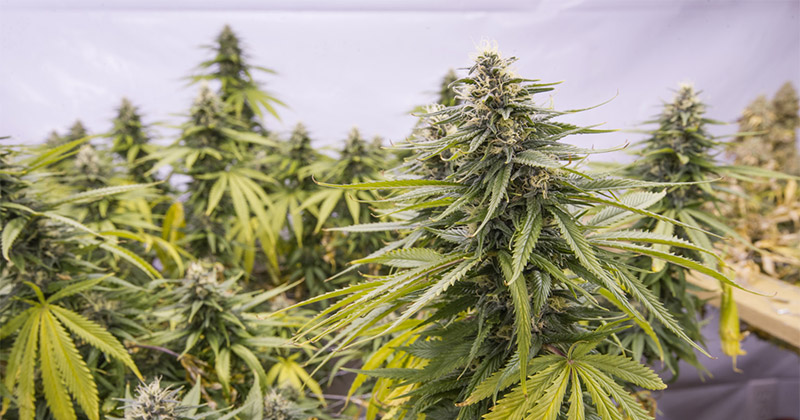
Cannabis anatomy: the parts of the plant
When takes a close look at a cannabis head, When you're looking at it, you'll notice the complexity of its various parts: little reddish-orange hairs, translucent crystals, buds wrapped in sticky little leaves. But what are these formations, and what exactly do they do?
This guide to cannabis anatomy examines every part of the plant - from roots to trichomes - to understand the role of each organ in the biology of cannabis. Cannabis sativa.
Male, female and hermaphrodite plants
Cannabis is a dioecious species: plants are either male or female, although hermaphroditic individuals do exist. In the cultivation of edible cannabis, only plants females are of interest, as they produce the resinous flowers that are rich in cannabinoids.
The male plants produce bell-shaped pollen sacs at the base of their leaves. Their role is to pollinate females to initiate seed production. In a consumer-oriented garden, males are generally eliminated as soon as they are identified, to avoid pollination by females.
The unpollinated female plants - called sinsemilla (literally «seedless» in Spanish) - concentrate all their energy on resin and cannabinoid production rather than seed formation. These plants produce buds richer in THC and CBD.
The hermaphrodite plants carry both male and female organs, enabling them to self-pollinate. This is generally a sign of environmental stress (light, temperature, lack of water) or genetic predisposition. Growers seek to eliminate them quickly to avoid unwanted pollination of the whole garden.
Professional growers ensure the sex of their plants by growing clones from confirmed female mother plants, or by using feminized seeds - or even triploid seeds to maximize returns.
Complete anatomy of the cannabis plant
The roots
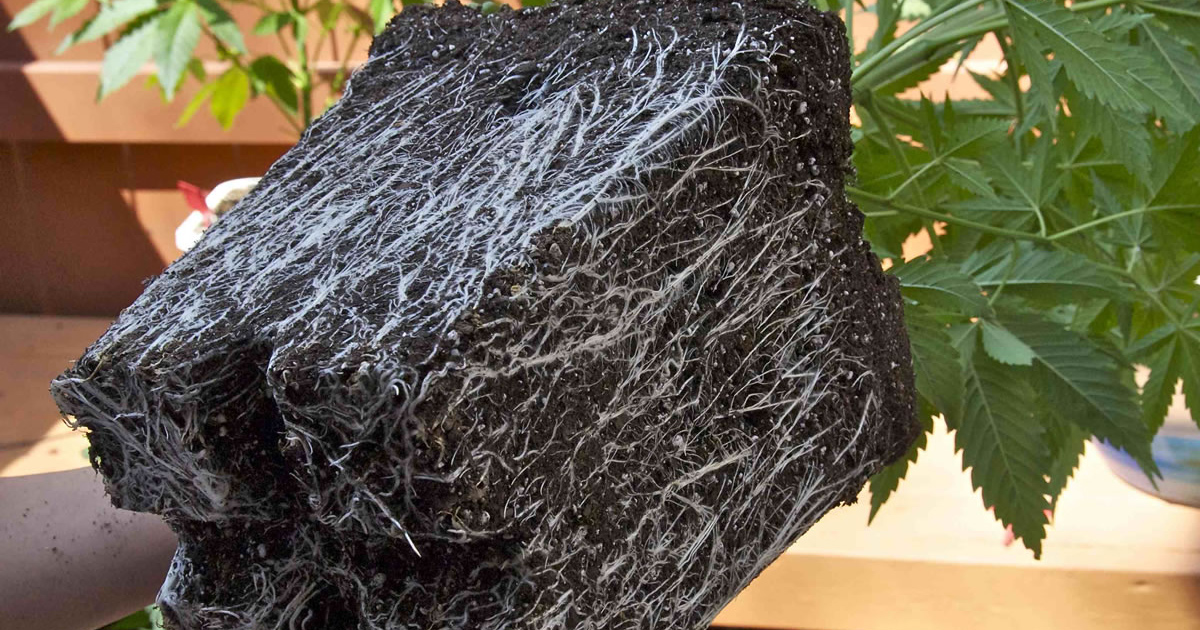
Roots anchor the plant in its substrate and ensure the absorption of water and minerals. In cannabis grown in the open ground, the taproot can grow several tens of centimetres deep, developing a secondary network of rootlets that colonize the surrounding soil.
The cannabis roots contain low concentrations of cannabinoids but have documented medicinal value in traditional medicines - notably for their anti-inflammatory properties. In soil-less cultivation (hydroponics, aeroponics), the roots develop differently, often in the form of a dense, white network visible in the nutrient tray.
Main stem and branches
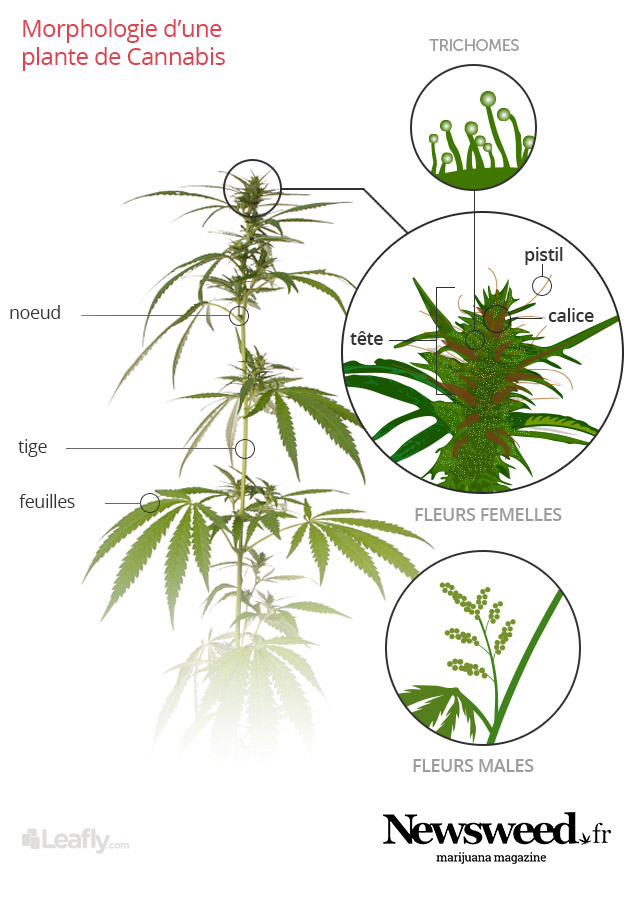
The main stem (main stem) supports the plant's entire aerial structure. Hollow at its heart in mature plants, it conducts raw sap from the roots to the leaves and flowers. Lateral branches develop from the nodes and carry leaves and flowering sites.
Stem strength and rigidity are indicators of the plant's overall health. Stems that are too thin or unable to support the weight of flowering heads often need to be staked.
Nodes and internodes
The nodes are the points of insertion of leaves and branches on the stem. This is also where the plant's first signs of sex are formed - the prefleurs - a few weeks after germination, well before the official start of flowering.
The internodes are the stem segments between two consecutive nodes. Their length is an important genetic and environmental indicator: short internodes generally indicate a compact plant (indica type or good light); long internodes signal a stretched plant, often due to lack of light (reduction).
The leaves
Cannabis produces two morphologically distinct types of leaf.
The main leaves (fan leaves are the large palmate leaves with 5, 7 or 9 leaflets that everyone associates with cannabis. They are the plant's main photosynthesis organ. They contain very little trichomes and therefore low in cannabinoids - they are generally not harvested for consumption but can be used as juice or compost.
The small sugar leaves (sugar leaves) are the small leaves that emerge directly from the buds during flowering. Covered in trichomes, they are much richer in cannabinoids than fan leaves. They are often harvested with the buds, then trimmed during the trimming, and can be used to manufacture kief, from bubble hash or cannabic butter.
Cola
The cola refers to a cluster of heads that develop on the same branch and gradually merge to form a dense, continuous structure. The main cola (cola hand or apical bud) is the central head at the top of the plant, generally the largest and most resinous. Secondary colas develop on lateral branches.
Cultivation techniques such as SCROG or the LST (low stress training) aim to multiply the number of secondary colas of comparable size to the main cola, to maximize overall yield.
The chalice
The calyx (calyx) is the fundamental structure of the female cannabis flower: a teardrop-shaped plant envelope surrounding the reproductive organs. Inside the calyx are the ovules - and in the case of the sinsemilla, The calyx's energy is entirely devoted to resin production.
The calyxes are grouped in successive layers to form the head (bud). Their shape, size and color vary according to genetics: some varieties produce swollen, fleshy calyxes, others elongated and tapering. Calyx density is a determining factor in yield and visual quality of the harvest.
Bracts
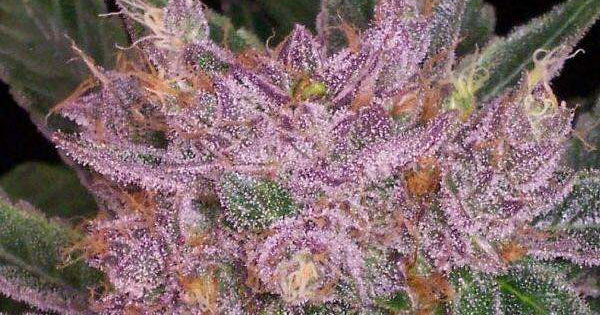
The bracts are the modified leaves that envelop and protect the calyx. These are the parts of the plant denser trichomes of the entire plant - even more so than the calyxes themselves. Bracts are therefore proportionally the richest in cannabinoids and terpenes, making them the main target for high-quality extractions.
Pistils
The pistils are the little filaments that emerge from calyxes and bracts. They start out white, then gradually turn yellow, orange, red or brown, depending on the plant's maturity and genetics. Their biological role is to capture pollen from male plants during reproduction.
Pistil color is often used as a rough indicator of ripeness, but it is less reliable than the observation of the trichomes to determine the optimum harvesting time. Pistils do not add significant strength or aroma.
Trichomes
Despite their microscopic size trichomes are the most important part of the plant for the consumer. These mushroom-shaped resin glands cover calyxes, bracts and sugar leaves, giving them the characteristic frosted appearance of quality buds.
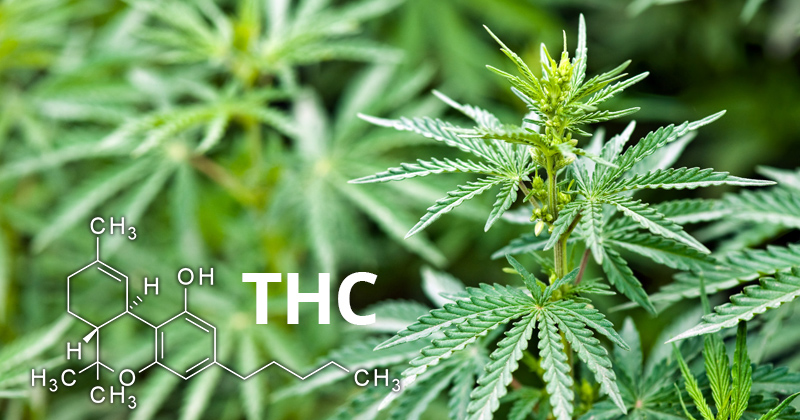
It is inside the trichome heads that the cannabinoids — THC, CBD, CBG, THCA and many others - as well as terpenes, trichomes, the aromatic molecules responsible for the olfactory and taste profiles of each variety. Trichomes also serve as a natural defense mechanism against insects, fungi and environmental aggression.
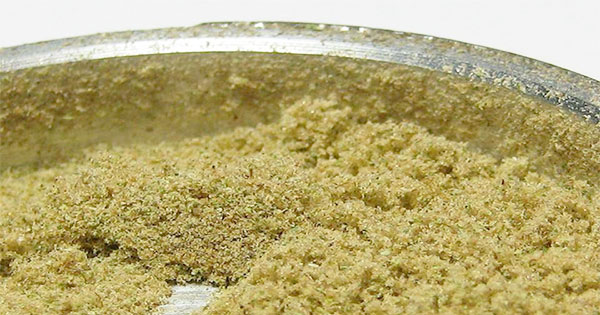
Once dried and separated from the plant, the trichome heads constitute the kief. Pressed together, they form the hashish. Extracted with ice water, they give the bubble hash.
Summary: the parts of the cannabis plant
| Part | Main role | Rich in cannabinoids |
|---|---|---|
| Roots | Water and nutrient absorption | Very low |
| Stem / branches | Sap structure and conduction | Null |
| Fan leaves | Photosynthesis | Very low |
| Sugar leaves | Photosynthesis + resin production | Low to moderate |
| Nodes | Leaf/branch insertion point, sexing | Null |
| Cola | Cluster of flower heads | High |
| Calyx | Flower structure, resin production | High |
| Bracts | Protecting the chalice | Very high |
| Pistils | Pollen capture | Very low |
| Trichomes | Cannabinoid and terpene production | Maximum |






Medical Cannabis in Germany: THC Prices Vary by a Factor of 12

France already has 3,000 cannabis retail outlets. None of them are legal.

Morocco's exports of legal cannabis have expanded to 15 countries

Aurora Cannabis Doubles Its Production Capacity in Germany

Tilray is accelerating its operations in Europe thanks to a license in Portugal

Boston will host the 10th annual State of the Cannabis Industry Conference on October 26

A DEA report confirms that there are no fatal cannabis overdoses

A British patient is challenging the NHS's refusal to reimburse medical cannabis

October 2026 CBD Highlights: 10 Strains and Hash to Discover from 5 French Producers

