Cannabis clones and cuttings: definition, harvesting and storage
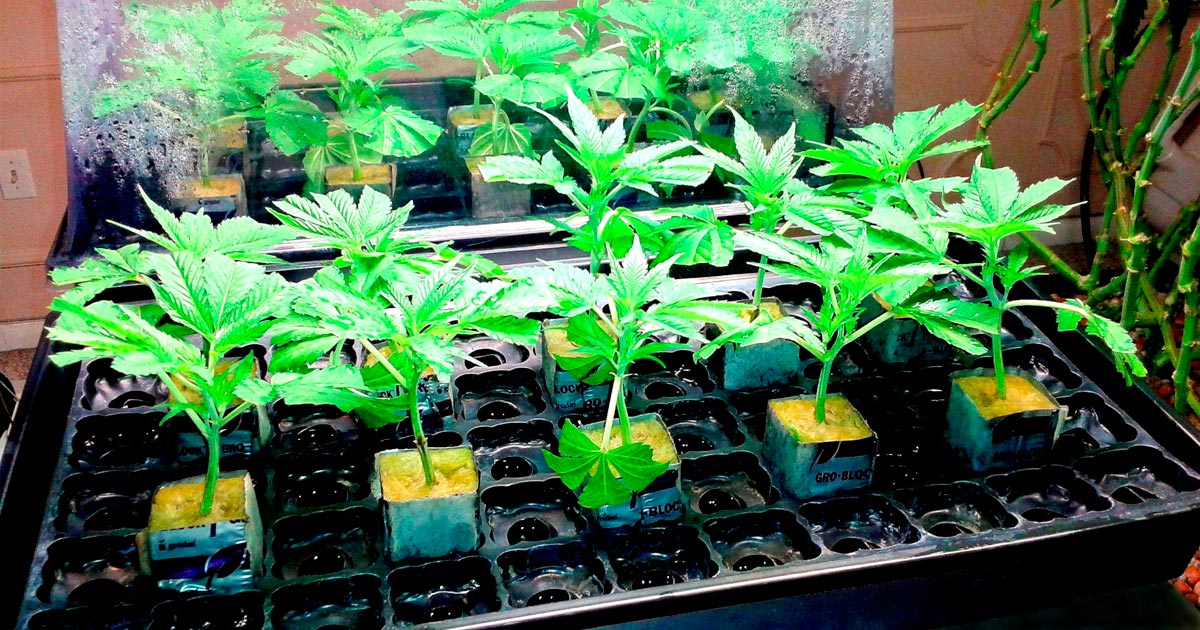
Cannabis clones are branches taken from a cannabis plant, in the same way as a cutting, which will give rise to another complete plant. A clone is a genetic replica of the mother plant from which it was taken.
What are cannabis clones?
Cannabis plants can start from a seed or a clone. Seeds require germination, and in the case of ordinary seeds, they need to be sexed to separate females from males. Growing from a clone allows you to skip these steps.
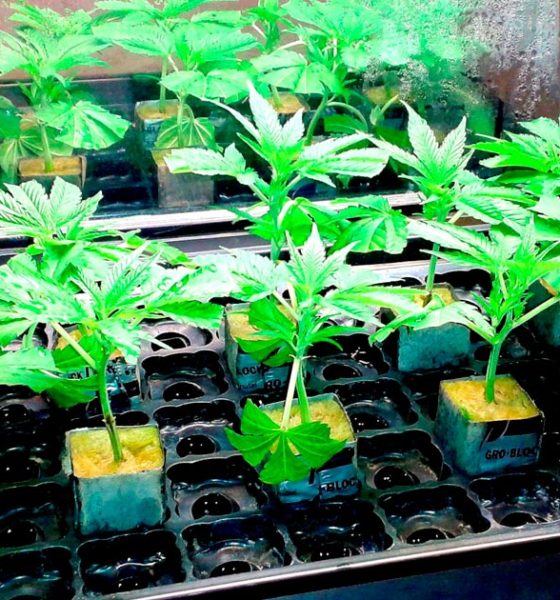
Clones are cuttings taken from another plant, called the «mother», and are genetically identical. Clones must develop roots before they can be placed in soil or other growing medium. Often, they are placed in root cubes, in a cloner with a rooting hormone, or in a cloner with a rooting hormone. aeroponic cloner to promote growth. When the clone takes root, it is already at the seedling stage.
Since clones are genetically identical, cloning guarantees that the particular strain produced by a grower will be the same from generation to generation, so consumers will always get the same product.
What's the difference between a clone and a cannabis cutting?
As far as we know, there is no fundamental difference between a cutting and a cannabis clone. A cutting is a plant fragment detached from the mother plant and placed in a medium where it takes root and develops into a complete plant. The clone is the genetic replica of the original plant, the result of cuttings.
Why choose clones over seeds?
There are several reasons why growers and hobbyists prefer clones to seeds. Cannabis is a heterozygous plant, which means it naturally reproduces a diverse set of offspring. Cultivators and home growers depend on continuity of plant characteristics, which sexually reproduced cannabis cannot provide.
For home growers, clones save time and money. It can take up to a month to determine the sex of a seed. With clones, home growers know and control the sex of the plant from the outset, saving weeks of energy, nutrients and expense that might otherwise have been wasted on an unwanted male plant. Clones also tend to sell for around the same price as seeds.
Growers also prefer clones for their genetic consistency. Identical plants enable controlled experiments, which growers rely on to evaluate and reproduce effects, as well as to determine optimal feeding schedules, flowering periods and nutritional recipes. With all these advantages, growers have a much better chance of achieving favorable reproduction.
But clones also have their drawbacks. Lack of genetic diversity is good for growers, but it can also have catastrophic consequences. If exposed to adverse environmental effects for which it has no defense, a group of genetically identical plants can be wiped out. Fortunately, in the overwhelming majority of cases, the advantages of clone genetic consistency far outweigh the disadvantages.
| Clone | Seed | |
|---|---|---|
| Genetics | Identical to the mother, guaranteed | Variable, surprises possible |
| Gender | Guaranteed female (if female mother) | Uncertain (except feminized seeds) |
| Delay | Saves 2 to 4 weeks | Germination + sexing required |
| Root system | Less developed than a plant from seed | Stronger taproot |
| Resistance | May inherit mother's diseases | A healthy start |
| Availability | Requires a mother plant | Available everywhere |
| Cloning cars | Not recommended | The only viable option |
How to harvest clones from a mother plant
Taking clone cuttings from a mother plant is a relatively simple process, usually requiring the following equipment:
- A strong, healthy mother plant with vegetative branches 10 to 50 cm long.
- Razor blade
- Cup with water
- Cutting medium
- Cutting hormones (optional)
- Fluorescent light
- Cutting dome or plastic bag to cover the cutting
When choosing a mother plant for cuttings, make sure it is at least one month old and has shown clear signs of femininity. Cutting a mother plant can stunt its growth, so it's important to make sure it's in good health. If a plant appears to be under- or over-watered, avoid taking cuttings. A mother plant should be kept in a prolonged vegetative state; ideally, in a separate area from other plants, under a light cycle of 18 on/6 off.
Before you start cutting, it's essential to sterilize your blade to prevent deadly, fast-spreading bacteria infecting your clones as they develop their roots. When selecting clones from the mother plant, look for branches with four or more nodes, or points in a branch where new leaves are appearing. Professional recommendations for branch length range from 10 to 40 cm.
Be sure to cut the branch at a 45-degree angle, then remove any growth below the top two nodes. Put the cutting in water immediately after grooming to avoid emboli, or air bubbles that block the flow of transpiration and cause wilting. Rooting gels and other solutions are optional, but they further reduce the risk of embolism and provide hormones and nutrients that can accelerate the rate of growth.
Once you've managed to make all your cuttings, dip them in your rooting gel and carefully place them in a medium. If you're using a rockwool cube, don't put the clone in the hole. Instead, use the cutting to pierce the cube. This way, the roots won't receive any light and the cutting will be covered as much as possible.
Before producing roots, clones need a high level of humidity. Place the cutting in a cloning dome and maintain humidity between 75 and 90 % until the roots are able to absorb water.
Roots should begin to form within 7 to 14 days, signalling that the clones are ready for planting.
How to preserve clones over the long term
If you want to keep clones for future use, or have backup copies on hand in case a problem arises with some of your cuttings, storing them in the fridge is usually a simple and safe way of doing so. Clones can be kept in a sufficiently cold refrigerator for 2-3 months.
For best results, wrap the clone in a damp paper towel, place it in a resealable bag and seal the bag, leaving some air inside. Carefully place the bag in your refrigerator and renew the air inside at least once a week. Do not put the bags in the freezer. Placing cuttings at temperatures below 4°C runs the risk of bursting the plant's cell walls.
When you take the cuttings out of the fridge, put the stems in water for about 30 minutes to warm them up. If your cuttings have been refrigerated for a long time, they may take longer to root. To speed up the process, cut 1 cm off the stem and dip the raw end in rooting gel if possible.
How and where to buy clones
In France, the purchase of cannabis clones is only legally possible for medical purposes or in countries where cultivation is authorized. For growers in legal markets (Canada, some US states, Spain via Cannabis Social Clubs), dispensaries remain the best place to buy - with guaranteed genetics and plant health control.
Whatever the context, if you receive a clone from outside, sanitary precautions remain essential. Check carefully for the absence of spider mites, aphids or powdery mildew before introducing the clone into your growing area. Systematically put it in quarantine for 1 to 2 weeks, isolated from the rest of the garden. Preventive treatment with organic pesticides is recommended.
Also check visual quality: roots should be visible, stems thick and firm, color bright green without excessive yellowing. A clone that's too small (less than 10 cm), too etiolated or without established roots will have a hard time getting by.















«Vincy Gold»: Humboldt Seed Company on the Hunt for Saint Vincent Sativas

Cronos Completes the Acquisition of CanAdelaar for 57.5 million euros

Cannabis with a "bloody" twist: Discover Sensi True Blood and Sensi Sangria, the two new strains from Sensi Seeds

Hemp: The Council of the EU Takes a Stand on New Production and Marketing Rules

Missouri's legal cannabis market accounts for 93 % of consumer spending

THC Gummies: How to Read a Certificate of Analysis Before Buying

British patients now have access to THCV-rich cannabis flowers

Spain: Medical Cannabis Is Coming to About 50 Hospitals

JIHE 2026: Japan’s Largest Trade Show Dedicated to Hemp and CBD Returns to Tokyo with More Than 100 Industry Players

