Aeroponics: definition, operation and comparison
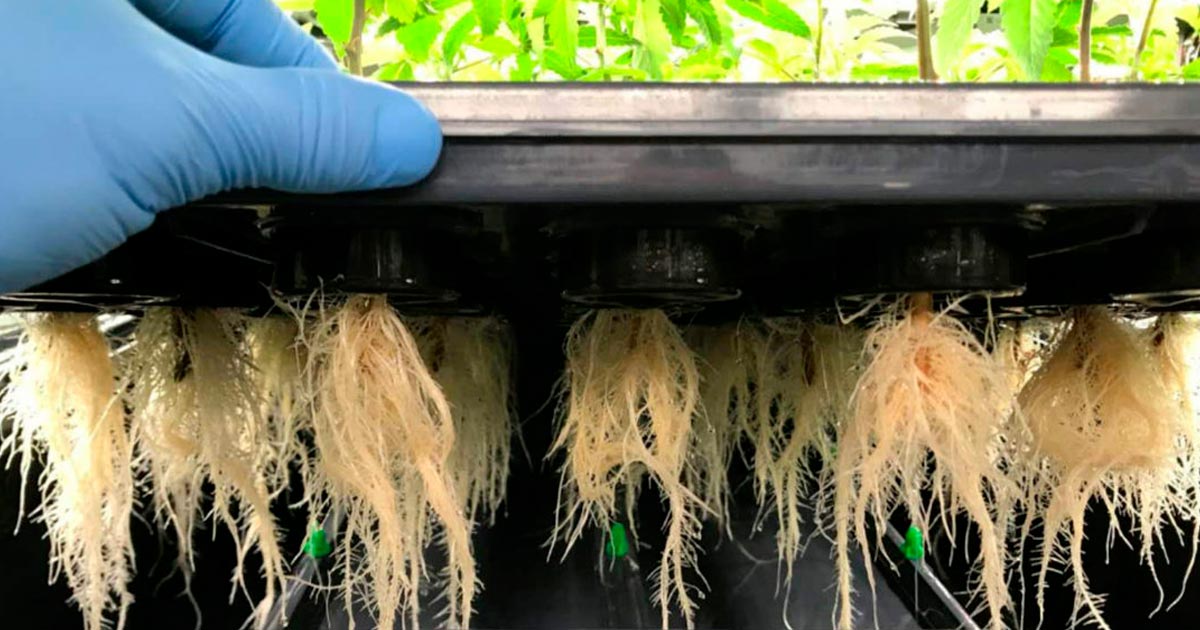
Aeroponics is a soilless growing method in which plant roots are suspended in the air inside a darkened chamber and sprayed continuously or intermittently with a fine mist of nutrient-rich water. With no substrate, no soil, no water immersion - the roots are exposed directly to the air, ensuring maximum oxygen supply.
In the world of cannabis, aeroponics is best known for its use in aeroponic clones, It can be used to root cuttings quickly and with a high success rate. But it can also be used to guide plants through their entire life cycle, from germination to harvest.
How does an aeroponic system work?
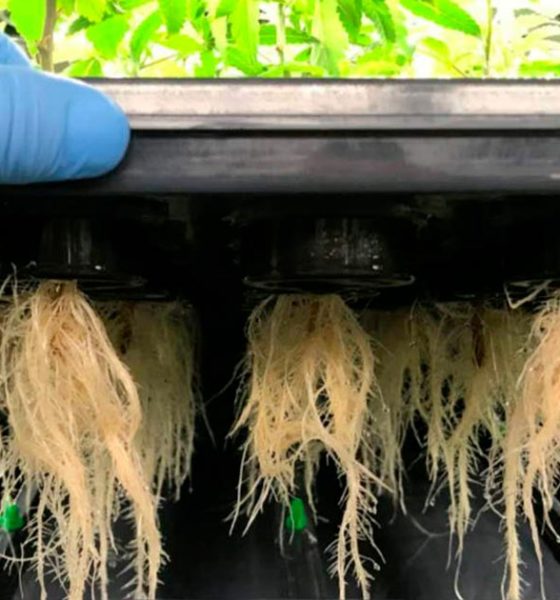
The principle is based on a light-tight chamber in which the plants are held in position, generally upside down, with the stems passing through orifices fitted with foam collars, and the roots hanging freely inside the chamber.
A pump immersed in a reservoir of nutrient water feeds spray nozzles or a high-pressure misting system, which sprays a fine mist onto the roots at regular intervals. This sprinkling/drying cycle is controlled by a timer: the roots receive nutrients during the sprinkling cycles, then air circulates freely in the intervals, providing oxygen.
The essential components of an aeroponic system are a light-tight chamber, a reservoir for the nutrient solution, a circulation pump, spray nozzles or a high-pressure mister, foam or neoprene collars to hold the plants, and a timer to regulate the spray cycles.
Aeroponics for cloning
This is the most common use in cannabis cultivation. A aeroponic cloner is a compact system for rooting cuttings (clones) in 5 to 14 days, with a success rate generally superior to traditional methods (rockwool cube + dome).
The process is simple: after taking cuttings from a mother plant, the stems are placed in the cloner's foam collars. The pump regularly sprays the bottom of the stems with slightly nutritious water (pH between 5.5 and 6.0, very low EC). The constant humidity combined with ambient oxygen stimulates the rapid formation of adventitious roots.
Once the clones have a solid root system (2-5 cm white roots visible under the collar), they can be transplanted into the substrate of your choice: soil, coco, rockwool, or directly into a hydroponic system.
Aeroponics full-cycle: from germination to harvesting
It is possible to grow cannabis plants aeroponically throughout their entire cycle, including vegetative growth and flowering. This approach, which is more technical than simple cloning, offers remarkable performance in terms of growth speed and yield when properly mastered.
In full-cycle aeroponics, plants grow faster than in soil-based cultivation or even in hydroponics thanks to maximum oxygenation of the roots. Vegetative growth is particularly accelerated. On the other hand, management is more demanding: a pump failure lasting just a few hours can be enough to completely dry out roots and kill plants. Redundant equipment (back-up pump, alarm) is essential.
Aeroponics vs. hydroponics vs. soil cultivation
| Aeroponics | Hydroponics | Earth | |
|---|---|---|---|
| Substrate | None (air) | None or inert | Earth, coconut |
| Root oxygenation | Maximum | Good | Limited |
| Growth speed | Very fast | Fast | Standard |
| Technical complexity | High | Average | Low |
| Risk in case of breakdown | Very high | Moderate | Low |
| Water consumption | Low (misting) | Moderate | Variable |
| Main use cannabis | Cloning + advanced culture | Full-cycle cultivation | All levels |
| Set-up costs | High | Medium | Low |
Advantages and disadvantages of aeroponics
Advantages :
- Faster root and vegetative growth than other methods
- Maximum root oxygenation, with no risk of over-watering
- Low water and nutrient consumption (efficient misting)
- Excellent cloning success rate
- No substrate to manage or dispose of
Disadvantages :
- System highly sensitive to faults (pump, electricity, nozzle clogging)
- Steeper learning curve than hydroponics or soil cultivation
- Higher initial cost, especially for high-pressure systems
- Spray nozzles can become clogged with mineral deposits - regular maintenance essential
- Less margin for error on pH and EC of nutrient solution
Practical tips for getting started
pH and EC The nutrient solution should be maintained between pH 5.5 and 6.2 for aeroponic systems. EC (electrical conductivity, a measure of nutrient concentration) should remain low during the cloning phase (0.4 to 0.8 mS/cm) and increase during vegetative growth (1.2 to 2.0 mS/cm) and flowering (1.8 to 2.4 mS/cm).
Spray cycles In cloning, short, frequent cycles are recommended: 30 seconds every 3 minutes is a common base. In full-cycle cultivation, cycles can be spaced further apart once the roots are well developed.
Solution temperature Ideally between 18°C and 22°C. Above 24°C, the risk of bacterial and fungal growth in the tank increases significantly.
Nozzle cleaning A weekly rinse with clear water and monthly cleaning with citric acid or diluted hydrogen peroxide will prevent clogging.


















Medical Cannabis in Germany: THC Prices Vary by a Factor of 12

France already has 3,000 cannabis retail outlets. None of them are legal.

Morocco's exports of legal cannabis have expanded to 15 countries

Aurora Cannabis Doubles Its Production Capacity in Germany

Tilray is accelerating its operations in Europe thanks to a license in Portugal

Boston will host the 10th annual State of the Cannabis Industry Conference on October 26

A DEA report confirms that there are no fatal cannabis overdoses

A British patient is challenging the NHS's refusal to reimburse medical cannabis

October 2026 CBD Highlights: 10 Strains and Hash to Discover from 5 French Producers

