Is Colorado cannabis too strong?

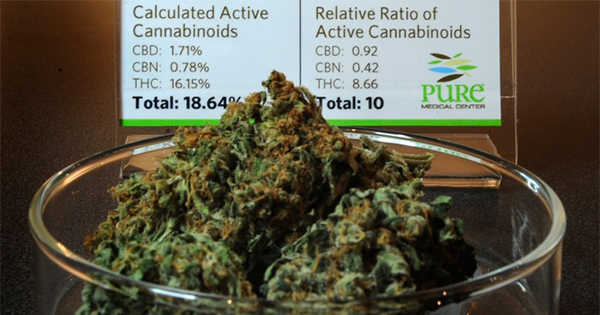
A citizens' initiative and a proposed amendment in Colorado aim to regulate the THC content of cannabis and cannabis-based products with a THC content below the current average. These proposals would limit the THC content to 15 or 16%, and "space food" would have to be measured out and sold in portions containing no more than 10 milligrams of THC.
The average potency of cannabis products in Colorado is already higher: 17.1% for cannabis flowers and 62.1% for cannabis extracts, according to a government study.
Supporters of these initiatives, introduced by Republican Representative Kathleen Conti, are calling for a degree of caution until more research is conducted, particularly on adolescent brain development.
Opponents, on the other hand, believe that these measures would be unreasonable and could lead to the disappearance of certain parts of the‘The cannabis industry in Colorado’.
«All previous studies have been conducted on THC levels ranging from 2 to 8%,» said Conti. «Most cannabis today contains more than 17% of THC, which is really high, and we don’t know if we’re on the right track when it comes to the Health Risks Associated with Cannabis Use« .
Industry Concerns
While this elected official’s concerns are legitimate, Colorado’s industry views these proposed reforms as a major obstacle to its growth.
First of all, because this 15 or 16% level is completely arbitrary. Official studies were conducted on cannabis containing no more than 8% of THC because the cannabis was provided by the University of Mississippi, the only entity authorized to grow cannabis for the government, with yields far below current standards.
A plant that grows to its full potential and contains 20% of THC would then have to be cultivated to a lower standard in order to stay within the legal limit. Or its cultivation would have to be discontinued, despite the benefits it could provide to certain patients. Because even in Colorado, many cannabis users are medical users.
Certain medical conditions require levels of THC very potent, often in the form of extracts or cannabis-infused foods for people who cannot absorb it through inhalation. These patients would be forced to turn to the black market to obtain their medication.
The extraction industry is also expected to dilute its products to meet legal limits. Cannabis concentrates typically contain between 55 and 85% of THC.
Challenges in Testing Products
The laboratories that test THC levels Currently, several methods are used: high-performance liquid chromatography, gas chromatography, mass spectrometry, etc.—none of which are currently standardized to define and regulate each of these methods. Currently, these different methods do not necessarily produce the same results, and even the same method used by two different laboratories can yield different results, causing significant problems for the companies being tested.
Furthermore, the samples tested do not necessarily reflect the entire crop, even within the same variety grown with the same fertilizers.
Research Needs
Ultimately, each side has its own arguments. The industry has significant financial stakes at stake, and its critics are seeking, in particular, to protect young people from highly appealing products.
Beyond the protective measures needed to limit the appeal of these products, the entire industry must be regulated and able to draw on recent studies of cannabis’s impact on consumers—particularly at current dosage levels—to determine whether it is necessary to limit THC levels. Patients who currently use cannabis with very high THC levels must not be overlooked either, or we risk seeing them move to another state or turn back to the black market.








«Vincy Gold»: Humboldt Seed Company on the Hunt for Saint Vincent Sativas

Cronos Completes the Acquisition of CanAdelaar for 57.5 million euros

Cannabis with a "bloody" twist: Discover Sensi True Blood and Sensi Sangria, the two new strains from Sensi Seeds

Hemp: The Council of the EU Takes a Stand on New Production and Marketing Rules

Missouri's legal cannabis market accounts for 93 % of consumer spending

THC Gummies: How to Read a Certificate of Analysis Before Buying

British patients now have access to THCV-rich cannabis flowers

Spain: Medical Cannabis Is Coming to About 50 Hospitals

JIHE 2026: Japan’s Largest Trade Show Dedicated to Hemp and CBD Returns to Tokyo with More Than 100 Industry Players

New Caledonia: The Courts Clear the Way for the Return of CBD
-
 Business3 weeks ago
The legal cannabis market in New York exceeds 4 billion $ in revenue
-

 Cannabis in France4 weeks ago
Which countries legalized medical cannabis before France?
-
Cannabis in France1 week ago
France already has 3,000 cannabis retail outlets. None of them are legal.
-
Business4 weeks ago
South Korea is preparing to begin local production of medical cannabis to meet rising demand
-
Cannabis in the U.S.1 week ago
A DEA report confirms that there are no fatal cannabis overdoses
-
Cannabis in Thailand4 weeks ago
From the boom in dispensaries to a purely medical approach: Thailand is revising its cannabis policy
-
Cannabis and driving4 weeks ago
Medical Cannabis and Driving: New South Wales Ends Automatic Penalties for THC
-
Cannabis in France3 weeks ago
France’s Drug Policy Chief Defends Cannabis Prohibition... and Runs Into the Facts
















You must be logged in to post a comment Login