The 5 most promising discoveries about medical cannabis

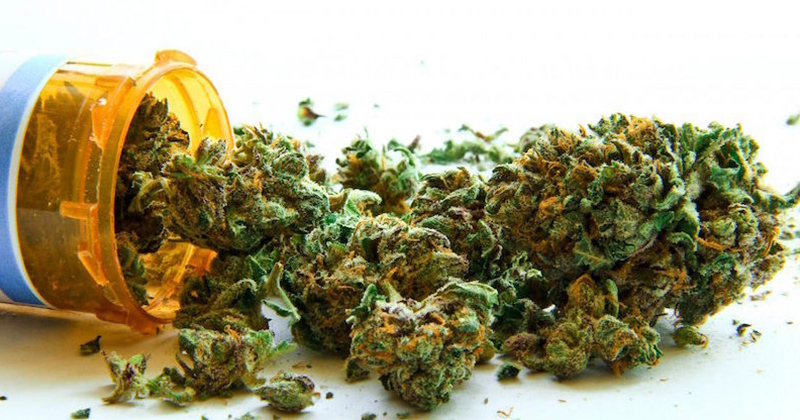
More and more voices are being raised in France in favor of the use of cannabis for therapeutic purposes. While more than half of American states have already authorized medicinal cannabis, as is Canada, and in Europe, Germany has announced legalize medical cannabis in spring 2017 while Switzerland, Finland, Spain, Italy and Portugal already allow it, here are the top 5 the most promising discoveries in medical cannabis.
Cannabis may activate the self-destruction of cancer cells
The most important research on cannabis has turned to the study of cannabinoids.
Cannabinoids are a kind of chemical compounds found in the Cannabis plant, but which the human body also produces naturally. They play a role in regulating pleasure, memory, concentration, appetite, pain, etc. within a system known as endocannabinoid. THC is a cannabinoid, as is cannabidiol (or CBD), but there are hundreds of them.
The more researchers look into cannabinoids, the more it seems that these molecules possess incredible medical properties.
So far, we know that cannabinoids bind chemically to cells in the human body, via specific receptors. When cannabinoids are injected into certain types of cancer cells, they send out a chemical signal that leads to their self-destruction.
Cannabis could therefore be a good way of curing certain types of cancer.
In fact, the US National Institute on Drug Abuse recently change its data sheet [Recent animal studies have shown that cannabis can kill some cancer cells and reduce the size of others, [including most brain tumors]«.
Read also: The US government finally admits that cannabis kills cancer cells
Cannabis may help prevent Alzheimer's disease
In 2005, a scientific study suggested that the cannabinoids present in cannabis could protect certain parts of the brain from Alzheimer's disease.
On the other hand, the 2005 study is important because it opens the door to further research. Studies conducted since 2005 have deepened our understanding of how cannabis can treat Alzheimer's disease, but there is still much work to be done on this subject.
Scientists have suggested, in a study published in the Journal of Alzheimer's Disease, that low doses of THC could slow the production of beta-amyloid protein, which typically accumulates to create plaques in the brain and is a known feature of Alzheimer's disease.
Medical cannabis reduces opiate addiction
The United States is currently plunged into an «epidemic» of addiction to painkillers, most of which are made from opiates - highly effective, but also highly addictive.
Obama and Macklemore launched an appeal this weekend for better opiate-based treatments. Sales of painkillers have quadrupled in recent years, and an estimated 2 million Americans are now addicted to these prescription drugs. 16,000 people die from opioid overdoses.
The «good news» is that states where medical cannabis is legal have lower rates of significantly lower rates of addiction to these drugs. In those states where medical cannabis is not authorized, 5.4% of people with painkiller prescriptions abuse it, compared with 2.8% where it is legal.
The state of Maine, which is in the process of legalizing medical cannabis, is already using cannabis to treat cocaine and heroin addiction.
Cannabis can help regulate bone mass
In 200, researchers discovered that cannabinoids, as part of the endocannabinoid system, played a key role in the development of the immune system. important role in regulating bone mass.
The sendocannabinoid system would affect the cells that weaken bones as well as those that rebuild them. This discovery means that cannabinoids may play a role in the fight against bone disease.
Another study in 2009 concluded that «cannabinoid-based medicines» can be used «to combat osteoporosis».
Medical cannabis has a wide safety margin
In the United States, cannabis is still classified by the DEA as a Schedule 1 drug, a list of substances classified as «most dangerous». Many citizens and activists are calling for it to be removed from this list, in view of the various medical uses to which it can be put.
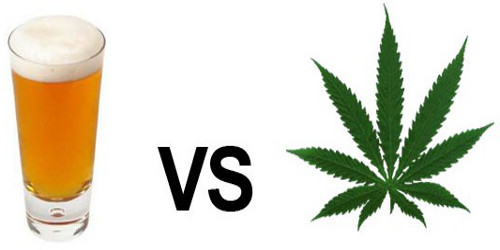
In 2015, German and Canadian researchers compared the different risks associated with drug use. In particular, they concluded that tobacco and alcohol are far more dangerous than cannabis.
Read also: 5 little-known health benefits of cannabis
Back in 1988, scientists determined that it was almost impossible to overdose on cannabis. A person would have to smoke 680 kilos of cannabis in 15 minutes to risk overdose. At that stage, the carbon monoxide contained in the smoke would have killed him before.









Medical Cannabis in Germany: THC Prices Vary by a Factor of 12

France already has 3,000 cannabis retail outlets. None of them are legal.

Morocco's exports of legal cannabis have expanded to 15 countries

Aurora Cannabis Doubles Its Production Capacity in Germany

Tilray is accelerating its operations in Europe thanks to a license in Portugal

Boston will host the 10th annual State of the Cannabis Industry Conference on October 26

A DEA report confirms that there are no fatal cannabis overdoses

A British patient is challenging the NHS's refusal to reimburse medical cannabis

October 2026 CBD Highlights: 10 Strains and Hash to Discover from 5 French Producers

CBD in France: Traceability, Retail Stores, THC and Driving… What the New Bill Proposes
-
 Business2 weeks ago
The legal cannabis market in New York exceeds 4 billion $ in revenue
-

 Cannabis in France3 weeks ago
Which countries legalized medical cannabis before France?
-
Business3 weeks ago
South Korea is preparing to begin local production of medical cannabis to meet rising demand
-
Cannabis in Thailand3 weeks ago
From the boom in dispensaries to a purely medical approach: Thailand is revising its cannabis policy
-
Cannabis and driving3 weeks ago
Medical Cannabis and Driving: New South Wales Ends Automatic Penalties for THC
-
Cannabis in Argentina4 weeks ago
Argentina Opens Its Market to Hemp Flowers Containing 1% of THC
-
Autism3 weeks ago
Autism and Cannabis: Results from the First Placebo-Controlled Trial of NTI164
-
Cannabis in France2 weeks ago
France’s Drug Policy Chief Defends Cannabis Prohibition... and Runs Into the Facts

















You must be logged in to post a comment Login