
US government-grown weed looks like nothing

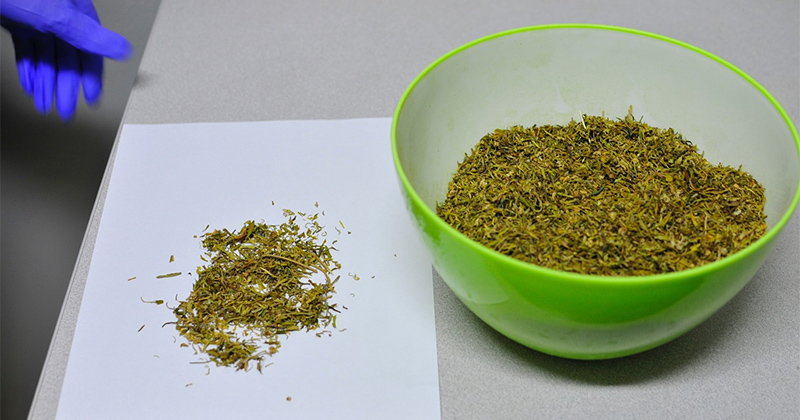
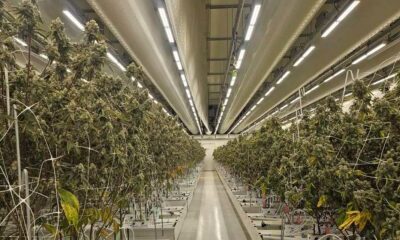
Just take 10 seconds to look at the photo above. If you’ve never seen cannabis before, it’s understandable if you don’t recognize it. This bowl of «weed» is actually the cannabis grown by the U.S. government for federal patients and scientific research.
Since the late 1960s, the U.S. government has required that cannabis used in scientific studies come from federal plantations. Scientists, however, need a product that resembles what people actually consume. But according to the Washington Post, government-produced weed doesn't resemble weed at all.
That, in fact, is what Sue Sisley, a scientist who wants to conduct a study on the effectiveness of medical cannabis for war veterans suffering from post-traumatic stress disorder. While real weed is usually bushy and dark green, government-issued weed is stringy and very light in color. It’s also full of cannabis branches and stems, which cannabis enthusiasts don’t consume. «It doesn’t look like cannabis, it doesn’t smell like cannabis.» simply put, Sisley.
Jake Browne, a cannabis critic for TheCannabist, agrees. «In 20 years of using cannabis, I’ve never seen anything like this. People normally smoke the plant’s flowers, but here you can clearly see branches and leaves—parts of the plant that should be removed. Smoking this would be like eating an apple with the seeds and the stem it grew on still attached.»
All federal cannabis is grown at the University of Mississippi, under the supervision of the National Institute on Drug Abuse (NIDA). Last summer, the DEA had initiated a reform to allow other organizations to grow marijuana for scientific purposes. But so far, none have been approved.
The problem with this government-grown weed goes beyond its appearance. It’s supposed to contain 13% of THC, but Sue Sisley tested it at 8% instead, whereas commercial strains average around 15 to 20%, with some reaching 30%. It is therefore difficult for a researcher to replicate the effects of cannabis on the body using products that are completely different from those actually consumed. No Big Bud or White Widow in sight.
This weed also isn’t tested for pesticides or mold, even though most U.S. states that have legalized it already do so before putting weed on the market. In fact, the weed Sue Sisley received had mold levels that far exceeded the standards in states like Colorado and Washington.
NIDA readily acknowledges that there is definite interest within the scientific community in having access to a wider variety of cannabis. And it promises to soon offer strains with more than 13% of THC. Our take is, above all, that they’d be wise to hire a breeder and a grower!






CBD is said to promote athletic recovery, without improving performance

294 cannabis clubs in Chile: a booming movement with uneven distribution

Chronic Sciatica: New York Approves First Clinical Trial of a THC-Based Medication

United States: The DEA is accelerating the integration of medical cannabis at the federal level

Florida is nearing one million patients using medical cannabis

Uruguay Revives Its Plan to Allow Tourists to Legally Access Cannabis

In Brazil, researchers are developing an innovative CBD eye drop

Autism: Medical Cannabis Is Linked to Reduced Anxiety

The $28 billion U.S. hemp market remains under threat

Jamaica Eases Small Farmers' Access to the Cannabis Market
-
 Business6 days ago
The legal cannabis market in New York exceeds 4 billion $ in revenue
-

 Cannabis in France2 weeks ago
Which countries legalized medical cannabis before France?
-
Business2 weeks ago
South Korea is preparing to begin local production of medical cannabis to meet rising demand
-
Cannabis in the Netherlands4 weeks ago
One year after the launch of the Dutch cannabis experiment, the first trends are emerging
-
Cannabis in Thailand2 weeks ago
From the boom in dispensaries to a purely medical approach: Thailand is revising its cannabis policy
-
Cannabis in France4 weeks ago
French medical cannabis remains stalled at the Ministry of Health
-
Cannabis in Argentina3 weeks ago
Argentina Opens Its Market to Hemp Flowers Containing 1% of THC
-
Cannabis and driving2 weeks ago
Medical Cannabis and Driving: New South Wales Ends Automatic Penalties for THC
















You must be logged in to post a comment Login