EELV introduces a bill to regulate cannabis distribution
Noel Mamère and other Green Party lawmakers introduced a bill in the National Assembly on January 11 to establish a state-regulated framework for cannabis. Here’s a closer look at the bill.

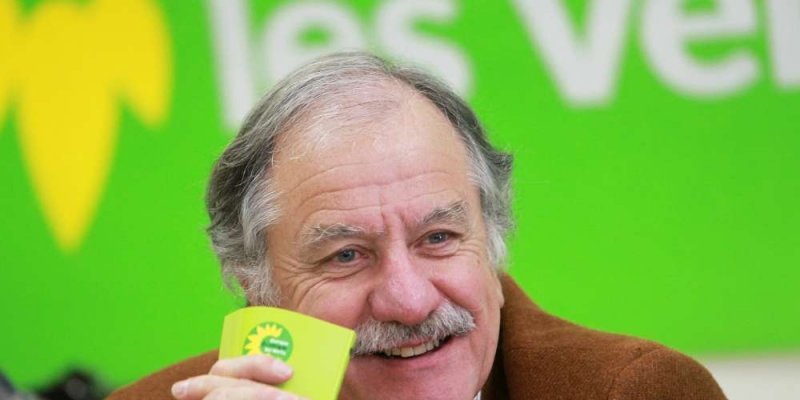
Having just announced his retirement from parliament in June 2017, Noël Mamère is attempting one last major political move. He and ten other elected officials from Europe Ecology – The Greens (EELV) introduced a bill on Wednesday to establish a state framework for cannabis. EELV would like to see a Full-scale test of cannabis legalization. According to these elected officials, this issue should be put to the French people in a referendum.
The text proposes the creation of a state monopoly on the production and distribution of cannabis. With the implementation of this measure, the bill calls for the creation of 20,000 to 30,000 jobs in the agriculture, manufacturing, and service sectors. Lawmakers hope to generate 2 to 3 billion euros in tax revenue and savings for the government.
The Main Provisions of the Bill
Founding of La Française du cannabis
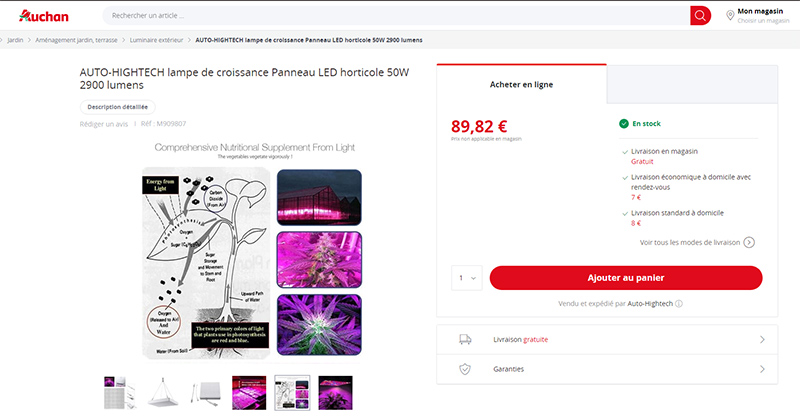
EELV is calling for the creation of a regulatory agency for the production and distribution of cannabis products, to be named La Française du cannabis. This agency will be responsible for implementing prevention initiatives and overseeing prevention efforts. It will issue production and distribution licenses. Farmers will be required to sign a production contract. They will not be allowed to grow cannabis under artificial lighting. Producers would be prohibited from using pesticides or chemical fertilizers on their crops.
La Française du Cannabis would also issue distribution licenses to retailers. They will be provided with strict specifications. The agency will supply the product to retailers, so there will be no direct contact between producers and retailers. The store must specify the composition of THC and the potential dangers of using cannabis products. Requirement to remind customers in the store of the dangers of drugs and to whom to turn in the event of substance abuse.
Regulations for Specialty Stores
To open a specialty store, approval from the prefect and the mayor of the municipality will be required. Each department must establish the minimum distance that stores must maintain from schools and transportation companies. These stores will be prohibited from admitting minors, even if accompanied by parents. The store will be temporarily closed if it violates the law. It is prohibited to serve alcohol and to sell more than 100 grams of marijuana, except in certain cases. It is prohibited to use tobacco (only pure or with a blend of cannabis) in stores. As with bars, these stores will be required to be considerate of the neighborhood. They would be prohibited from advertising, but would be allowed to display small signs inside the stores. These stores could be similar to dispensaries in the United States or Coffee Shop. They are referred to as «flow» in the bill.
VAT: 25 % of the sales price of all cannabis-containing products. This high rate will not apply to medical cannabis. A specific portion of this tax will be allocated to cannabis prevention efforts.
The Public Health Program
Prohibition on sales to minors, use in public places, driving under the influence of cannabis, and advertising of cannabis products and derivatives. Consumption is permitted only at home or in specialty stores. Temporary exemptions may be granted by prefects in the event of demonstrations or public gatherings.
Penalties
Fines for: public consumption, offering, or selling cannabis to a minor; and selling cannabis without a state license. With regard to the cannabis and driving, EELV wants to raise the maximum limit to 8 ng/L of blood, up from the current 1 ng/mL. Drivers who violate this limit will face a fine of 9,000 euros, a license suspension, or even a three-month suspended prison sentence. These penalties will be more severe if the driver responsible for an accident has a blood alcohol concentration above this limit. Currently, even the slightest trace of cannabis while driving can result in the loss of your license.
The Medical cannabis will be overseen in cooperation with the French Health Products Agency. The government will designate the laboratories that will be allowed to grow crops using artificial light. A bit of a disappointment, the The Greens are not proposing to legalize personal cultivation.
Overall, the bill seems fairly comprehensive. It remains to be seen how this measure could be implemented in less than six months, and what the next occupant of the Élysée Palace would say about it if it were to pass. The details of this bill could otherwise be useful to the winner of the left-wing primary, who proposes to regulate cannabis.












JIHE 2026: Japan’s Largest Trade Show Dedicated to Hemp and CBD Returns to Tokyo with More Than 100 Industry Players

New Caledonia: The Courts Clear the Way for the Return of CBD

The Brazilian medical cannabis market continues to grow

Morocco: Three Cannabis-Based Medications Approved for the Treatment of Epilepsy

Canopy Growth Receives New EU-GMP Certification to Strengthen Its Presence in Europe

Three years after legalizing medical cannabis, Albania continues to establish regulations for it

The first plant-based medical THC spray arrives in the United Kingdom

Medical Cannabis in Germany: THC Prices Vary by a Factor of 12

France already has 3,000 cannabis retail outlets. None of them are legal.

Morocco's exports of legal cannabis have expanded to 15 countries
-
 Business2 weeks ago
The legal cannabis market in New York exceeds 4 billion $ in revenue
-

 Cannabis in France4 weeks ago
Which countries legalized medical cannabis before France?
-
Business4 weeks ago
South Korea is preparing to begin local production of medical cannabis to meet rising demand
-
Cannabis in France4 days ago
France already has 3,000 cannabis retail outlets. None of them are legal.
-
Cannabis in Thailand4 weeks ago
From the boom in dispensaries to a purely medical approach: Thailand is revising its cannabis policy
-
Cannabis in the U.S.5 days ago
A DEA report confirms that there are no fatal cannabis overdoses
-
Cannabis and driving3 weeks ago
Medical Cannabis and Driving: New South Wales Ends Automatic Penalties for THC
-
Cannabis in France3 weeks ago
France’s Drug Policy Chief Defends Cannabis Prohibition... and Runs Into the Facts

















Jean-Michel Sinte
January 14, 2017 at 11 h 10 min
Response from Laurence Havel of ‘The Institute for Justice.’ This is what I received in my inbox this morning, as I constantly monitor all reactions across the European political spectrum.
« »
Cannabis: We're preparing our counterattack!
Dear Madam, Dear Sir,
The news made headlines.
150 prominent figures from Marseille, including members of parliament, have launched a petition calling for the legalization of cannabis.
The reasons cited are as follows:
#1: The endemic crime in Marseille is believed to be primarily due to drug trafficking.
#2 The war on drugs is expensive. It's better to give up.
#3: Repression prevents us from viewing drug addicts as sick people.
#4: Prohibition leads to the social exclusion of drug users.
The reasons are laudable… but amount to a fallacy.
In fact, the French do not seem to support such legalization.
Despite thunderous media support and the full weight of influential pro-drug lobbies…
… the petition to legalize cannabis is a total flop.
If the Institute for Justice dared to publicize a petition with such meager results, there’s no doubt that certain well-meaning journalists would seize the opportunity to slander us.
The flop is good news… but I have even better news.
I'm going to need your help starting next week. We need to rally the whole of France to raise awareness about the realities of cannabis in France.
And they are a far cry from the ones touted by pro-drug lobby groups.
1,600,000 French people use cannabis regularly. Without realizing it, they are addicted to a drug that is slow—very slow—to take effect and has a harmful effect on the nervous system.
Without even realizing it, you get caught up in a terrible cycle. You don't realize it. And by the time you do, it's already too late.
You and I are going to have a mission: to restore the truth in the face of media hegemony that favors these lobbies.
When you hear about cannabis in the media, it’s usually to learn that marijuana is a “soft” drug. That it poses no health risks… and even better: it’s said to provide relief from illnesses where conventional medications are ineffective.
We sought the opinion of Professor Jean Costentin, a member of the National Academy of Medicine and the National Academy of Pharmacy.
He has published numerous studies that are considered seminal works in the field of addiction.
That’s quite something. This isn’t just the opinion of a few blissful «joint» smokers—it’s the view of one of France’s leading experts in addiction studies.
To put an end to the misinformation that runs rampant on this topic, he agreed to produce a series of videos on cannabis.
It will be released next week exclusively on the Institute for Justice website!
You need to be aware of the effects of cannabis, and so should your children and grandchildren.
That's why we went a step further: we put together a special guide on what to do when dealing with cannabis.
Better yet: we’ve worked with Professor Costentin to produce a comprehensive and detailed study on the subject. You’ll find everything in it: why cannabis is a highly toxic substance; how it remains in the brain for weeks… and how it contributes to schizophrenia in our youth.
I can give you a sneak peek at one figure.
A figure:
«Cannabis is active at very low concentrations. While alcohol’s psychotropic effects become apparent at levels above 500 mg/L in the blood, for morphine, the threshold is around 5 mg/L (that is, one hundred times lower), and for cannabis, it occurs at concentrations YET ANOTHER HUNDRED TIMES LOWER (50 µg/L).»
You'll find out next week.
Nevertheless, I need your support starting today.
You see, we'll need to disseminate all this work as widely as possible.
»This will require purchasing online advertising space; hiring a public relations specialist to generate media coverage of these projects; and investing resources to ensure that the French public and decision-makers hear about them.» » » »
YOU BE THE JUDGE—I call this disinformation and Holocaust denial.
Jean-Michel Sinte
January 14, 2017 at 11:18 a.m.
My response to this »Institute»:
« » »Dear Sir or Madam,
If you want credibility when it comes to cannabis, check out the latest medical studies and learn about the WHO’s plans to classify cannabis next year (2018) as having proven medical properties.
No one has said that cannabis is harmless; you’re spreading misinformation based on a preconceived notion.
As for the rest of your speech: it's sickening.
I don't see you saying anything about alcohol and tobacco, and yet you're the one talking about lobbying?
Why is it so sickening? Because there is no line of reasoning in your argument that can be scientifically supported—except by those who defend the pharmaceutical lobbies.
I am an advocate for cannabis regulation in order to provide guidance to users and help them break free from recurring contact with criminal organizations. You’re proposing NOTHING but even more repression, even though it doesn’t work and the resources required for it are already beyond the means of the French government, as they are for many other governments. And it is repression itself that is the cause of the problem, so it is by no means a solution.
You talk about dangers, yet you refuse to implement the appropriate measures—namely, consumer protection through relevant information, appropriate prevention, supervision, and medical monitoring, etc. And to do that, we need to give cannabis a different legal status. In my view, it is on the same level as alcohol—no more, no less—even though there are no known cases of overdose involving this substance.
You call it an insignificant petition, yet a poll on medical cannabis shows that more than 65% of the French population are not opposed to it; however, without defining the conditions, it’s difficult for them to express a more positive view.
You're talking about justice? First, learn not to lie to people.
I suffer from a rare and very painful condition, and compared to benzodiazepines and opium-based painkillers, cannabis is a walk in the park and is therefore significantly less dangerous. I am living proof of this, and I am far from being the only one.
Are you denying that? My God, you're deniers—and at this rate, in 20 years the Earth will be flat again?
There are other ways to make a point while expressing disagreement without having to lie. You’re just going to create new paradoxes. Professor Constentin has long since lost all credibility, except among the mentally challenged or lobbyists for deadly drugs. You should know that 40,000 people die every year in the U.S. from overdoses of legal drugs.
Cannabis is dangerous for anyone who can’t control their use of it, which applies to 10 % of users—10 % too many, I agree. But if we can change consumption patterns and encourage responsible use among those who use it, that will be far more beneficial to society than your outlandish ‘fairy tale.’.
I fully understand that giving in to this product isn’t the solution, nor is ignoring it. So you need to find a middle ground; that way, you’ll reach the entire population—consumers and non-consumers alike—and take your efforts much further.
I'm the guy who can prove to you, in black and white, that your stance on cannabis is—if not laughable—completely out of touch with reality.
You’re confusing drug use among young people with that among adults. Yet if regulations are ever put in place, young people won’t be allowed to use drugs anyway, and only prevention efforts targeting all drugs can reduce the number of users—not inappropriate demonization.
But you won't change your minds anyway, which makes you conservative radicals, right in line with those who seek to curtail civil liberties.
Have a great weekend.
NewsWeed
January 14, 2017 at 4:20 p.m.
Thank you, Jean-Michel, for forwarding this email to me and for your reply.
The presence of that dear Mr. Costentin alongside these hard-to-swallow remarks severely undermines the credibility of the core message, but is no less dangerous.
One could counter this with the equally eminent Dr. Lowenstein, who argues exactly the opposite.
Jean-Michel Sinte
January 24, 2017 at 10:44 a.m.
Not long ago, one of the French-language channels in Belgium aired a documentary about cannabis in Colorado. I wrote to the TV station because there was no background information provided. In fact, this documentary was filmed right at the beginning of cannabis legalization in Colorado. The conclusions have since changed completely; cannabis use among young people has decreased, and the mafia-style operations shown—which were intended to prove that the black market hadn’t shrunk—have since virtually disappeared. No one denies the ‘tourism’ from other states to Colorado, and no one denies the abuses regarding certain products on offer, such as candies, for example. I believe that these types of derivative products will have no place in Europe. Journalism has a duty to warn the public when the information provided is scientifically disputed. Journalism has a duty to respect free will by providing accurate information. This was not the case in this documentary, which fails to distinguish between consumption by legal-age adults and that by young people who use it illegally. Furthermore, we see two social workers reprimanding young users by reminding them that cannabis leads to schizophrenia, yet we know that this condition must be preexisting in order to develop, and even when it is present, not everyone develops the disorder. As for the destruction of neurons, a study by the American Academy of Sciences shows that there is no proven loss of IQ resulting from adolescent use. Nevertheless, there is a shift in interests, which can hinder learning in subjects useful for future social and professional development. I can also point out that more and more people are driving under the influence of cannabis and causing fatal accidents. In fact, it is the city of Denver—which opposes cannabis and is therefore at odds with the state governor for political reasons—that has enforced police checks on drivers by disregarding the legal threshold for THC in the blood and systematically equating any driver under the influence ofalcohol and/or other drugs to a driver under the influence of cannabis as soon as the tiniest trace of THC was detected in a blood sample. The Denver Police Department itself admits that the checks were not impartial. The Drugs Policy Survey reaches the same conclusion and therefore opposes this method, which was intended solely to cast cannabis in a negative light by Denver’s prohibitionists. No one denies the dangers, but if these prohibitionists are to be believed, cannabis is far more dangerous than alcohol—I suppose they own shares and stocks in alcohol companies. There is also talk in Denver—and strangely, only there—that there are numerous hospitalizations of people in danger due to cannabis. It’s worth noting that, while the number of admissions due to cannabis has indeed risen from 1.5 % to 3.2 %, everyone is discharged the next day without any lasting effects; these are primarily ‘bad trips‘ caused by inexperience or abuse. If every person who had a bad hangover had to go to the hospital, I think the hospitals would be overwhelmed. So there you have it: be cautious when processing information, and above all, use your own judgment.
David Tellier
January 17, 2017 at 15 h 54 min
Noel Samère yes …
David Tellier
January 17, 2017 at 15 h 54 min
Noel Samère yes …