German drugs commissioner opens door to pilot cannabis stores

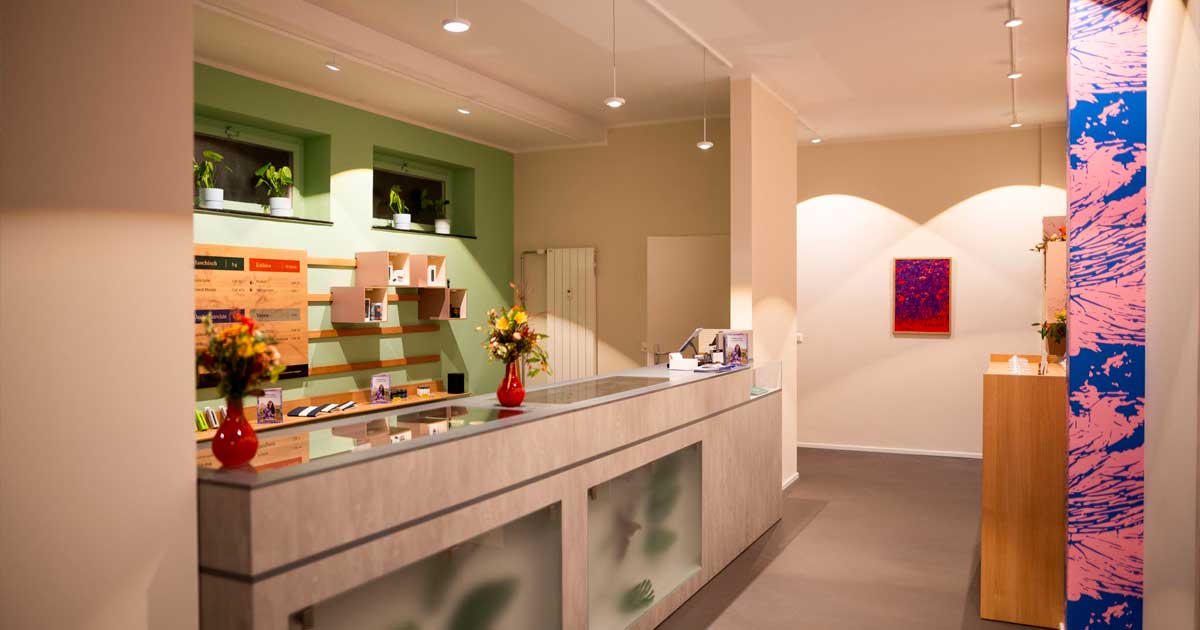
The German Federal Commissioner for Drugs, Hendrik Streeck, became the first prominent member of the Conservative Party CDU to publicly support pilot projects for the regulated sale of cannabis. In interviews with German media outlet RND, reported by CannabisIndustrie.nl, Mr. Streeck said he could support limited-scale experiments in legal distribution, but only under «very strict conditions».
This proposal marks a significant change within the CDU, a party which has widely criticized the partial legalization of cannabis adopted in Germany in 2024 under the previous coalition government. While several conservative politicians have called for the law to be repealed, Mr. Streeck has argued instead for a more pragmatic approach based on current consumer habits in Germany.
«Around five million people in Germany regularly use cannabis. We can't ignore that,» said Streeck.
However, the drugs commissioner has made it clear that he does not support a large commercial market similar to those observed in Canada or in some American states. In his view, any pilot project should prohibit advertising, avoid the «normalization» of cannabis consumption and exclude young adults from legal access.
Streeck suggested a maximum purchase of five grams per transaction, sales restricted to adults aged 25 and over, and mandatory scientific monitoring throughout the projects.
Concerns about the medical cannabis market
Much of Streeck's argumentation focuses on what he describes as the’The growing abuse of Germany's medical cannabis system for recreational purposes.
According to the CDU politician, online prescription platforms have contributed to the emergence of a «dangerous mixed market» where recreational consumers are increasingly accessing cannabis through medical channels. Streeck warned that this situation weakens youth protection measures and undermines the legitimacy of genuine medical access.
«Medical care and recreational use must remain clearly separated,» he said.
This debate comes at a time when the German Ministry of Health has reported a sharp rise in medical cannabis imports. According to the Ministry, imports rose by 170% in the second half of 2024 compared with the first half of the year. At the same time, prescriptions reimbursed by public health insurance rose by only 9%, fuelling suspicions that many prescriptions are for non-medical use.
In response, Germany's Minister of Health, Nina Warken, has proposed stricter rules for medical cannabis prescriptions. His bill would require face-to-face consultations before prescribing cannabis flowers and prohibit mail-order distribution.
The proposal has so far been blocked by the SPD, which argues that such restrictions would undermine doctors' professional autonomy and patients' freedom of choice. The Social Democrats also believe that a ban on mail-order sales could conflict with European Union rules on the free movement of services.
Calls for adjustments to German cannabis legislation
In addition to the pilot projects, Streeck also called for the revision of several aspects of the German legal framework in the field of cannabis legalization.
He argued that the current possession limit of 25 grams is too high and could facilitate detour to the illicit market. He also questioned the rule allowing adults to grow up to three plants at home, claiming that the resulting harvests can far exceed realistic levels of personal consumption.
At the same time, Streeck recognized that Germany's highly regulated culture associations might be too restrictive to function effectively.
«If crop associations are regulated in such a complex way that they barely function, this doesn't lead to control, but to circumvention,» he said.
Germany legalizes personal possession, home cultivation and non-profit cannabis clubs in April 2024. A second phase of the reform, initially planned by the’former coalition government, was to include regional pilot projects for commercial sales under license. However, the necessary regulations were never implemented.
As a result, legal retail sales remain banned in Germany, driving many adult consumers towards medical prescriptions or the illicit market.
Mr Streeck also called for stricter rules on public consumption, saying that cannabis use should not be visible in pedestrian areas, markets or places frequented by children.
Despite persistent political criticism, recent interim evaluations of Germany's cannabis law reportedly concluded that several feared negative consequences had not materialized. The evaluations did, however, recommend stricter supervision of medical cannabis and more flexible rules for cultivation associations.
At the same time, new pilot initiatives continue to emerge in cities such as Wiesbaden and Neuss, keeping the debate on the future of regulated cannabis sales in Germany alive.





















Medical Cannabis in Germany: THC Prices Vary by a Factor of 12

France already has 3,000 cannabis retail outlets. None of them are legal.

Morocco's exports of legal cannabis have expanded to 15 countries

Aurora Cannabis Doubles Its Production Capacity in Germany

Tilray is accelerating its operations in Europe thanks to a license in Portugal

Boston will host the 10th annual State of the Cannabis Industry Conference on October 26

A DEA report confirms that there are no fatal cannabis overdoses

A British patient is challenging the NHS's refusal to reimburse medical cannabis

October 2026 CBD Highlights: 10 Strains and Hash to Discover from 5 French Producers

CBD in France: Traceability, Retail Stores, THC and Driving… What the New Bill Proposes
-
 Business2 weeks ago
The legal cannabis market in New York exceeds 4 billion $ in revenue
-

 Cannabis in France3 weeks ago
Which countries legalized medical cannabis before France?
-
Business3 weeks ago
South Korea is preparing to begin local production of medical cannabis to meet rising demand
-
Cannabis in Thailand3 weeks ago
From the boom in dispensaries to a purely medical approach: Thailand is revising its cannabis policy
-
Cannabis and driving3 weeks ago
Medical Cannabis and Driving: New South Wales Ends Automatic Penalties for THC
-
Cannabis in Argentina4 weeks ago
Argentina Opens Its Market to Hemp Flowers Containing 1% of THC
-
Autism3 weeks ago
Autism and Cannabis: Results from the First Placebo-Controlled Trial of NTI164
-
Cannabis in France2 weeks ago
France’s Drug Policy Chief Defends Cannabis Prohibition... and Runs Into the Facts

















You must be logged in to post a comment Login